Sportxia

Category: Sourcing & Manufacturing

  • Technical Designer vs Fashion Designer: Who Should Your Activewear Brand Hire First?
    Technical Designer vs Fashion Designer: Who Should Your Activewear Brand Hire First?

    SPORTXIA
    Inquire Now
    HOW-TO-GUIDE

    Technical Designer vs Fashion Designer: Who Should Your Activewear Brand Hire First?

    Match your first design hire to the work blocking your launch: a clear collection concept, a reliable fit, or a specification the factory can manufacture.
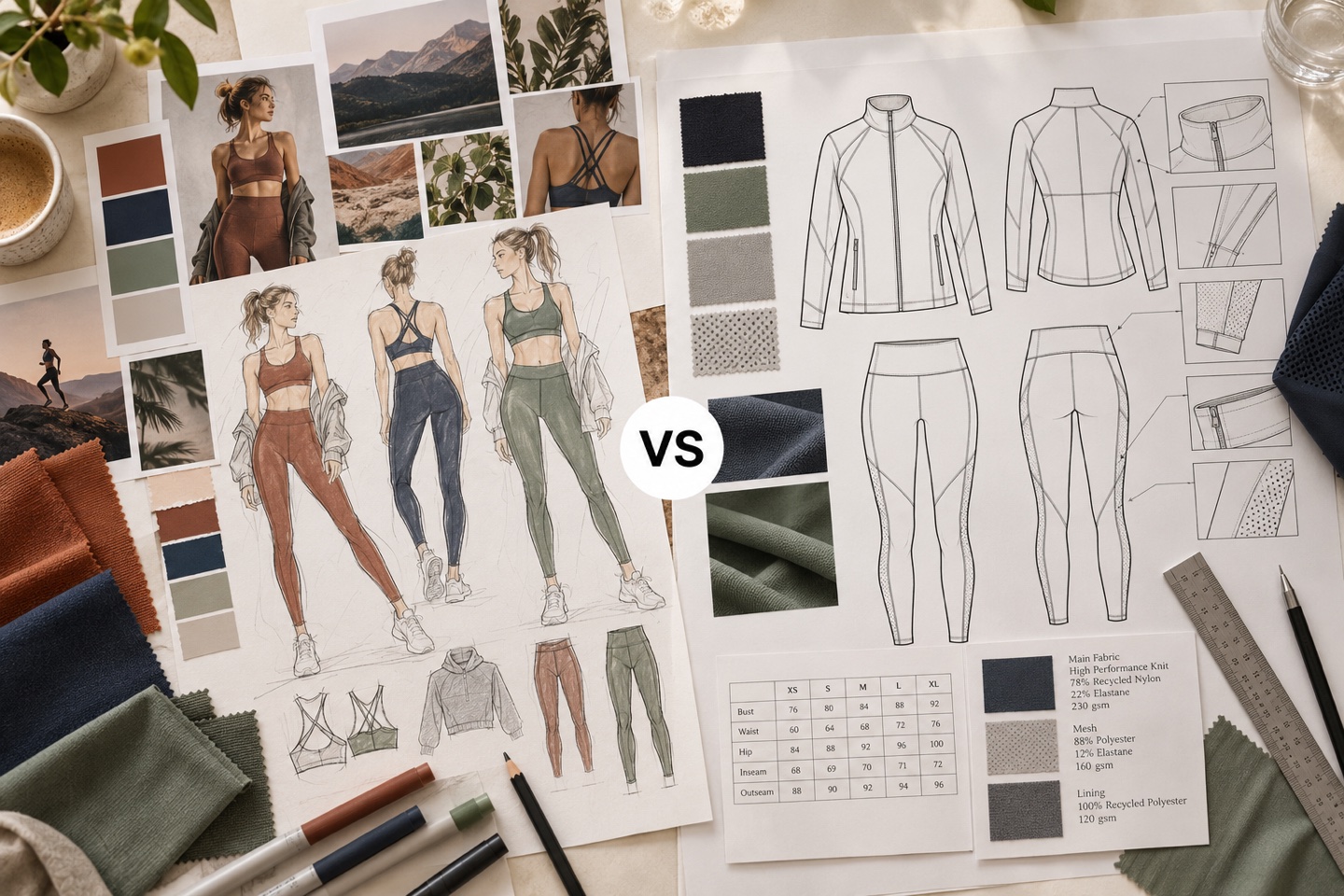
    Creative sportswear moodboard beside a technical garment specification, separated by a VS badge

    The first design hire should remove the biggest obstacle between your product idea and a repeatable garment. For an activewear founder who already knows the intended look, that obstacle is often fit, construction or the quality of the factory handover. A technical designer owns those decisions. A fashion designer gives a collection its visual direction and commercial identity.

    The first-hire recommendation

    Sportxia’s working recommendation is to prioritise a technical designer for about 90% of activewear startups we encounter—particularly teams that already have references or sketches. This is our experience-based judgement, not a market-wide hiring statistic. If your brand has no defined aesthetic or collection concept, start with a fashion designer, then arrange technical development before sampling.

    One useful internal comparison involved two routes into sampling. A concept-only submission needed follow-up on fabric weight, components and construction. A released technical file containing Nylon 6.6 material references and graded measurements supported a sample in 10 days. That project result is a practical example, not a delivery guarantee for every new style.

    Throughout this guide, “technical designer” and “fashion designer” describe responsibility, rather than rigid limits on what an individual can do. Some people cover both. The US Bureau of Labor Statistics also describes production and material knowledge within fashion-design work. Evaluate the candidate’s actual files and experience before deciding that a title proves competence.

    Ask Sportxia to review your design brief and technical-development needs.

    Compare the Work, the Tools and the Hiring Evidence

    Our internal review of 50+ product launches focused on a practical question: what information reduced uncertainty for the sample room? Use the following three tables to turn that question into a hiring brief.

    1. Deliverables, accountability and commercial value

    Role comparison: outputs and founder value
    Role comparison: outputs and founder value
    DecisionTechnical designerFashion designerFounder value
    Main outputTech pack, graded measurements and construction recordsConcept boards, palette, sketches and range directionChoose a defined handover, not a job title alone.
    Success measureAgreed fit-pass target; an example brief aims for fewer than 2 revision roundsA clear customer proposition and coherent approved collectionTrack technical acceptance separately from market response.
    Risk controlledMaterial, measurement and construction errors before cuttingWeak differentiation or an inconsistent visual identityEarly technical review can expose a potential $10,000 mistake; actual exposure is order-specific.
    Ownership periodTechnical development through agreed production sign-offConcept development through design freezeName the approver at each handover.

    In Sportxia’s reported project experience, technically managed development involved around 60% fewer sampling rounds than creative-only handovers. The comparison depends on starting-file quality, style complexity and material readiness. It should inform the hiring decision without becoming a promised saving on every order.

    2. Software and working proficiency

    Role comparison: tools and demonstrated proficiency
    Role comparison: tools and demonstrated proficiency
    Tool or skillTechnical-design evidenceFashion-design evidence
    Adobe Illustrator / PhotoshopAccurate technical views and construction calloutsOriginal visual concepts, artwork and colour stories
    Excel / Google SheetsPOM charts, grade calculations, tolerances and revision trackingRange plans, colourway lists and line information
    CLO / BrowzwearPattern reasoning and a reproducible virtual-fit setupDrape, silhouette and collection visualisation
    Supplier communicationMeasurable POM comments, acceptance criteria and relevant AQL knowledgeApproved design intent and clear visual priorities

    3. A focused 30-minute interview exercise

    30-minute design interview: practical evidence
    30-minute design interview: practical evidence
    CandidateShort exerciseEvidence to look for
    Technical designerRedline one tech-pack page and write a sample fit commentA named point, direction and value—for example, lower an armhole by 1 cm—plus the checks needed before release.
    Fashion designerPropose a mini capsule of 3 coordinated stylesA consistent customer, palette and silhouette story, with an explanation of how the range fits the intended market.

    Five Decisions That Separate Creative Direction From Technical Ownership
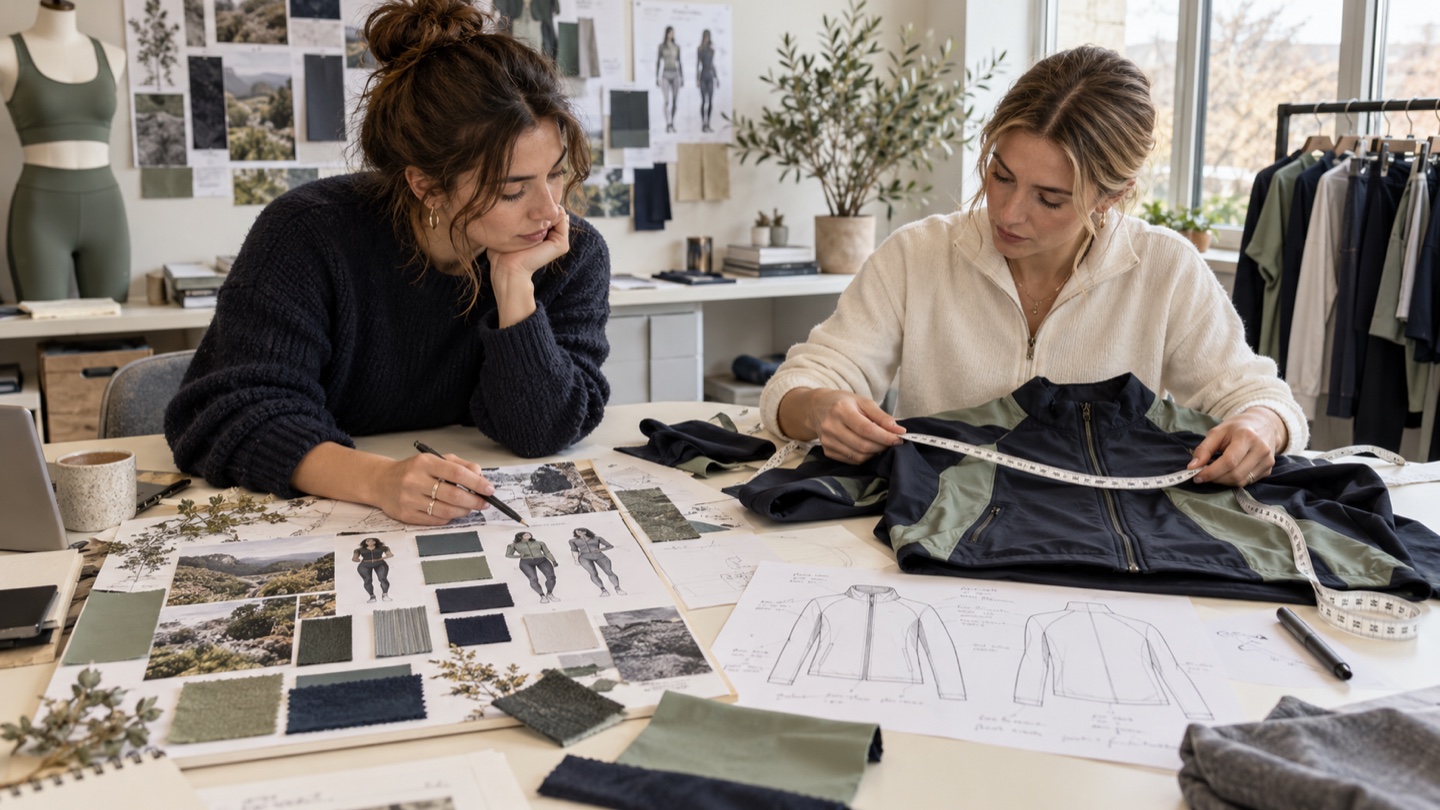
    Creative and technical apparel professionals reviewing a moodboard and measured jacket sample

    A useful hiring plan assigns each decision to someone who can finish it. Creative direction answers what the collection should communicate and why a customer would choose it. Technical ownership establishes how the intended product will fit, move and be repeated. Both require judgement; their handover needs a shared deadline and a clear approver.

    At Sportxia, the practical test is whether the next person in the workflow can act on the information supplied. A cutting-room operator needs verified pattern data. A merchandiser needs an approved colour story. Asking either person to infer the other’s decisions creates avoidable rework.

    1. Turn the Design Into an Executable Product File

    A fashion designer should establish the customer, use occasion, silhouettes, colour relationships, artwork direction and range balance. These choices give the collection a reason to exist. A technical designer translates the approved direction into dimensions, construction instructions and a documented development history.

    For a first supplier brief, specify the actual handover package instead of requesting “design support.” A production-ready file normally needs the following connected records:

    • Technical flats: front, back and relevant detail views showing panel boundaries, seams, closures and decoration positions.
    • Points of measure (POM): a base-size chart, measurement diagrams and a graded size range. An example file may contain 15 POM with a +2 cm grade increment at selected points. That increment describes a size-to-size change; it is not the allowed manufacturing tolerance.
    • Construction specification: seam class, stitch type, thread and finishing. A 4-needle, 6-thread flatlock can be a suitable specified operation where the product and machinery support it; calling an entire garment “seamless” does not describe that operation.
    • Bill of materials (BOM): fabric code, composition, weight, colour, trims, elastic and thread. For example, texturised polyester thread should be identified by its approved code and intended use, rather than substituted on appearance alone.
    • Version control: the style ID, revision date, change log and linked approved samples.

    A fabric description that can be tested

    78% nylon / 22% spandex, 260 GSM, interlock knit is much more useful than a request for “stretch fabric.” It identifies a material construction to source and evaluate. It does not, by itself, prove opacity or compression. Assess the actual fabric colour, stretch direction, extension, recovery and garment fit before approving it for squat coverage.

    During portfolio review, ask to see a revision trail. A note such as Revision 3: inseam reduced by ½ inch after fabric relaxation should link to a measured sample and a revised pattern. The valuable evidence is the relationship between an observed issue, the change made and the result—not how polished the PDF looks.

    First-hire advantage: technical design when the collection concept exists but the factory still lacks an agreed specification.

    Connect this handover package to material approval, sample gates, costing and production release with our apparel product development workflow.

    2. Check How the Software Supports a Manufacturing Decision
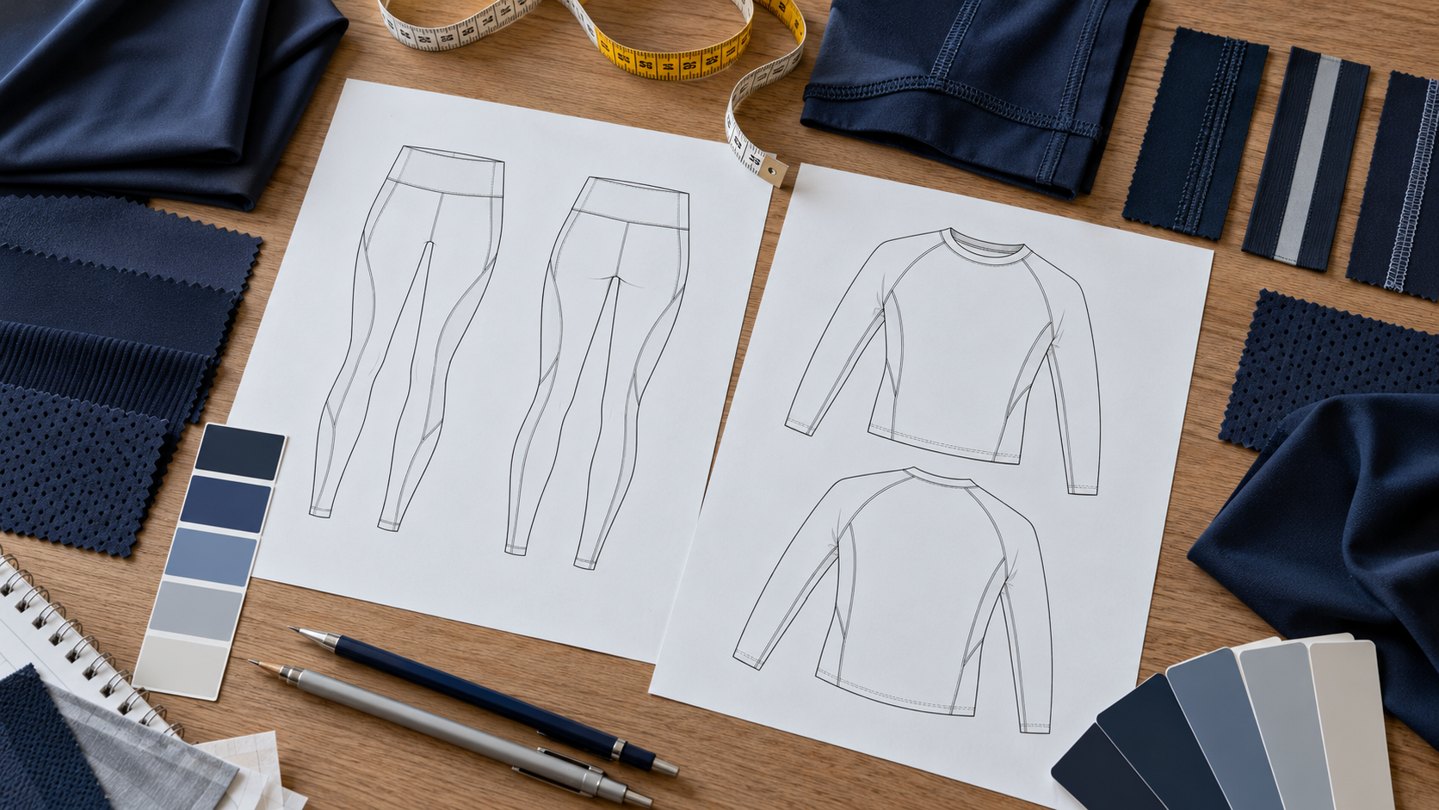
    Technical garment drawings, construction references and fabric specification records

    Illustrator and Photoshop can support original prints, presentation boards and technical drawings. Excel or Google Sheets can hold line plans as well as graded measurements. CLO and Browzwear can help develop virtual garments. The distinction is what the person can demonstrate with those tools, rather than a rule that reserves a program for one job title.

    Ask a technical candidate to explain the assumptions behind a digital garment: the pattern version, avatar dimensions, material properties and seam settings. Ask a creative candidate to explain how a proposed palette, print scale and silhouette work across the range and at the intended selling price.

    A sports-bra simulation needs an evidence trail

    In an internal development example, a virtual fit review highlighted an area of concentrated strap loading. The team changed the strap arrangement before sending another physical prototype. The avoided courier-and-review loop saved approximately 2 weeks on that project. The outcome relied on a suitable digital setup; a red region on a screen is not a clinical pressure measurement.

    Physical fit and movement checks still decide whether the finished bra provides the required coverage and support. A simulation can help target the next test, but it cannot validate every material property, seam interaction or wearing condition.

    First-hire advantage: a technical designer who can connect digital development to verified patterns and physical samples.

    3. Give Fit and Performance a Named Approver
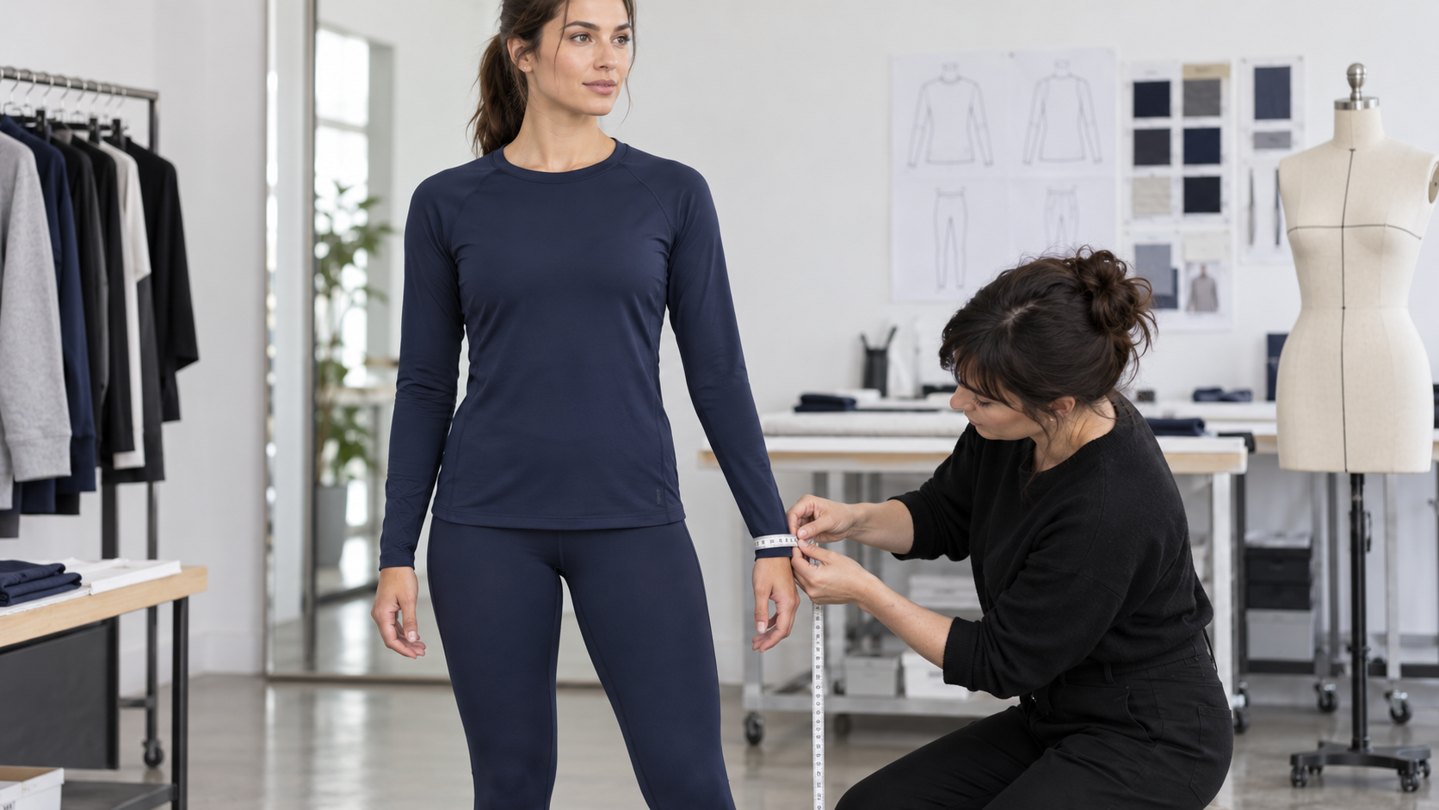
    Apparel technician measuring an activewear fit sample on an adult model

    The intended appearance needs to survive movement. Before a fit session, state the target wearer, body measurements, base size and activities. Review both the standing silhouette and the movements the product is being sold for. A logo adjustment of 2 mm may matter visually, but it should not displace a check for waistband roll or restricted reach.

    What the creative review protects

    • Proportions, visual balance and panel placement.
    • Colour blocking, artwork scale and logo alignment.
    • The relationship between the individual style and the collection.

    What the technical review must prove

    • Coverage and seam behaviour during a squat or lunge.
    • Waistband extension and recovery after movement.
    • Neckline, armhole and strap behaviour on the intended wearer.
    • Agreement between the measurement record and approved pattern.

    Record different failure types separately. Seam grin is opening at a seam under tension, exposing stitches or the interior. Fabric becoming transparent during a squat is a different coverage problem. Both can occur in the same garment, but they need different material and construction investigations.

    An example specification may use ±0.5 cm at a critical compression-garment point and ±1.5 cm at a less sensitive T-shirt measurement. These are product-specific examples, not universal limits for either category. The technical designer should justify each tolerance against fit sensitivity, material variation and the production process.

    For a rolling waistband, assess pattern balance, elastic selection, seam position and the wearer’s movement before choosing a correction. An approved internal power-mesh layer is one possible construction solution. Its inclusion needs a BOM reference and a physical test, so the improvement can be repeated in bulk.

    First-hire advantage: technical design when the launch is blocked by fit instability or unproven functional construction.

    4. Make Factory Comments Specific Enough to Resolve
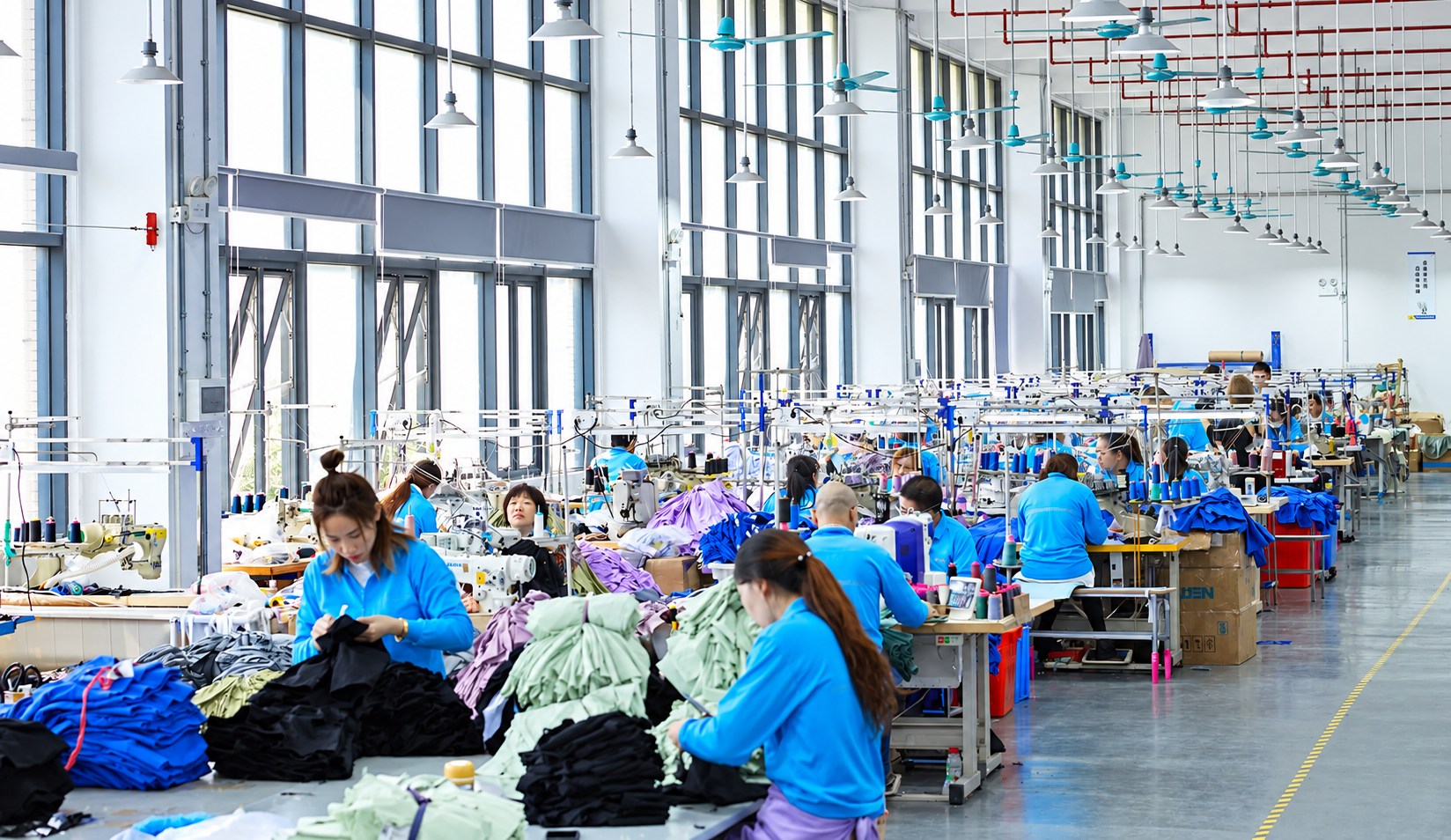
    Real garment workshop from the user’s factory photograph library

    A useful correction identifies a location, a measured difference and the required next action. Instead of circulating several messages asking for a more comfortable fit, combine the issues into one controlled comment pack. Include marked photographs, POM references and an updated specification.

    Example of an actionable revision record

    Style / version: identify the sample tag and current tech-pack revision.
    Measurement: increase the specified hip POM by 1.5 cm; state whether this is a flat or circumference measurement.
    Construction: use the approved 4-needle, 6-thread flatlock at the named seam, with the agreed thread and setup.
    TOP decision: hold the affected hem operation because of puckering; investigate feed balance and tension, then submit corrected evidence.
    Approval: name the person who can release the revised sample or process.

    In our reported comparison, a submission with defined measurement points could move into production planning, while a vague brief spent 3 days waiting for clarification. A complete brief does not override material availability or a factory’s actual capacity, but it gives the production planner a decision they can make.

    Keep the route visible: prototype → fit sample → PPS/PP → TOP. New styling changes at TOP can affect material already cut and units already sewn, creating exposure of thousands of dollars depending on the order. Make discretionary design changes before the agreed design freeze, and handle later necessary changes through formal approval.

    First-hire advantage: technical design when instructions are repeatedly returned to the buyer for interpretation.

    5. Hire From Evidence of Completed Work
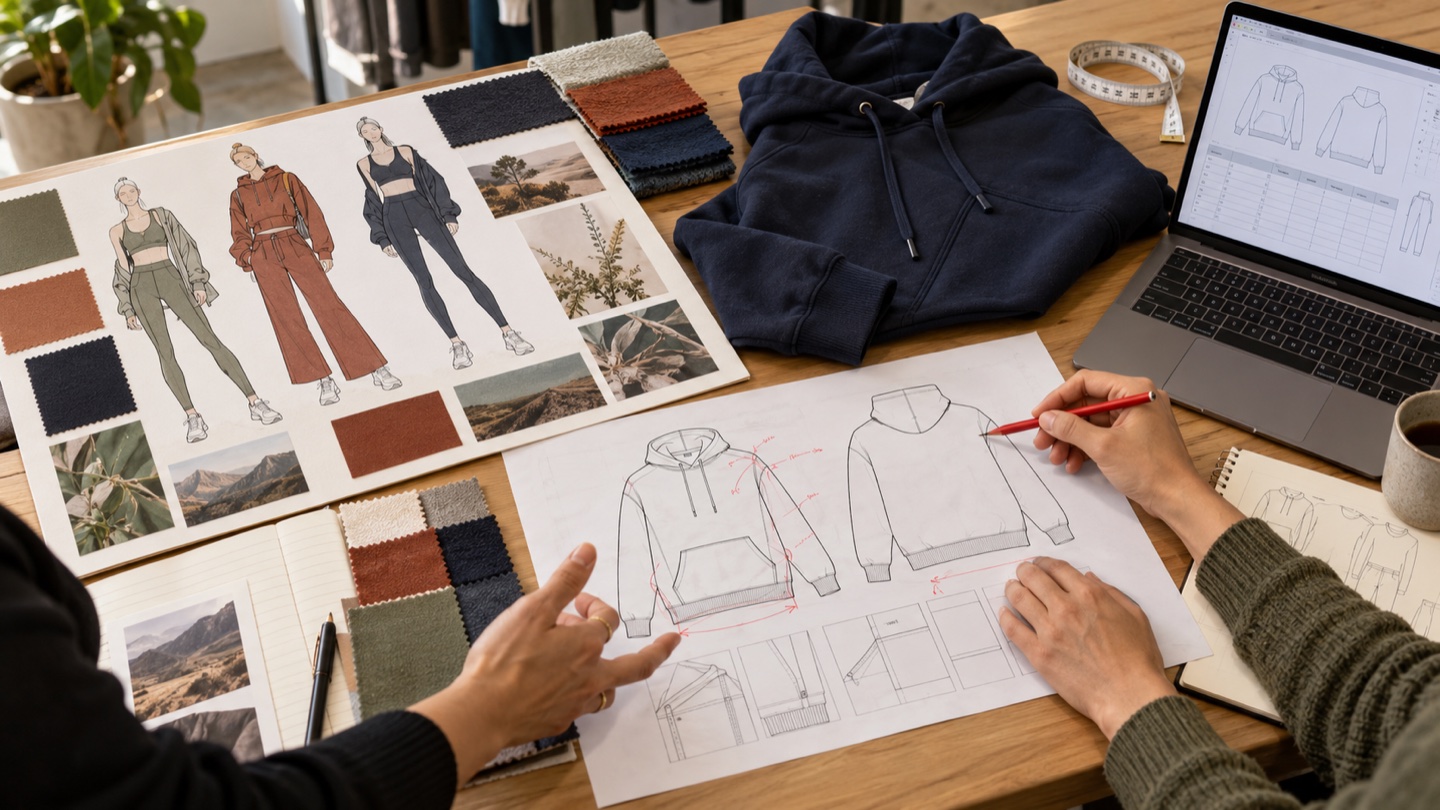
    Reviewing creative collection work and annotated technical garment files during an interview

    Our review of 50 resumes reinforced the need to examine outputs. Keywords help route a candidate to the right interview, but a portfolio should demonstrate a decision, its implementation and the resulting product.

    Evidence for a creative lead

    • Customer and trend research translated into a coherent collection.
    • Original concepts, colour stories and print or styling direction.
    • A line plan that explains how the styles work together.
    • A clear rationale for the intended price and market position.

    Evidence for a technical lead

    • Construction knowledge and pattern-correction records.
    • Graded specifications with consistent measurement methods.
    • Fit comments connected to photographs and revised samples.
    • PLM version control and relevant AQL inspection knowledge.

    Use a hoodie sample to test how the candidate separates an observation from a proposed fix. A useful technical response might identify a 2 cm neck-drop issue, explain why the hood is pulling backward and propose a controlled change to neck drop and hood height. The candidate should also say what additional measurements are needed before confirming that diagnosis.

    The creative response should explain the intended hood volume, face opening and relationship to the body silhouette. A strong candidate in either discipline can discuss trade-offs and recognise when the other discipline needs to make a decision. Pay candidates for substantial take-home work and use a brief that is not an unpaid production assignment.

    Choose the first hire by the unresolved problem

    Direction unclear: commission creative development.
    Direction agreed, product unresolved: commission technical development.
    Both unresolved: define a short concept phase followed by technical release, with separate deliverables and approval dates.

    First-hire advantage: neither title automatically wins. Hire the person whose demonstrated output clears the current bottleneck.

    See how Sportxia supports emerging brands with coordinated sampling and manufacturing.

    When a Technical Designer Is the Better First Investment

    Best fit: the collection has a visual direction, but fit, sizing, construction or supplier instructions are incomplete. The technical designer should own development records through the agreed production handover and approval milestones.

    Advantages

    • Fewer unresolved sampling loops: Sportxia’s reported experience is approximately 60% fewer rounds with complete technical management. In an individual comparison, approval moved from a 4-round route to a second-sample decision. Those two observations are distinct: 4 to 2 is a 50% reduction, not 60%.
    • Repeatable sizing: grade rules can preserve intended fit relationships from Small to XL, with physical checks where body shape or construction makes simple scaling unreliable.
    • Clearer quality decisions: an observed 2 cm discrepancy can be assessed against the agreed POM, measurement method and tolerance. Whether to reject a lot depends on that specification, defect classification and inspection agreement.

    Limitations

    • Visual direction is still required: a technically sound garment can lack a distinctive reason to buy it if the brief never defines the brand’s point of view.
    • Setup takes work: a new team may need body measurements, reference garments and internal measurement rules before technical development becomes efficient.

    When a Fashion Designer Should Lead First

    Best fit: the founder needs a customer proposition, recognisable collection direction or a new visual language. The fashion designer should establish what is being developed before the team invests in detailed pattern and fit work.

    Advantages

    • A collection with a point of view: coherent shapes, colours and styling can connect the product to a specific customer and selling context.
    • Visual differentiation: lookbooks and range presentations help the team judge how products read together, rather than approving each technical file in isolation.
    • Stronger presentation: Sportxia’s internal observations found greater visual appeal in creatively led collections; this is a qualitative assessment, not a quantified sales uplift.

    Limitations

    • Performance can remain unproven: a fabric selected for colour or drape still needs stretch, recovery and coverage checks for the intended activity.
    • Translation is a real development cost: unresolved construction can generate repeated supplier questions. In one reported development route, this contributed to 3 resampling rounds.

    A Practical Hiring Sequence for a Small Brand

    Define the concept, freeze the agreed appearance, develop the technical file, approve fit, and then release production. A mature team may overlap tasks, but it should still make the handover visible. The creative lead owns the approved design direction; the technical lead owns the evidence that the developed product meets its specification.

    For a founder with an existing concept and a limited budget, the technical hire often protects the more immediate exposure. A weak colour story can be revised before sale. A production run of 500 units with a functional fit problem creates material, rework and delivery consequences. That is why our recommendation prioritises technical ownership once the visual brief is established.

    Write each engagement around deliverables and an approval gate, not a vague promise to handle everything. State who owns the files, who approves changes and what the manufacturer must receive before cutting. When both roles sit with one person, keep the two decision records separate so that late creative changes do not silently invalidate a fit approval.

    Questions Founders Ask Before Hiring a Designer

    Who should a boutique yoga studio hire first?

    If the studio already has its brand identity, prioritise a technical designer with relevant activewear fit experience. Specify waistband stability, movement coverage and consistent sizing across colourways. Review the physical sample on the intended wearer before approving the range. Bring in creative support first if the actual collection concept remains undefined.

    I am an influencer with a clear aesthetic. Do I still need a designer?

    You may already supply much of the creative direction. A technical designer can convert that direction into patterns, graded measurements, construction details and controlled sample comments. Confirm who owns original artwork and how revisions will be approved. A recognisable aesthetic does not automatically provide a production-ready specification.

    Who should develop corporate uniforms in XS–4XL?

    Assign technical ownership for the full XS–4XL range, including measurement methods, grade rules, wearer needs and endpoint fit checks. Creative input can establish the corporate appearance. Neither job title alone guarantees knowledge of a regulated protective product; assess additional standards expertise where relevant.

    What if I have no sketches or collection concept?

    Start with a fashion designer or creative-development brief. Define the customer, use occasion, silhouettes, palette and range plan. Agree an approval date for that concept, then commission the technical package. This gives the technical specialist something concrete to engineer.

    When should I hire both roles?

    Use both when the scope includes original collection development as well as fit and production ownership, particularly as you move from samples into bulk. Give the creative lead a design-freeze milestone and the technical lead a fit-sign-off milestone. Agree how later changes reopen either approval.

    FACT CHECKED&EDITORIAL GUIDELINES

    Reviewed October 29, 2026. Internal experience figures are company-reported observations, not an independently audited industry benchmark or a guaranteed project outcome. Construction and tolerance examples require product-specific approval. Send a correction to the content team.

    READY TO DEVELOP YOUR COLLECTION?

    Bring Your Design Brief to the Sample Room

    Discuss your concept, technical files, fit requirements and next sampling milestone with Sportxia.

    Get Your Development Quote
  • How to Find Sportswear Manufacturers: From Tech Pack to First PO

    How to Find Sportswear Manufacturers: From Tech Pack to First PO

    SPORTXIA
    Inquire Now
    HOW-TO-GUIDE

    How to Find Sportswear Manufacturers: From Tech Pack to First PO

    Find a sportswear manufacturer that can make your product, prove its capability and deliver the order you approved. Follow the full route from a technical brief to your first purchase order.

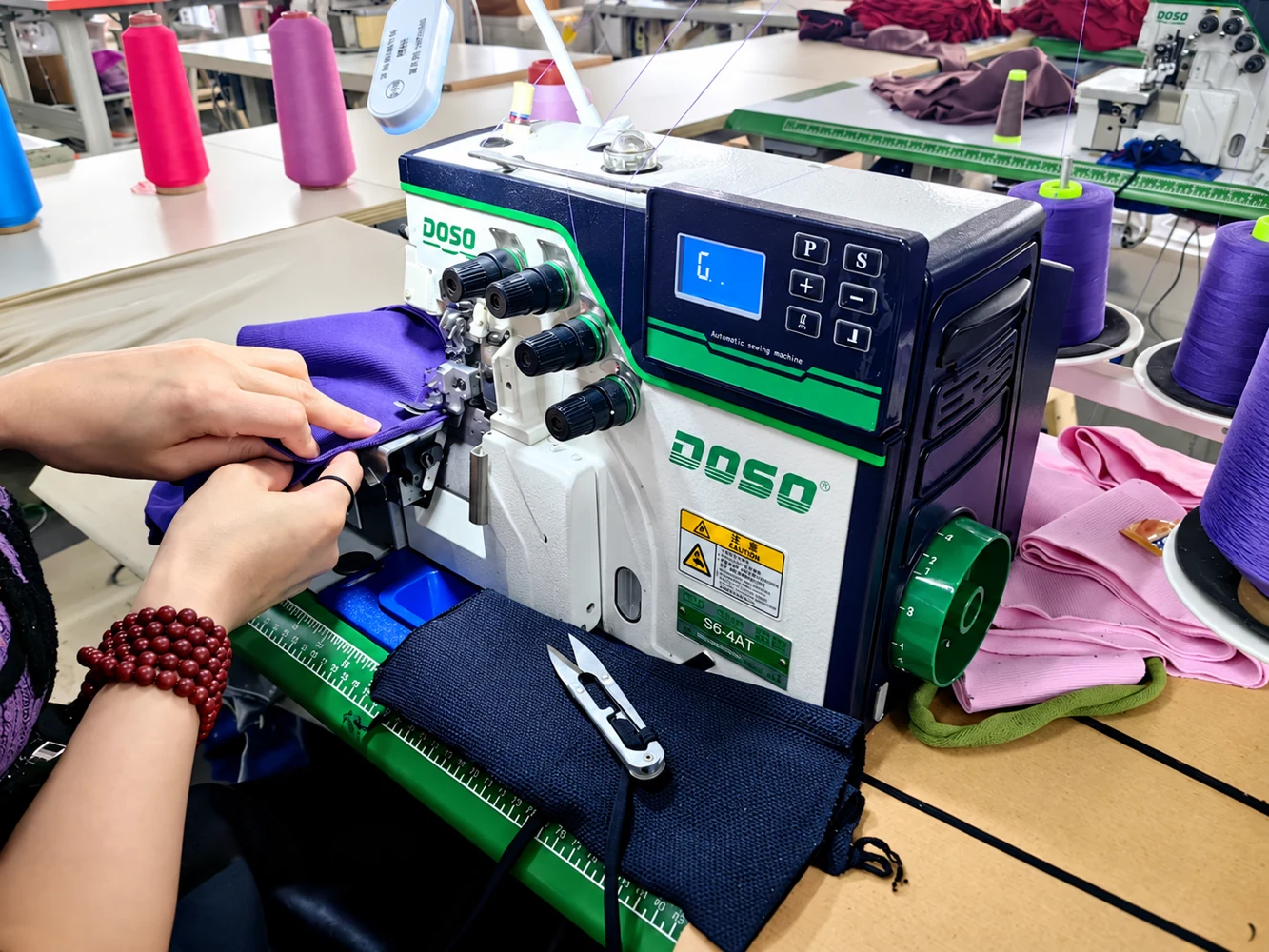
    Real garment factory sewing floor from Sportxia’s photo library
    How to Find Sportswear Manufacturers:
    From Tech Pack to First PO

    A finished product photo cannot tell you whether a supplier understands stretch recovery, controls sewing tension or can repeat a colour across a reorder. Those questions must be settled before bulk cutting begins. At Sportxia, we recommend choosing the manufacturing process first and comparing quotations against that process.

    This guide turns sourcing into a sequence of decisions with an approval record at each stage. It covers startup activewear, private-label collections and team uniforms. The result should be a shortlist you can explain, an approved physical sample and a purchase order that connects the product specification to inspection, payment and delivery.

    Before You Contact a Sportswear Factory

    Put the information a production team needs in one shared folder. Your first email does not need a finished collection, but it must identify the garment and the decisions still open. Reserve budget for development samples and independent inspection as well as the goods.

    Your essential files

    • A one-page brief: category, destination market, intended customer, size range, quantity and target price.
    • A versioned tech pack: front and back flats, points of measure, grading, seam construction and artwork positions.
    • A fabric specification: composition, GSM, stretch, recovery and an opacity target, supported by a physical reference where possible.
    • Branding artwork: .AI or .SVG logo files, care-label wording and hangtag requirements.
    • A supplier comparison sheet: identical fields for quantity, sampling, delivery, payment and evidence.

    Decisions to make in advance

    • Which destination labeling and chemical requirements apply?
    • Which voluntary certificates support the claims you intend to make?
    • Who arranges freight and acts as importer?
    • Which measurements and performance checks decide sample approval?
    • What inspection plan will be included in the PO?

    For quality-system context, review ISO 9001. A management-system certificate does not certify the performance of your particular leggings or jersey.

    Step 1. Turn the Product Idea Into a Quoteable Specification

    Sportswear technical drawings, fabric and construction references

    Write five screening requirements before searching: manufacturing category, order quantity, target delivered cost, required evidence and warehouse arrival date. Distinguish seamless knitting from cut-and-sew: the machinery, development work and material commitments differ.

    A quantity such as 50 units per colour is a useful opening question, provided you also identify sizes and available materials. It is not the same as 50 units across several custom colours. Specify a DDP destination if the budget is meant to include delivery; otherwise the supplier cannot price the same scope.

    For a compression style, identify the proposed Nylon 6.6 blend and evaluate a 220–250 GSM candidate range. Neither the yarn name nor fabric weight alone proves recovery or squat-proof coverage. Assess the chosen colour, stretch level and finished garment. Specify flatlock construction where the design needs reduced chafing, with seam position and thread requirements.

    • First collections: begin with available fabric colours when a smaller opening run matters.
    • Team kits: agree print durability and sublimation artwork before discussing optional hand-feel changes.
    • Repeat collections: identify the fabric lot and approved colour reference that future runs must match.

    Need help converting the brief into production instructions? Explore apparel sizing and cut-and-sew development.

    For the full sequence from brief and tech pack through sampling, costing and production release, follow our sportswear product development guide.

    Before requesting a sample quote, use our factory-ready sportswear tech pack guide to turn the agreed brief into controlled drawings, material codes, measurement methods and approval instructions.

    Step 2. Build a Supplier List Across Five Channels

    Real garment sewing workshop from the company photo library

    Search widely enough to compare actual capabilities. Record why each candidate belongs on the list, rather than collecting company names with no product evidence. Use the same screening questions on all five channels.

    1. Industry directories: use Common Objective and relevant local textile networks to discover candidates. Check what a listing actually verifies.
    2. B2B marketplaces: search Alibaba and Global Sources. Read the supplier classification and assessment details; a badge does not replace order-specific due diligence.
    3. Trade-show exhibitors: investigate ISPO and Canton Fair exhibitors whose samples demonstrate your construction.
    4. Material-supplier referrals: ask mills which garment factories routinely handle the fabric and pay reliably.
    5. Sourcing agents: compare their fee, inspection role, subcontracting visibility and accountability when you need local management.

    If trade-show exhibitors are part of your search, use our step-by-step trade show sourcing SOP to plan meetings, capture comparable booth evidence and turn the shortlist into a controlled pilot order.

    For every lead, record the legal entity, production address, owned versus outsourced operations, MOQ, sample timing and bulk timing. Request evidence of three relevant past styles and a business-license copy. Ask who owns the line that would produce your order.

    To build a China-focused candidate list, compare our ten sportswear manufacturers in China, then apply the same product, minimum-order and evidence checks to each enquiry.

    If you need local production support, compare the fee, technical deliverables and accountability in our apparel sourcing agent versus factory-direct guide. Identify which tasks are already included by the manufacturer before paying for additional coordination.

    Step 3. Send One RFQ and Compare the Evidence

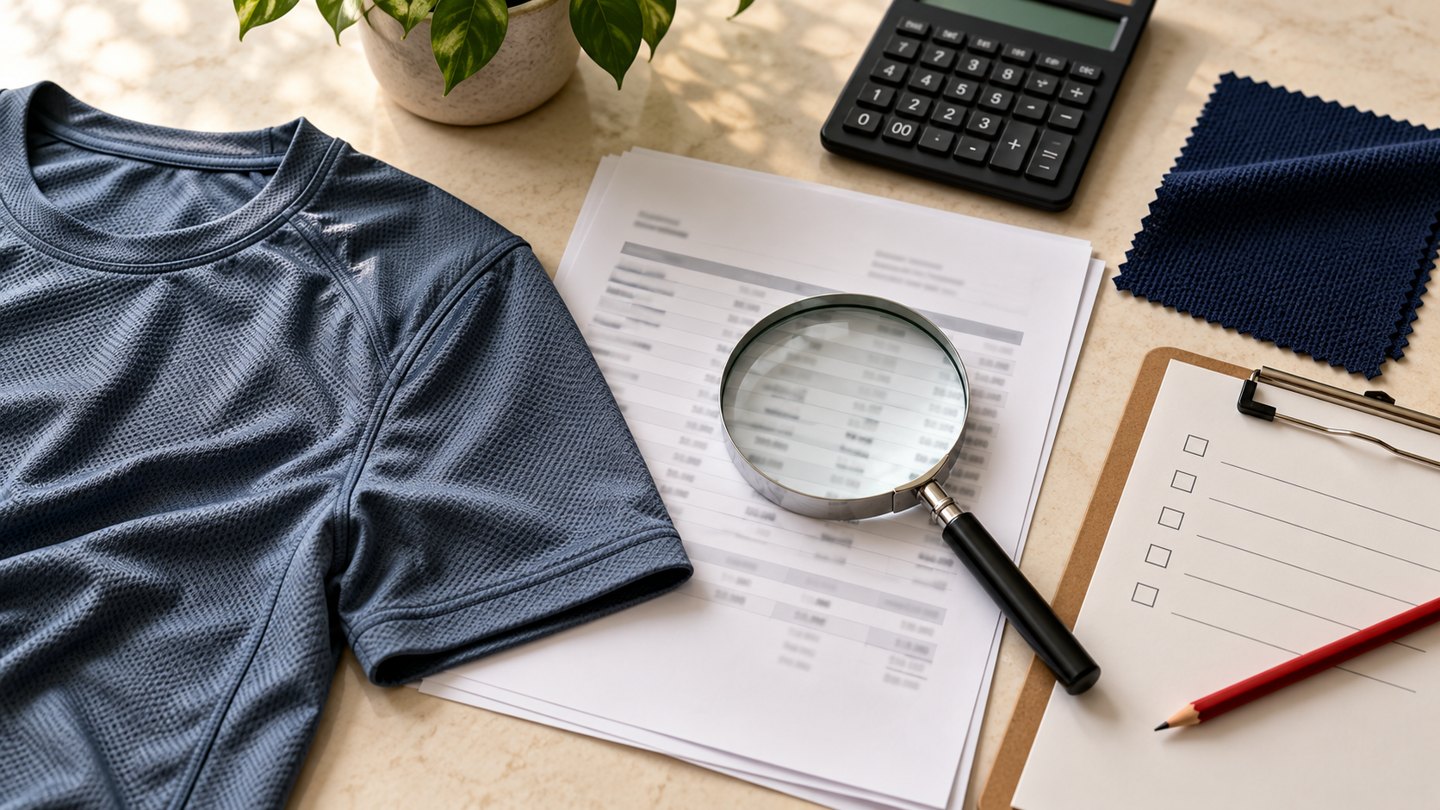
    Apparel quotation planning with fabric, garment and calculator

    Use these ten questions to ask a clothing factory to structure the follow-up interview, then verify the manufacturer’s identity, claim records and production controls before treating the answers as approval evidence.

    A comparable quotation begins with comparable instructions. Send the same tech-pack version and quantity breakdown to every shortlisted supplier. Ask them to list assumptions and exclusions, including material substitutions, packaging and inspection charges.

    RFQ template — copy and adapt

    Subject: Sportswear RFQ — [brand / style / tech-pack version]
    
    Hello [supplier team],
    Please review the attached specification and quote [quantity] units,
    split by the attached colour and size breakdown, for [destination].
    
    Please provide:
    1. Unit price, currency, named Incoterm and named port/place.
    2. Sample fee, development schedule and revision inclusions.
    3. Bulk schedule measured from final sample/material approval.
    4. MOQ by style, colour, size and fabric; any material minimums.
    5. Deposit/balance milestones and quotation validity.
    6. Relevant certificates, scope and order-specific test options.
    
    Identify outsourced processes, proposed substitutions and exclusions.
    Attach recent, unretouched examples of comparable production.
    Please flag any specification you cannot achieve before quoting.
    
    Thank you,
    [name / brand / contact]

    Score response speed, quotation clarity and production proof on a 0–2 scale each. Award 2 points for a useful response within 24 hours, allowing for agreed working hours; 0 points for repeated unanswered follow-ups. Use 1 for an incomplete response that is resolved promptly. Apply the same 0, 1 or 2 method to clarity and evidence, for a total of six.

    Then ask a precise follow-up: for example, the waistband-label stitch density and whether it is included in the quote. An answer that ignores the measurement is a reason to investigate communication before production. Keep a direct factory and a vetted agent in consideration when their service scopes differ; compare the extra management cost transparently.

    Approval gate: retain candidates that can meet the actual MOQ, document their quotation scope and answer the technical follow-up accurately.

    Step 4. Verify Certificates Against the Product and Order

    Reviewing textile sourcing documents and material records

    Start with the destination law and the claims on your product. OEKO-TEX STANDARD 100 is a voluntary harmful-substances certification; it is not automatically mandatory for every skin-contact garment. Request it when it is part of your buying specification, and check that the certified scope covers the material or finished article being supplied.

    1. Identify the scheme: STANDARD 100 for the specified harmful-substances scope; GOTS for qualifying organic-textile certification; GRS or RCS for the relevant recycled-content chain of custody.
    2. Collect identifiers: certificate or license number, certification body, company and site details, scope and validity period.
    3. Check the issuing source: use OEKO-TEX Label Check, the GOTS certified-supplier database, or Textile Exchange certificate authentication.
    4. Match the scope: confirm the facility, processing operation, product category and relevant product class. A yarn certificate alone does not establish that a finished garment is covered.
    5. Archive the result: save the document and dated verification record with the supplier file.

    Where a fabric mill holds the certificate, document its relationship to the garment maker. Different names need an explained supply chain; they are not automatically evidence of forgery.

    Step 5. Run Samples Through Three Approval Stages

    Measuring a sportswear pre-production sample

    Sampling is where a promising supplier becomes a production partner. Require a graded measurement chart for every size, the fabric composition and GSM, artwork dimensions, seam callouts and component list. Mark every revision with a new version, date and responsible approver.

    Prototype → fit → pre-production

    1. Prototype: evaluate construction, material feasibility and the design direction. Record any substitute fabric.
    2. Fit sample: review the intended body measurements, size balance, grading and movement.
    3. Golden sample: approve the final pre-production unit with the agreed bulk fabric, colour, trims and decoration. Keep a sealed reference at both ends.

    Test what an athlete will notice

    • Check opacity in the actual movement and stretch conditions, including squats where relevant.
    • Observe waistband roll, chafing and seam comfort during wear.
    • Measure before and after the agreed wash procedure.
    • Evaluate fabric growth, recovery and seam performance using agreed loads and methods.

    AATCC TM135 concerns dimensional changes of fabrics after home laundering. Choose the appropriate garment method where necessary, and specify separate methods for pilling and recovery. One wash method cannot establish every performance claim.

    Step 6. Write Quality Control Into the PO

    Real sewing production floor used to illustrate in-process quality checks

    Agree a defect library and measurement method while the approved sample is still available. Reference an appropriate ANSI/ASQ Z1.4 or ISO 2859-1 plan with the edition, lot definition, inspection level and severity specified. AQL values alone do not determine sample size or acceptance numbers.

    Swipe the table or use the column controls
    Defect classBuying specificationExample
    Critical0 acceptance under the agreed safety protocolNeedle fragments, sharp contamination or mold
    MajorAQL 2.5 planning targetOpen seams, unusable zippers or incorrect size labels
    MinorAQL 4.0 planning targetAgreed cosmetic defects such as untrimmed threads

    The product checklist should cover seam opening under stretch, print rub and wash durability, label accuracy, packaging and garment measurements. The reference target of ±0.5 cm can be specified for selected waist, inseam and rise measurements when the construction supports it; state the exact points, measuring tension and tolerance for each size.

    Use in-line checks to correct drift during sewing. Arrange final random inspection when production is complete and the agreed packing readiness is reached; 80% packed is a common booking condition, not permission to leave the remaining quantity unfinished. For overseas procurement, independent inspection adds a separate view of the shipment.

    Step 7. Price Delivery, Not Just the Garment

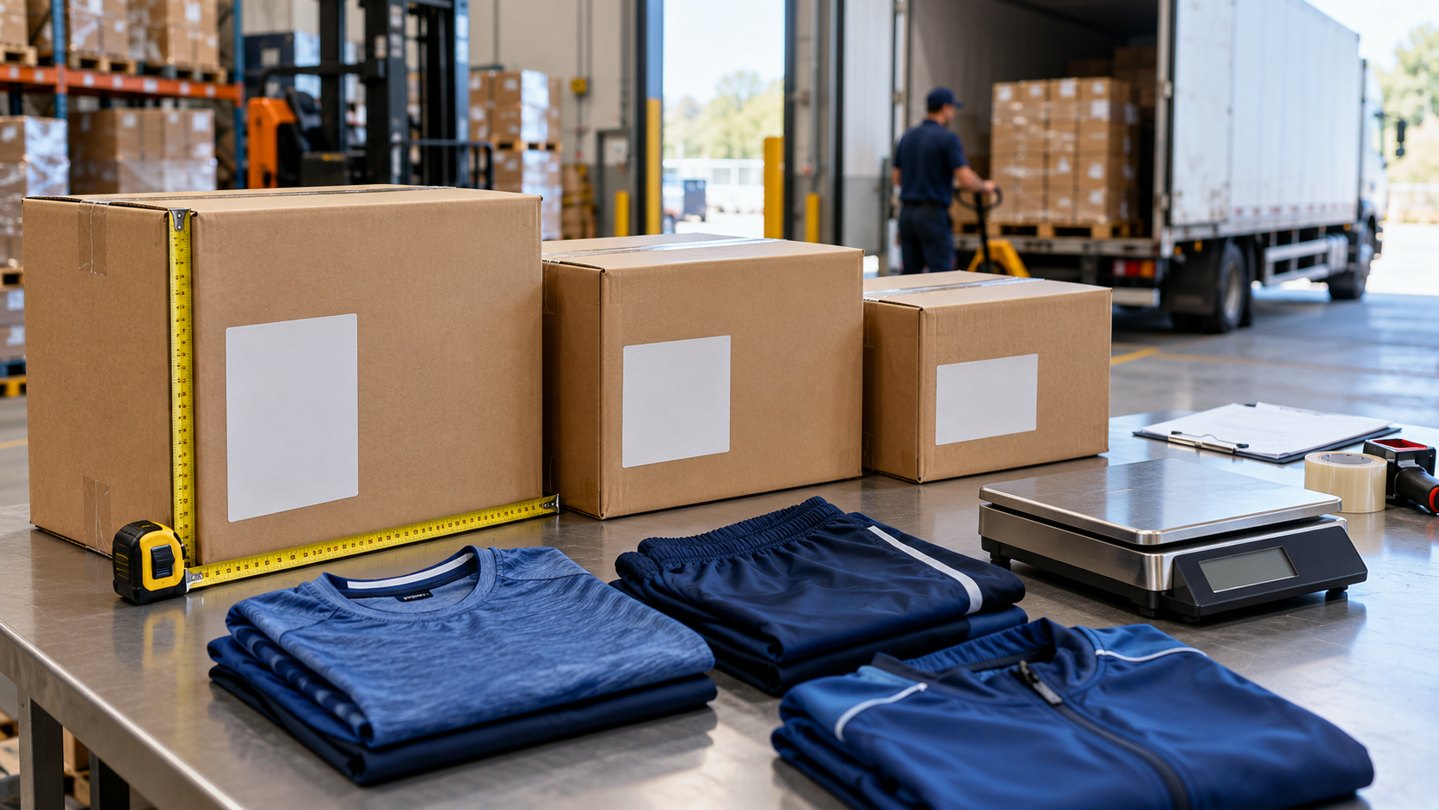
    Export cartons, garment packing and shipment measurements

    Ask for the preliminary packing list before choosing the shipping route. Carton length, width and height in centimetres, gross weight in kilograms, carton count and the proposed HS classification all affect the estimate. Use the forwarder’s actual chargeable-weight method; volumetric weight can exceed scale weight.

    Write the named place and version beside the trade term. FOB — Free on Board applies to sea or inland-waterway delivery on board the vessel; discuss FCA for relevant container or multimodal arrangements. DDP — Delivered Duty Paid assigns extensive delivery and import obligations to the seller, but requires a workable importer and tax arrangement. It does not automatically make transport faster. Use the ICC Incoterms guidance to define responsibilities.

    Swipe the table or use the column controls
    Cost lineEvidence to requestCheck before approval
    Garments and packagingSupplier’s itemized quotationSame specification, quantity and inclusions
    FreightForwarder’s air/sea quotationRoute, chargeable weight and surcharges
    InsuranceInsurer or forwarder quotation~1% of cargo value is a planning allowance, not a fixed premium
    Duty and taxClassification and official tariff checkOrigin, destination and importer treatment
    Brokerage and receivingBroker and warehouse quotationClearance, handling and delivery exclusions

    For US entries, begin the tariff check with the USITC Harmonized Tariff Schedule. Add inspection and development costs when comparing the commercial result, then test the margin at the planned selling price.

    Step 8. Confirm the Contract and the Production Site

    Real automated cutting equipment and operators from the factory photo library

    Before a deposit, reconcile the signatory, business-license entity, invoice issuer and bank beneficiary. Any difference needs verified documentation and an approved payment arrangement. An unexplained mismatch is a reason to pause. Obtain suitable legal review of the actual sales agreement rather than relying on a heading or invoice stamp.

    • Product exhibits: tech-pack version, approved sample photographs, fabric lot, artwork and packing specification.
    • Quality remedies: inspection rights, acceptance conditions, rework, replacement, refund and the process for disputed findings.
    • Delivery terms: named milestones and a negotiated delay remedy. A 5% discount per week is an example to review, not a universally enforceable penalty.
    • Design protection: appropriate non-disclosure, non-use and non-circumvention provisions, plus pattern and artwork ownership.
    • Payment: where a 70% balance is negotiated, tie its release to the agreed inspection and document conditions rather than assuming the shipping date proves acceptance.

    Use a live tour to verify equipment suitable for the product, including circular knitting for a seamless programme where relevant. Follow labeled fabric rolls and dye lots into the cutting area. Locate in-line inspectors, check the barcode and carton-labeling process, and observe clear aisles, fire equipment and task-appropriate PPE.

    Troubleshooting: What to Do When the Evidence Does Not Match

    Reviewing apparel supplier quotation and due diligence records

    A red flag is useful only when it changes the next action. Resolve uncertainty before money or material commitments make a change expensive.

    1. An implausibly cheap, immediate quotation

    A $4 technical hoodie is a prompt to examine scope and construction, not automatic proof of fraud. Ask for fabric yield, trim costs and cut-and-make labor. Request a bill of materials and ask which specified process or material has been excluded.

    2. No access to the working facility

    Ask for a 5-minute live walk from material storage to cutting. If access is refused, request an independent site visit or documented ownership and outsourcing information. Do not mark an office tour as a factory audit.

    3. A certificate that cannot be verified

    Request the complete scope certificate and issuer details. Check the official database and ask the certification body to resolve missing records or entity differences. A polished PDF is not a substitute for a verifiable scope.

    4. Payment requested to a new or unrelated beneficiary

    Stop the transfer. Confirm any change through a known, independently verified contact. Avoid treating a new email thread, personal account or cash-transfer request as routine instructions.

    5. Bulk goods drift away from the approved sample

    Reconcile sample tags, tech-pack version and fabric-lot records. Quarantine affected goods, compare measurements and inspection photos, then follow the contract’s corrective-action process.

    Questions Buyers Ask Before the First Order

    How do I find a reliable sportswear manufacturer?

    Use all five sourcing channels, then require relevant product evidence, a transparent production location, written quotation assumptions and a sample that passes your agreed checks. A supplier’s ranking or directory badge alone cannot establish that it can manufacture your exact style.

    What MOQ should a custom activewear brand expect?

    The reference planning comparison uses 300–500 pieces per style/colour for conventional cut-and-sew orders and 50–100 units for selected micro-runs. These are comparison bands, not universal minimums. At Sportxia, discuss a selected-style 50-piece pilot and available fabrics first; confirm the actual minimum separately for style, colour, size and custom material.

    Do I need a finished tech pack before making contact?

    You can start with a clear brief and ask Sportxia for development support. Before accepting an accurate production quote or approving bulk, resolve the measurement chart, materials, construction and artwork in a versioned tech pack. No single generic ASTM standard replaces that specification.

    How can I tell whether certification documents are genuine?

    Check the identifier, validity, entity, facility and product scope with the issuer’s official database. Document any mill-to-garment-factory relationship and obtain applicable transaction evidence for certified goods. Ask the certification body about unresolved discrepancies.

    Should my first order use FOB or DDP?

    Compare the same delivery destination and complete cost scope. DDP may reduce coordination when the seller can legally perform its obligations. FOB offers an on-board sea-freight responsibility boundary; a buyer with a forwarder should also assess FCA when appropriate. Neither term guarantees a lower total bill or better margin.

    From a Shortlist to a First PO You Can Control

    The practical goal is 3–5 vetted suppliers, a documented sample decision, an agreed QC protocol and a complete delivery-cost model. Choose the supplier that can explain how the product will be made and how exceptions will be handled.

    1. Send the same RFQ and current tech pack to the shortlist.
    2. Arrange production-site checks and resolve certificate questions.
    3. Order and test samples before committing to bulk materials.
    4. Put the approved specification, inspection and delivery conditions into the purchase order.

    When production grows from 100 to 10,000 units, the approval record becomes more valuable. Archive revisions, sample photographs, lab results, inspection decisions and approval emails so the next run starts with evidence rather than memory.

    Build your first production brief with Sportxia

    Bring us your sportswear idea, quantity, fabric requirements and launch date. We can discuss private label, selected-style low-MOQ pilots and custom development against one manufacturing brief.

    FACT CHECKED&EDITORIAL GUIDELINES

    Technical references were reviewed for this draft on October 26, 2026. MOQ bands, insurance allowances, packaging reductions and example contract terms are planning inputs whose applicability must be confirmed for the order. Send a correction or evidence question.

    READY TO START YOUR BRAND?

    Turn Your Tech Pack Into a Production Plan

    Discuss sampling, materials, inspection and your first sportswear order.

    Get Your Production Quote
  • Clothing Sample Stages: A Step-by-Step Production Timeline

    Clothing Sample Stages: A Step-by-Step Production Timeline

    SPORTXIA
    Inquire Now
    HOW-TO-GUIDE

    Clothing Sample Stages: A Step-by-Step Production Timeline

    Know what each clothing sample must prove, who approves it and when the next stage can begin. Build a practical route from tech pack to fit approval, PP, TOP and shipment.

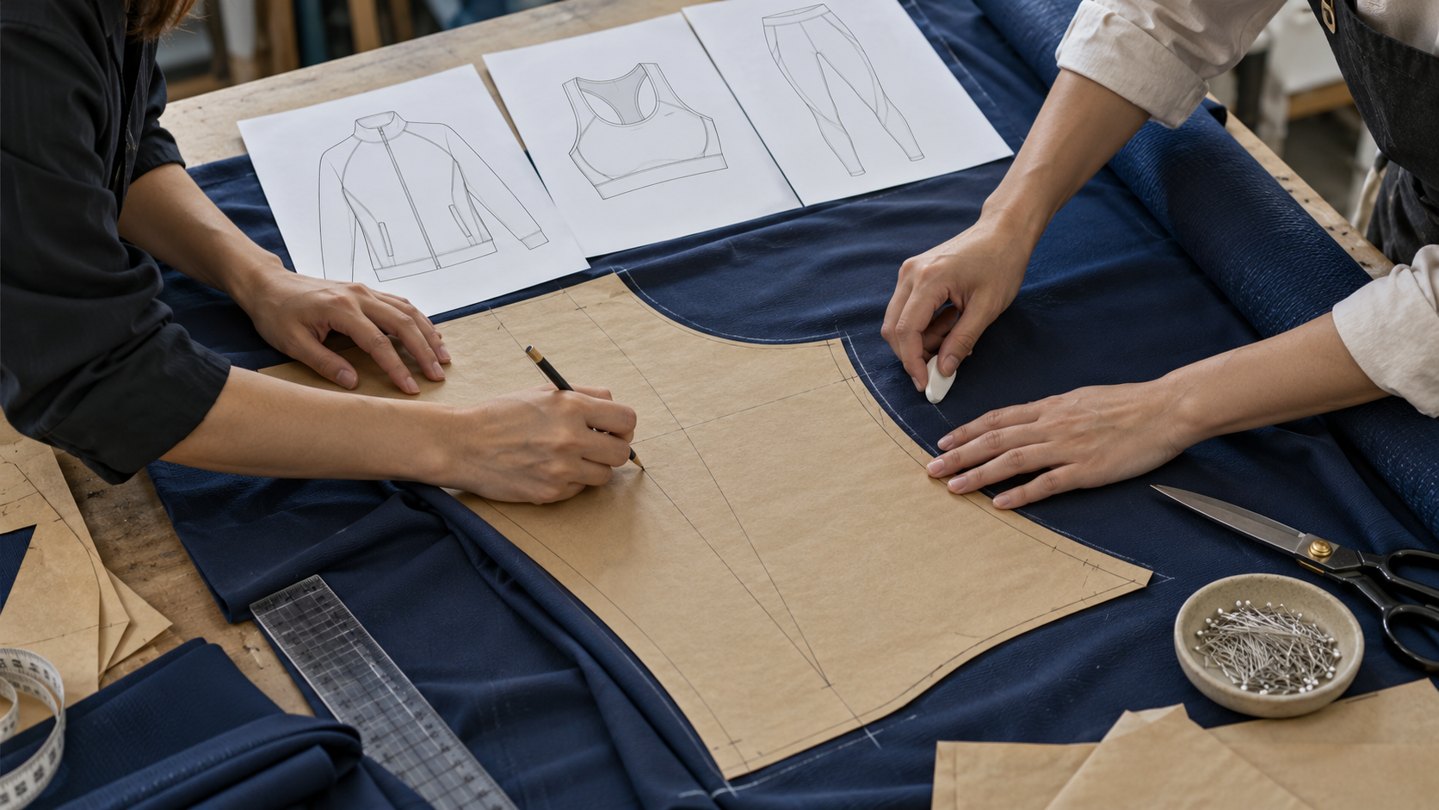
    Garment developers tracing a paper pattern on blue fabric during clothing sample development

    A sample is useful when it answers a defined production question. Does the pattern create the intended shape? Does the garment fit the agreed body measurements? Can the production line repeat the result using the ordered materials? Combining all three questions into one informal approval makes it difficult to locate the cause of a later failure.

    At Sportxia, we recommend a dated approval record for each clothing sample stage. The route is tech pack → prototype → fit revisions → pre-production (PP) → top of production (TOP) → shipment. Salesman samples and size sets sit alongside this route when the sales channel or size range needs them. Use the checklist below to keep development, commercial decisions and bulk readiness connected.

    To place sampling within the wider process, see our apparel product development guide covering the initial brief, materials, costing and production release.

    What to Prepare Before Sampling Begins

    Clothing sample brief, fabric swatches and production records

    A brief the sample room can use

    • Product purpose: customer, sport, movement and required coverage or compression.
    • Commercial scope: target FOB price and intended quantity. A 100-unit trial and a 5,000-unit repeat programme may need different material and setup choices.
    • Visual priorities: identify required construction details separately from optional styling.
    • Branding: current vector artwork, label copy and decoration positions.

    People, tools and records

    • Adobe Illustrator or equivalent vector files, plus an Excel/Google Sheets specification.
    • A fit model or dress form with recorded body measurements and a tailor’s tape.
    • One master version register or PLM system, with an assigned buyer approver.
    • A named factory contact who can coordinate patterning, material sourcing and sewing.

    Define the base size, chemical requirements, fiber labeling, care information and country of origin before ordering labels. Review the relevant scope of OEKO-TEX STANDARD 100 where it forms part of your material specification. Agree suitable confidentiality terms before sharing protected graded patterns or vector artwork.

    Sampling Timeline Checklist

    Download an editable CSV with stage owners, timing ranges, approval evidence and status columns. Open it in Excel or Google Sheets and enter your project dates.

    Download Sampling Checklist (CSV)

    Step 1. Build the Time & Action Calendar

    Start with your warehouse or launch deadline and work backward through production, approval, transport and sample reviews. Give each task an owner, target date, actual date and status. Record what the next task depends on, so a delayed trim approval can be distinguished from a delayed pattern.

    The calendar should show decisions as well as factory work. For example, “fit sample received” and “buyer comments returned” are separate milestones. The factory cannot revise the pattern while the buyer’s comments are still unresolved.

    A useful status system

    Use Not started / In progress / Awaiting buyer / Awaiting material / Approved / Revision required. Add the unresolved issue and its owner. A green date with an outstanding fabric substitution is not a cleared production gate.

    Step 2. Put Three Approval Gates on the Calendar

    These three checkpoints keep the project moving in a controlled order. Define what evidence closes each gate and which work may proceed in parallel while it remains open.

    1. Gate 1 — technical brief released: freeze the agreed BOM and tech-pack version, such as TP_v1.0. List unresolved options instead of letting them become assumed approvals.
    2. Gate 2 — fit accepted: approve the pattern against measurements and movement checks. A 3D review can support early decisions; retain the agreed physical reference when material behavior and construction require physical confirmation.
    3. Gate 3 — PP accepted: review the pre-production garment made with the ordered bulk materials and intended production methods before releasing mass cutting.

    Label the retained fit reference or counter sample clearly. It controls fit; the approved PP garment connects that fit to bulk materials, trims and production settings. Keep both when they establish different decisions.

    Step 3. Assign Owners and Realistic Durations

    The factory manages its pattern room, sourcing, sewing and sample dispatch. The brand supplies complete instructions and consolidated feedback. A courier service or nominated logistics contact manages the delivery leg. Put a named person against each responsibility.

    Sample-stage planning durations
    Sample-stage planning durations
    ActivityOwnerPlanning rangeTypical hold
    Prototype / 3D reviewFactory7–14 daysIncomplete BOM or unresolved construction
    Fit reviewBrand2–5 daysBuyer comments not consolidated
    Sample revisionsFactory7–10 daysChanges outside the agreed brief
    Courier deliveryLogistics contact3–5 daysAddress, documentation or customs issue
    Pre-production sampleFactory10–14 daysFinal fabric or trim not available

    These ranges are planning inputs, not a promise that every activity can run simultaneously. Add 2–4 weeks when custom dyeing or knitting requires it. The broader development allowance is 30–60 days from a usable tech pack to production approval, with the specific plan depending on materials, revision rounds and delivery.

    Sportxia’s advice: revise the launch plan when a critical sample fails. A short deadline does not resolve a failed fit, unapproved colour or missing component.

    Step 4. Make the Tech Pack Usable at the Cutting Table

    Technical flats, seam examples and sportswear material references

    A useful technical package tells a pattern maker and sewing operator the same story. Export a controlled PDF for review, while retaining editable artwork and measurement files. State which documents are included in the PO; a technical file does not become a complete contract merely because it is called a tech pack.

    1. Front and back flats: name the components and show seam placement, pockets and decoration positions.
    2. Points of measure: define the base-size measurements and how each point is measured, including relaxed or stretched condition.
    3. Grading: document size-to-size changes. A +2 cm example is a rule for a named measurement, not a value to apply to every dimension.
    4. Bill of materials: identify fabrics, trims, elastic, labels, packaging and thread. If the construction calls for Tex 40, make that designation explicit.
    5. Colourways and artwork: provide vector files, positions and a physical colour reference supported by the Pantone colour system.

    Write the construction rather than a quality adjective. Examples include a 4-needle, 6-thread flatlock construction or topstitching positioned 3 mm from a specified edge. A material description such as 280 GSM cotton/spandex with a carbon-peached finish still needs composition, tolerances, performance requirements and an approved hand-feel reference.

    Build and check these pages with our sportswear tech pack checklist and build guide, including a downloadable review checklist and editable template for recording the current specification before the next sample round.

    Step 5. Approve Materials and Understand the Sample Fee

    Evaluate materials before using repeated fit rounds to solve a fabric problem. Stretch, recovery, drape and thickness affect the pattern. If an early prototype uses substitute cloth, mark that limitation and schedule another review in the intended material.

    A sample unit can cost 3–5× the intended bulk unit price because pattern work, small material purchases and machine setup are spread over very few garments. Ask Sportxia to itemize development and revision fees, and state whether an agreed amount will be credited against a qualifying bulk order.

    What changes sample-development cost
    What changes sample-development cost
    Cost driverLower complexity optionHigher complexity option
    Fabric sourceAvailable stock / market fabricCustom knitted or woven material
    Colour developmentExisting stock-card colourCustom lab dip or Pantone match
    Garment constructionStandard seam arrangementAdditional panels, lining or quilting
    ComponentsAvailable standard zipper or buttonCustom-molded puller or toggle

    Approve three physical reference groups

    • Fabric swatches: examine drape, opacity, hand feel, composition and the specified mass per unit area. ASTM D3776/D3776M covers fabric mass-per-area methods; agree the applicable edition and test conditions with the laboratory.
    • Lab dips and print strike-offs: compare physical samples to the approved standard under consistent agreed lighting. A video can show movement and texture, but does not replace physical colour approval.
    • Trim cards: operate zippers, snaps and other components and assess elastic against the intended performance.

    Build a separate development budget for the agreed sample rounds, setup work, testing and delivery. Our step-by-step clothing sample cost guide shows how to compare itemized quotations and track conditional bulk-order credits without confusing them with the cash needed for sampling.

    Step 6. Review Proto 01 for Structure and Feasibility

    Reviewing the shape and construction of an initial clothing prototype

    The first prototype establishes whether the design can be made as intended. Confirm silhouette, panel relationships and assembly before spending time on small cosmetic details that are already scheduled for later materials.

    1. Measure flat first: compare chest, waist, inseam and other required points to the current specification. If the agreed tolerance is 1.0 cm, a deviation greater than 1.0 cm requires resolution before the fit decision. Use the actual point-specific tolerance rather than treating that example as a universal rule.
    2. Review on the agreed body or form: observe balance and movement. A remote review should include a consistent camera angle and the measuring method.
    3. Build a photo record: front, back, side and close-ups of tension areas such as the armhole or crotch.
    4. Return located instructions: identify the seam or measurement by name and quantify the change, such as raising a specified hem by 2 cm.

    Put every comment into one revision log and rank it as required for approval or a preference for discussion. Changing numerous unrelated variables in the same sample makes the result difficult to interpret.

    Step 7. Verify Fit and Release the Pattern

    Technician checking the sleeve of an activewear fit sample

    Use a consistent fit model or dress form and retain its body measurements. ASTM D5219 provides terminology for body dimensions used in apparel sizing; it does not specify your brand’s finished-garment fit or certify that a sample fits.

    For every round, measure the garment, assess fabric torque and hand feel, then review the intended movements. Sportswear may require sitting, reaching, stretching and squatting. Note waistband roll, pressure, coverage and restriction separately so the pattern team can identify the cause.

    For a repeatable movement screen and a clearer cause-to-correction record, follow our guide to diagnosing and fixing activewear fit issues. Use the observations to brief the next fit round before releasing the pattern.

    Write a location, direction and value

    Instead of “the sleeve is too long,” identify the sleeve and measurement point, specify a 1.5 cm reduction and state whether the cuff position or other points must stay fixed. Save the change from Rev A to Rev B in the measurement chart and photo record.

    Concentrate on the 3–5 highest-impact structural issues in a round when that is enough to establish a stable direction. If several variables must change together, record the reason and which earlier approvals need to be repeated. Retain the signed, tagged counter sample as the fit reference and archive its associated specification.

    Approval output: a final fit comment pack, current measurements, locked pattern version and an identifiable approved reference garment.

    Step 8. Choose Size Sets and Sales Samples for Their Jobs

    Three graded jacket samples and finished sales-sample garments

    After base-size fit approval, two questions remain: does grading work across the range, and is the product ready to represent the collection to buyers or customers? Use the sample types that answer those questions.

    1. Check grading with a size set

    Review the full planned size range or an agreed representative run such as XS, M and XL. If the range includes XXL, decide whether that endpoint needs its own physical check rather than assuming a Medium pattern proves it. Measure each point against the grading chart and assess pocket position, trim proportion and movement across sizes.

    2. Order the right sales or photo sample

    An SMS — salesman sample — or dedicated photo sample should use the final approved fabric, colour, trims and finishing needed to represent the goods being sold. A fit sample with substitute components is a development record, not automatically a suitable e-commerce product.

    Choose the sample for the decision
    Choose the sample for the decision
    Business needSample typeWhat it establishes
    Wholesale / retail sellingSalesman sample (SMS) runFinished collection presentation; a 6-month selling lead may apply
    Direct-to-consumer contentFinal-material photo sampleProduct photography and campaign reference
    Production size consistencySize set / agreed size runPhysical verification of grading before bulk cutting

    A wholesale calendar may need the collection shown 6 months before launch; agree the actual selling schedule with the buyer. A lean direct-to-consumer launch can request one final-material photo sample rather than an unnecessary full SMS collection, while size verification and production approvals continue separately.

    Step 9. Approve PP, Then Check the Production Output

    Real garment workshop from the user’s factory photo library

    The PP sample connects the approved pattern to bulk fabric, final trims, decoration and the intended production machinery. Record how it was made, any remaining difference from the bulk process and whether that difference affects the approval.

    Run the production-readiness checks

    • Laundering and torque: the planning example uses 3–5 wash-and-dry cycles and a 5% shrinkage rejection limit. Agree the product-specific limit, cycle conditions, measuring method and recovery period; also inspect seam twisting. Choose suitable AATCC methods for the property being tested.
    • Stitch consistency: record the approved stitches per inch. A PP setting of 12 SPI and a bulk setting of 10 SPI is a process mismatch to investigate. Stitch count alone does not prove whether the seam will fail.
    • Component operation: a 50-cycle zipper check can be an agreed development screen. Test elastic recovery and printed-area stretch with defined conditions and acceptance criteria.
    • Labels and packaging: verify that the actual product supports the care instructions and matches approved label and carton records.

    Keep three checkpoints after sample approval

    1. In-line review: an agreed checkpoint at 20% sewn can reveal cutting or construction drift while correction is still manageable. Record the inspected quantity and the affected lot.
    2. TOP — top of production: inspect representative first units from the actual production line. Compare material, measurements, workmanship and hand feel to PP; hold the affected process when the result differs materially.
    3. Final inspection: apply the agreed ISO 2859-1 or ANSI/ASQ Z1.4 plan before the contractual balance-release milestone. Define the lot, level, severity, defect classes and acceptance criteria.

    Match the bulk BOM to the approved PP references. A change in zipper, thread, fabric lot or print process needs a recorded review, rather than a silent replacement. Ask for TOP measurement video linked to an identifiable production lot.

    PP approval email — copy and complete

    Subject: PP decision — [style / version / sample tag]
    
    Reviewed sample: [tag, date, colour, size]
    Linked documents: [tech-pack version, BOM, material approvals]
    Decision: [APPROVED / APPROVED WITH LISTED CONDITIONS / REVISE]
    
    Approved references: [fit, material, trim, artwork and packaging IDs]
    Open conditions: [item, owner, completion evidence and due date]
    Cutting release: [permitted / held until conditions are cleared]
    In-line checkpoint: [quantity or progress point, checks, report owner]
    TOP approval: [sample count, lot identification and required evidence]
    Final inspection: [standard, level, defect criteria and release process]
    
    No unapproved substitution is permitted. Please confirm receipt,
    the production version in use and the agreed checkpoint dates.
    
    [approver / role / date]

    Troubleshooting a Sample That Is Not Moving Forward

    The design differs from your intention

    Check: missing construction callouts or conflicting references. Next action: compare the sample with the relevant detail drawing, identify the exact difference and write a measurable change in millimetres. Separate required matching details from details where the factory may propose alternatives.

    Each fit revision creates a new problem

    Check: simultaneous changes in model measurements, pattern and material. Next action: return to the last understood version, fix the base-size reference and change the identified variable. Log what is being held constant.

    The PP garment differs from the fit reference

    Check: material behavior, seam settings, operator method and production equipment. Next action: hold the affected approval, reconcile the construction and repeat the relevant check on the production process. Use TOP to confirm the correction reached the line.

    Remove the administrative bottlenecks

    Run lab-dip and trim decisions alongside pattern development where dependencies allow. Put comments from email, WhatsApp or WeChat into one controlled log. If instructions are ignored for two consecutive rounds, pause and investigate capability, communication and outsourcing before committing the bulk deposit; that pattern alone does not prove which cause applies.

    Questions About Clothing Sample Stages

    Why can a sample cost 3–5 times the bulk unit price?

    Development pays for pattern work, sourcing small quantities, setup and review across very few units. Ask for the fee, included revisions and material charges in writing. Where Sportxia agrees a sampling-fee credit against a bulk order meeting the applicable MOQ, the quotation should identify the credit and conditions.

    What is the difference between PP and TOP?

    PP is reviewed before the bulk-production release and establishes the approved production reference. TOP is taken from actual early production to confirm that the line is following that reference. Retain both records; approving PP does not eliminate production inspection.

    Can a fit sample be used in a product photoshoot?

    Use it only if it actually represents the final product and is separately approved for that purpose. Substitute fabric, temporary trim or unfinished labels can misrepresent the goods. A final-material photo sample or SMS provides a clearer marketing reference.

    How long should the complete sample programme take?

    Use 30–60 days as a planning band. Prototyping may use 7–14 days, material sourcing 5–10 days and PP development 10–14 days, with review, revision and courier time added or overlapped only where feasible. Custom knitting or dyeing can add 2–4 weeks. A programme below 30 days needs an explicit readiness and risk review rather than skipped approvals.

    Finish With a Production Record You Can Reuse

    A completed sampling programme leaves more than a good-looking garment. You should have a released technical file, approved materials, a tagged fit reference, PP approval and a production inspection plan. Each record should identify the product version it controls.

    Build one product archive containing the signed decisions, revision log, material and test records, reference photographs and retained physical samples. That archive gives Sportxia and your buying team a common starting point for the first shipment and the next reorder.

    FACT CHECKED&EDITORIAL GUIDELINES

    Reviewed October 26, 2026. Timing bands, construction examples and screening thresholds are planning references to confirm against the product and order specification. Contact the content team about a correction.

    READY TO START YOUR BRAND?

    Give Your Next Sample a Clear Production Brief

    Discuss materials, fit revisions and approval dates with Sportxia.

    Get Your Sampling Quote
  • Sportswear Manufacturers China vs Europe: Which Supply Chain Will Grow Your Brand?

    Sportswear Manufacturers China vs Europe: Which Supply Chain Will Grow Your Brand?

    SPORTXIA
    Inquire Now
    HOW-TO-GUIDE

    Sportswear Manufacturers China vs Europe: Which Supply Chain Will Grow Your Brand?

    China gives growing sportswear brands a stronger route to competitive unit costs, technical fabrics and scalable production. Europe earns its premium when proximity and short EU replenishment windows matter more than factory price.

    Real garment production workshop with sewing operators and overhead garment handling rails
    A production-floor view from Sportxia’s real factory photo library.

    For a brand building repeatable performance collections, our recommendation starts with China. An integrated textile network gives you more ways to control the fabric, construction and production cost together. At Sportxia, we connect those decisions before bulk cutting, rather than asking you to solve material sourcing, customization and delivery separately.

    Europe remains a practical option for a different operating model: premium positioning, frequent local fittings and short-distance replenishment into European distribution. Portugal, Italy and Turkey belong in the sourcing comparison, but they do not share one legal or customs regime. Portugal and Italy are EU members; Turkey requires its own origin and market-access checks.

    The useful question is not which region has the cheapest sewing. It is which route leaves your brand with the best total landed cost, approved product and available inventory. Start with the comparison below, then test it against your order quantity, destination and selling calendar.

    • Choose China when technical materials, customization, repeat orders and scale drive your margin.
    • Choose Europe when local development and short delivery lanes are worth paying more for.

    If China matches your sourcing requirements, use our China sportswear supplier comparison to build a shortlist, then request like-for-like quotes before selecting a factory.

    China vs Europe: The Numbers That Shape Your Order

    These planning inputs compare Guangdong/Zhejiang production with Portugal/Italy/Turkey sourcing. Sportxia’s order-development benchmarks are shown separately from regional cost and transport assumptions.

    Table 1 / 2026 cost and logistics planning comparison
    2026 cost and logistics planning comparison
    Cost / route inputChina: Guangdong / ZhejiangEurope: Portugal / Italy / Turkey
    Hourly labor-cost range$3.50–$4.50 / hour$8.00–$14.50 / hour
    Minimum-wage reference in comparison†$325 USD / month$900+ USD / month
    CMT proportion of FOB value15%–20%30%–40%
    Freight-budget reference†$3,500+ ocean / WCI reference$1,600–$2,500 road reference
    Transit: US East Coast30–35 days12–15 days
    Transit: EU destination35–45 days3–6 days
    Airfreight transit reference5–8 days1–3 days
    US tariff considerationSection 301 exposure; verify HTSTrade / GSP eligibility to verify; not automatic
    Table 2 / MOQ, development and production planning
    MOQ, development and production planning
    Order stageSportxia China programmeEuropean comparison
    Available-base / printed opening order50 units100–200 units
    Custom cut-and-sew opening order100–200 units500+ units
    Sample development7–12 days14–21 days
    Bulk production25–35 days40–55 days
    Repeat-order planning3 weeks6 weeks
    Table 3 / Inspection and compliance comparison
    Inspection and compliance comparison
    Approval checkpointChina comparisonEuropean comparison
    AQL inspection targetAQL 2.5; arrange independent checksAQL 1.5 comparator; confirm plan
    Chemical requirementsGB 18401 plus destination requirementsREACH for EU-market requirements
    Certification / audit referencesISO 9001; BSCIGOTS; OEKO-TEX STANDARD 100

    Comparison basis: regional wage and freight figures are budgeting inputs, not current statutory wage schedules or live quotations. Freight lanes, shipment sizes and transport modes differ. Transit excludes unlisted production and clearance time. AQL figures are inspection targets in this comparison, not legal standards automatically applied by a region. Certification is facility/product-specific. US trade-preference or GSP eligibility must be checked; European origin does not automatically mean duty-free US entry.

    Sportxia’s reading: the comparison supports roughly a 3× labor-cost advantage for China, with the broader European cost range reaching 3–4× Asian labor costs in some sourcing cases. That advantage matters most when your materials, approved sample and production slots are already aligned. It does not remove your destination’s testing or import obligations.

    Five Decisions That Matter More Than the Country Label

    Use these five checks before comparing suppliers. Each one connects a sourcing choice to money, development time or the consistency of your next shipment.

    1. Total Landed Cost: Price the Finished Delivery

    Real factory sewing floor from the company photo library

    A low factory quote is useful only when the rest of the delivery is priced. Build one worksheet covering ex-factory goods + duties + freight + testing + rework, with the same currency, destination and responsibility boundaries for both routes. FOB means Free on Board; it is a trade term, not another name for factory cost.

    Keep the reference production-cost illustration in view: $14.00 for a Portugal-made compression legging against $6.50 in Guangdong. It demonstrates the possible manufacturing gap; it should not be blended with another supplier’s scope or assumed to be a binding quotation.

    Working example: 1,000 nylon/spandex leggings

    China route

    At $6.50/unit, goods cost $6,500. A hypothetical ~20% duty adds $1,300. If the combined freight, testing and other landed additions are $2,700, the total becomes $10.50/unit, or $10,500. The shipping scenario ties up goods for 40 days; a Q4 freight increase changes the result.

    Europe route

    The separate comparison quote is $13.50/unit, or $13,500 before any charges excluded from that quote. Shorter local transport may reduce the delivery bill. Use a zero-duty assumption only when the actual origin, destination and applicable programme support it.

    Check classification and rates in the USITC Harmonized Tariff Schedule, review USTR’s Section 301 information, and use the Drewry World Container Index to monitor freight direction. The ~20% example is a calculation input, not a tariff determination for every garment.

    Our call: China is the stronger margin route for a planned order of 500+ units when the landed-cost worksheet includes the real import and freight exposure.

    2. Lead Times: Separate Development From Restocking

    Sportswear sample development and shipment planning

    A new design and an approved reorder are different jobs. Development depends on decisions: fit comments, fabric availability, trim approvals and specification changes. Replenishment depends on material reservations and booked line capacity. Comparing a first sample with a repeat shipment hides the real bottleneck.

    A scalable China programme can move from 500 to 50,000 units when the lines and materials are reserved. But two sample loops of 10 days each can consume the time you intended to save. Sportxia’s 7–12-day sampling and 25–35-day bulk-production planning ranges begin with a complete brief and ready materials; do not add transit to them silently.

    For an EU-focused launch, a local fitting visit can settle questions quickly. The short-lane example uses 2–4 days by truck to an EU distribution centre, compared with 30+ days at sea from Asia. The broader route assumptions remain in Table 1; the lane and service must match your actual warehouse.

    Our call: Europe has a proximity advantage for rapid local development; China becomes compelling when an approved product needs dependable production scale and planned replenishment.

    3. MOQ and Flexibility: Match the Run to the Material

    Small batches of sportswear prepared for flexible opening orders

    Do not let a low garment MOQ hide an expensive fabric commitment. Ask separately about units per style, units per colour, available base fabrics, custom dyeing, decoration and the minimum purchase for each trim. A small sewing run is only genuinely flexible when those upstream quantities also work.

    The historical China benchmark of 1,000+ units per style is no longer the only model. Sportxia’s stock/print entry point is 50 units, with 100–200 units for custom cut-and-sew programmes in the table. Micro-run production in the 50–200-unit band gives a brand a route to test a collection before moving into a larger commitment.

    European boutique runs in the 100–300-unit range can also work when materials are available. Distinguish those stock-supported runs from the 500+ custom cut-and-sew benchmark. A mill may decline to custom-dye just 50 yards, whichever sewing location you choose.

    Quantity decision

    • Demand test: 50–200 units. Use available fabrics and a narrow colour range. A nearby European supplier can suit local iteration; Sportxia’s micro-run route offers an alternative when you also want China-based sourcing.
    • Established demand: 2,000+ units. Secure the mill allocation and repeat-production plan. Ask how the supplier would handle a request to triple production, and which approvals would have to be repeated.

    Our call: choose an agile China programme when you want the small opening run and the later scaling path planned together.

    4. Performance Fabrics: Specify the Material, Then Choose the Route

    Compression knit, rib and mesh performance fabric swatches

    For activewear, a sewing quotation without a fabric specification is unfinished. Record composition, weight, construction, recovery, coverage, colour and finishing before approving a base. A material that feels right on a swatch can still behave differently across a stretched panel or after laundering.

    China’s technical supply network offers combinations such as Nylon 6.6, high-elastane knits and engineered rib structures, alongside sublimation, laser cutting and bonded construction. Put those options against your actual performance brief rather than buying an unspecified “premium” fabric.

    European sourcing can be attractive for organic cotton, merino wool and traceable recycled-polyester programmes. Yet the sewing location alone does not establish where the yarn was made, where the fabric was knitted or where finishing happened. Ask for each stage when local-material sourcing is part of the brand promise.

    Explore Sportxia’s cycling apparel, swimwear and printing methods to connect the material choice to the product and decoration process.

    Our call: China offers the stronger starting network for varied technical performance specifications, particularly when fabrics and specialist processes need to move through one coordinated brief.

    5. Ethical Manufacturing: Make Verification Part of the Order

    Real garment production workshop with sewing operators from the company photo library

    Manufacturing country is not an audit result. A recognised logo, a clean showroom and an attractive price should all lead to document checks, not replace them. Apply the same identity, site, validity and scope checks to suppliers in both regions.

    European production operates within the requirements of the country concerned; EU chemical rules are relevant to products placed on the EU market, including imports. A China-based supplier must therefore work to the destination requirements in the approved brief, not treat domestic GB 18401 compliance as an automatic replacement for REACH.

    • Chemicals: verify the OEKO-TEX certificate number through the official Label Check, then check that the relevant product and validity period are covered.
    • Recycled content: review the applicable GRS scope and transaction documentation for the specific batch. Use Textile Exchange’s GRS guidance rather than relying on a website badge.
    • Labor and site identity: request the relevant SMETA or BSCI report and corrective actions. Cross-check the declared production address, including map or Google Earth context, and establish which processes may be subcontracted.

    Our call: proximity can make European checks easier to arrange; verified site records, approved samples and in-process evidence make a China programme commercially workable.

    China: The Stronger Platform for a Collection That Must Scale

    China’s best case is a coordinated production programme: local performance materials, specialist processes and a repeatable approval standard. For Sportxia, the commercial objective is to keep the approved specification connected to the line that actually makes your order.

    • Connected sourcing: investigate the practical 50 km supplier-cluster advantage instead of comparing sewing rates in isolation.
    • Technical options: assess high-gauge seamless knitting, laser-bonded hems and the particular machines your garment needs.
    • Volume efficiency: use a stable material specification and repeatable construction to protect unit cost as orders grow.
    • Sample-to-bulk control: retain the sealed approval sample, measurement tolerances and agreed inspection points so a strong prototype becomes a consistent shipment.
    • Cash-cycle planning: budget for a 30–45-day ocean leg in the relevant route scenario, plus the other lead-time elements your order actually needs.

    Europe: Pay for Proximity Where It Changes the Business

    European production can justify a higher factory bill when nearby development, frequent restocking or an origin-led brand position produces a measurable return. Test the benefit against your warehouse location and reorder pattern instead of treating “Made in Europe” as a complete sourcing specification.

    • Traceability access: shorter travel and supply routes can make site visits and document follow-up easier.
    • Local replenishment: a nearby road route can support smaller deliveries into EU stockholding.
    • Boutique rhythm: frequent, limited runs can suit a premium collection using available materials.
    • Capacity reservation: at 10,000+ units (10k+), ask for a line plan and material commitment rather than assuming capacity will expand on demand.
    • Cost recovery: the comparison’s 3–4× labor-cost premium needs to be supported by the selling price, service benefit or lower inventory exposure.
    Production note: examine the origin of the yarn and greige fabric as well as the cutting, sewing and finishing locations. A shorter final shipment does not prove that the whole material route was local.

    A Practical Certification and Greenwashing Checklist

    Turn each claim into a record your team can file against the purchase order. This checklist applies on either side of the sourcing decision.

    1. ISO 9001: match the legal entity, manufacturing address, scope and validity to the production site being assessed.
    2. GRS: check the applicable chain of custody and batch-specific transaction certificate, rather than accepting a generic recycled-content logo.
    3. OEKO-TEX STANDARD 100: use the official checker and review the covered product group and certificate validity.
    4. SMETA/BSCI: read the findings and corrective-action plan, including follow-up evidence for issues previously identified.
    5. Order execution: approve the pre-production sample and require in-line sewing photos or video before final-payment release under the agreed terms.

    Specify defect classifications and the inspection plan. AQL 2.5/4.0 can be part of an agreed protocol; the table’s AQL 1.5 comparator is a different target. Neither target means every unit was inspected. A claimed defect reduction of up to 22% should be evaluated against a recorded baseline and follow-up period, rather than used as a guaranteed outcome for a new collection.

    Our Recommendation: Choose the Supply Chain Your Growth Needs

    If technical sportswear is your core business and repeat volume is the goal, start the conversation with a China manufacturing partner. Sportxia’s role is to bring fabric sourcing, fit development, customization, inspection and shipment planning into one order brief.

    Choose China when…

    • A proven SKU needs production capacity and competitive unit economics.
    • Teamwear, sublimated kits or technical activewear require coordinated customization.
    • Your team can manage sample sign-off, inspection checkpoints and the longer international freight lane.
    Explore teamwear manufacturing

    Choose Europe when…

    • Your premium positioning depends on a verified local production story.
    • Frequent physical fit reviews and a nearby EU replenishment lane are worth the factory-price premium.
    • Small, frequent runs fit the material availability and capacity of the supplier you have selected.
    Compare your sourcing brief with Sportxia

    Use a Hybrid Route When the Collection Has Two Jobs

    A single sourcing country does not have to serve every SKU. You can develop or test a limited run close to your market, then transfer the approved tech pack and physical references to China for a repeatable volume programme. Treat the transfer as an approval stage: repeat the fit, material and construction checks at the receiving factory.

    Split the line deliberately

    Keep time-sensitive hero products near the selling market when speed supports their price. Put stable core basics on a planned China production schedule, where repeat materials and scale can support the collection’s overall margin. Record which supplier owns each stage and how a replenishment decision is triggered.

    Build Your Next Sportswear Supply Chain With Sportxia

    Bring us your target garment, opening quantity, fabric requirements, destination and launch date. We will help structure the manufacturing brief so you can compare material choices, sampling, production and delivery on the same basis.

    FACT CHECKED&EDITORIAL GUIDELINES

    Read Sportxia’s fact-checking process and editorial guidelines. Company planning figures and worked cost scenarios are distinct from independent market statistics. For a correction, email our content team with the article link and supporting records.

    READY TO START YOUR BRAND?

    Turn Your Sourcing Decision Into a Production Plan

    Discuss fabrics, samples and your next production run with Sportxia.

    Get Your Free Quote
WhatsApp