Technical Designer vs Fashion Designer: Who Should Your Activewear Brand Hire First?

Match your first design hire to the work blocking your launch: a clear collection concept, a reliable fit, or a specification the factory can manufacture.
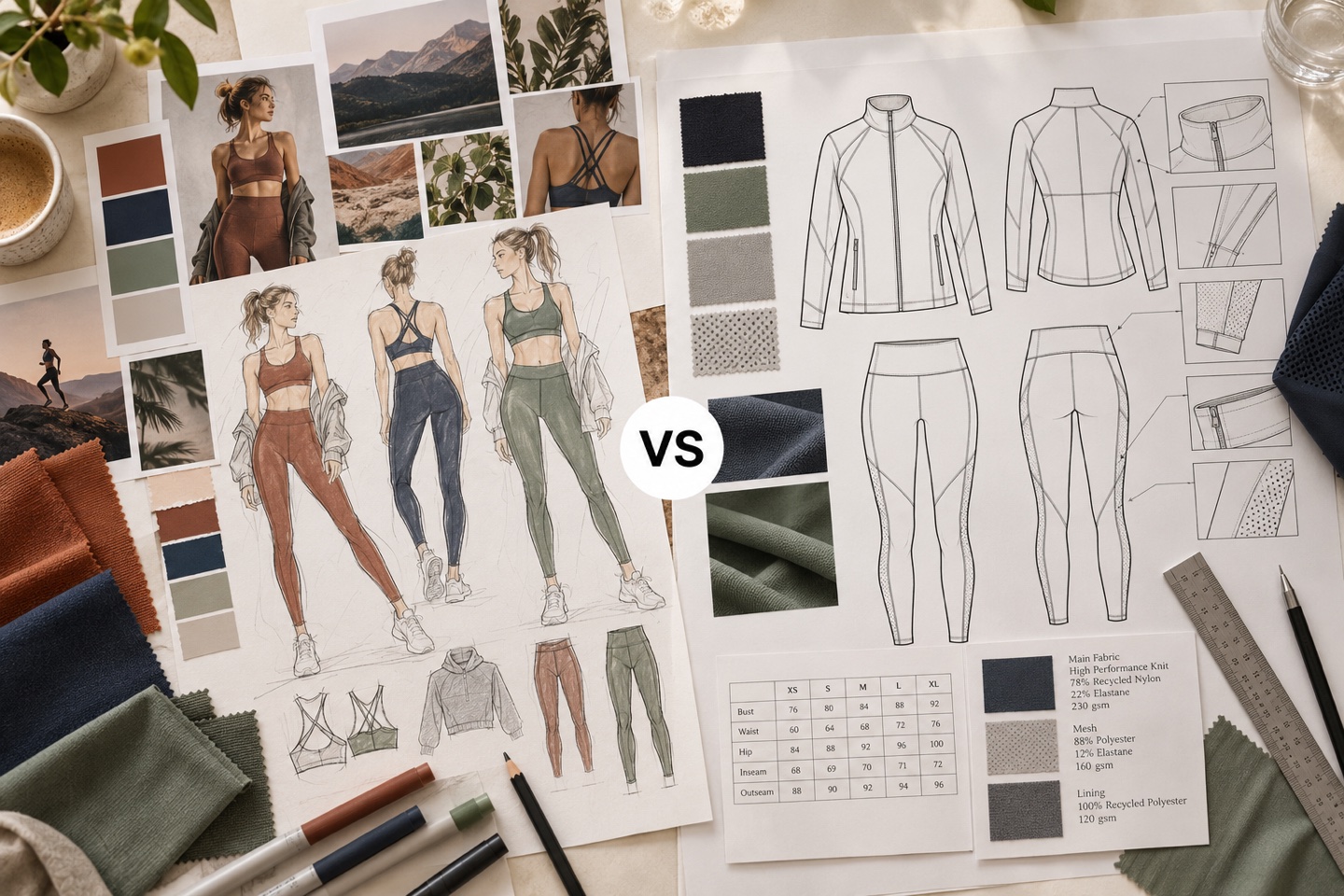
The first design hire should remove the biggest obstacle between your product idea and a repeatable garment. For an activewear founder who already knows the intended look, that obstacle is often fit, construction or the quality of the factory handover. A technical designer owns those decisions. A fashion designer gives a collection its visual direction and commercial identity.
The first-hire recommendation
Sportxia’s working recommendation is to prioritise a technical designer for about 90% of activewear startups we encounter—particularly teams that already have references or sketches. This is our experience-based judgement, not a market-wide hiring statistic. If your brand has no defined aesthetic or collection concept, start with a fashion designer, then arrange technical development before sampling.
One useful internal comparison involved two routes into sampling. A concept-only submission needed follow-up on fabric weight, components and construction. A released technical file containing Nylon 6.6 material references and graded measurements supported a sample in 10 days. That project result is a practical example, not a delivery guarantee for every new style.
Throughout this guide, “technical designer” and “fashion designer” describe responsibility, rather than rigid limits on what an individual can do. Some people cover both. The US Bureau of Labor Statistics also describes production and material knowledge within fashion-design work. Evaluate the candidate’s actual files and experience before deciding that a title proves competence.
Ask Sportxia to review your design brief and technical-development needs.
Compare the Work, the Tools and the Hiring Evidence
Our internal review of 50+ product launches focused on a practical question: what information reduced uncertainty for the sample room? Use the following three tables to turn that question into a hiring brief.
1. Deliverables, accountability and commercial value
| Decision | Technical designer | Fashion designer | Founder value |
|---|---|---|---|
| Main output | Tech pack, graded measurements and construction records | Concept boards, palette, sketches and range direction | Choose a defined handover, not a job title alone. |
| Success measure | Agreed fit-pass target; an example brief aims for fewer than 2 revision rounds | A clear customer proposition and coherent approved collection | Track technical acceptance separately from market response. |
| Risk controlled | Material, measurement and construction errors before cutting | Weak differentiation or an inconsistent visual identity | Early technical review can expose a potential $10,000 mistake; actual exposure is order-specific. |
| Ownership period | Technical development through agreed production sign-off | Concept development through design freeze | Name the approver at each handover. |
In Sportxia’s reported project experience, technically managed development involved around 60% fewer sampling rounds than creative-only handovers. The comparison depends on starting-file quality, style complexity and material readiness. It should inform the hiring decision without becoming a promised saving on every order.
2. Software and working proficiency
| Tool or skill | Technical-design evidence | Fashion-design evidence |
|---|---|---|
| Adobe Illustrator / Photoshop | Accurate technical views and construction callouts | Original visual concepts, artwork and colour stories |
| Excel / Google Sheets | POM charts, grade calculations, tolerances and revision tracking | Range plans, colourway lists and line information |
| CLO / Browzwear | Pattern reasoning and a reproducible virtual-fit setup | Drape, silhouette and collection visualisation |
| Supplier communication | Measurable POM comments, acceptance criteria and relevant AQL knowledge | Approved design intent and clear visual priorities |
3. A focused 30-minute interview exercise
| Candidate | Short exercise | Evidence to look for |
|---|---|---|
| Technical designer | Redline one tech-pack page and write a sample fit comment | A named point, direction and value—for example, lower an armhole by 1 cm—plus the checks needed before release. |
| Fashion designer | Propose a mini capsule of 3 coordinated styles | A consistent customer, palette and silhouette story, with an explanation of how the range fits the intended market. |
Five Decisions That Separate Creative Direction From Technical Ownership
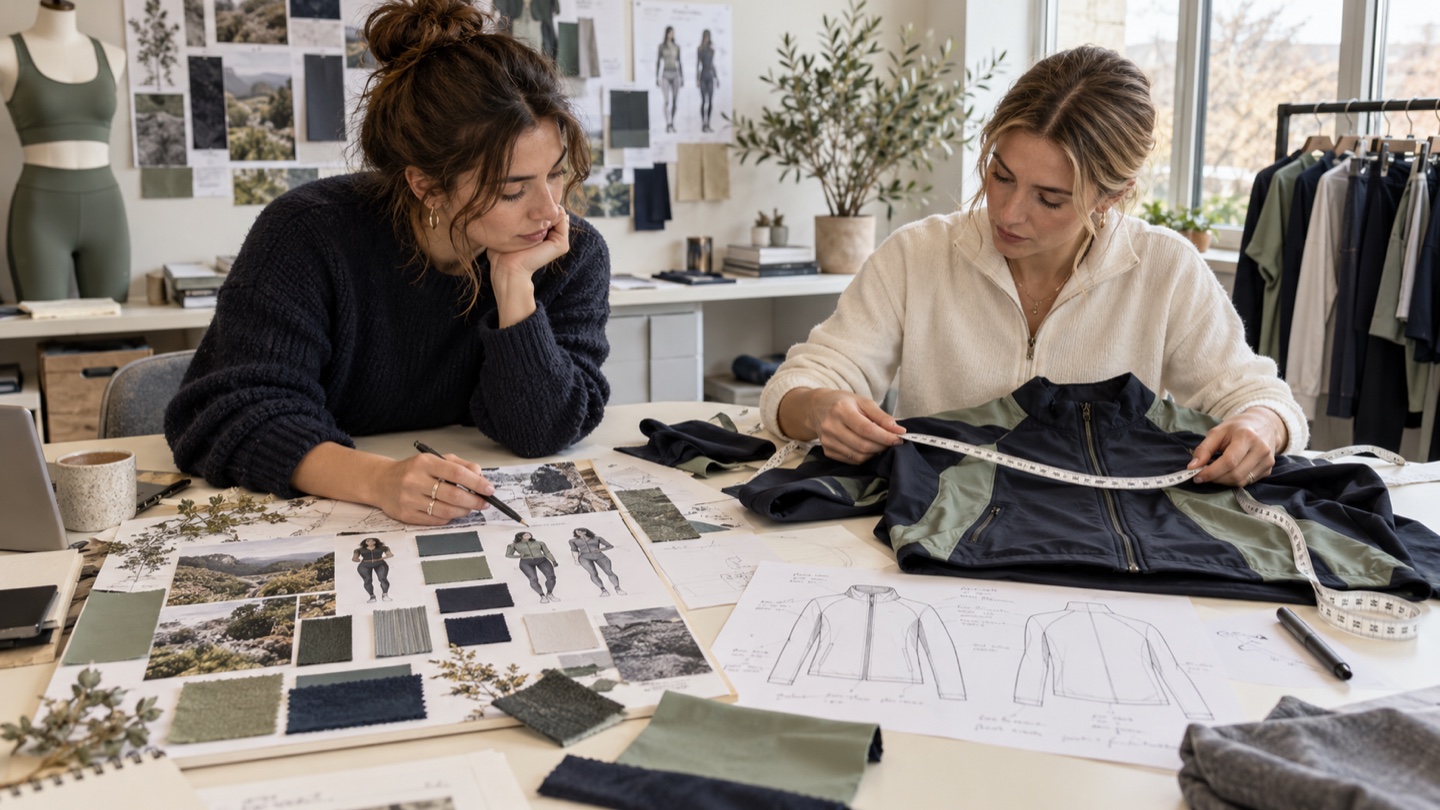
A useful hiring plan assigns each decision to someone who can finish it. Creative direction answers what the collection should communicate and why a customer would choose it. Technical ownership establishes how the intended product will fit, move and be repeated. Both require judgement; their handover needs a shared deadline and a clear approver.
At Sportxia, the practical test is whether the next person in the workflow can act on the information supplied. A cutting-room operator needs verified pattern data. A merchandiser needs an approved colour story. Asking either person to infer the other’s decisions creates avoidable rework.
1. Turn the Design Into an Executable Product File
A fashion designer should establish the customer, use occasion, silhouettes, colour relationships, artwork direction and range balance. These choices give the collection a reason to exist. A technical designer translates the approved direction into dimensions, construction instructions and a documented development history.
For a first supplier brief, specify the actual handover package instead of requesting “design support.” A production-ready file normally needs the following connected records:
- Technical flats: front, back and relevant detail views showing panel boundaries, seams, closures and decoration positions.
- Points of measure (POM): a base-size chart, measurement diagrams and a graded size range. An example file may contain 15 POM with a +2 cm grade increment at selected points. That increment describes a size-to-size change; it is not the allowed manufacturing tolerance.
- Construction specification: seam class, stitch type, thread and finishing. A 4-needle, 6-thread flatlock can be a suitable specified operation where the product and machinery support it; calling an entire garment “seamless” does not describe that operation.
- Bill of materials (BOM): fabric code, composition, weight, colour, trims, elastic and thread. For example, texturised polyester thread should be identified by its approved code and intended use, rather than substituted on appearance alone.
- Version control: the style ID, revision date, change log and linked approved samples.
A fabric description that can be tested
78% nylon / 22% spandex, 260 GSM, interlock knit is much more useful than a request for “stretch fabric.” It identifies a material construction to source and evaluate. It does not, by itself, prove opacity or compression. Assess the actual fabric colour, stretch direction, extension, recovery and garment fit before approving it for squat coverage.
During portfolio review, ask to see a revision trail. A note such as Revision 3: inseam reduced by ½ inch after fabric relaxation should link to a measured sample and a revised pattern. The valuable evidence is the relationship between an observed issue, the change made and the result—not how polished the PDF looks.
First-hire advantage: technical design when the collection concept exists but the factory still lacks an agreed specification.
Connect this handover package to material approval, sample gates, costing and production release with our apparel product development workflow.
2. Check How the Software Supports a Manufacturing Decision
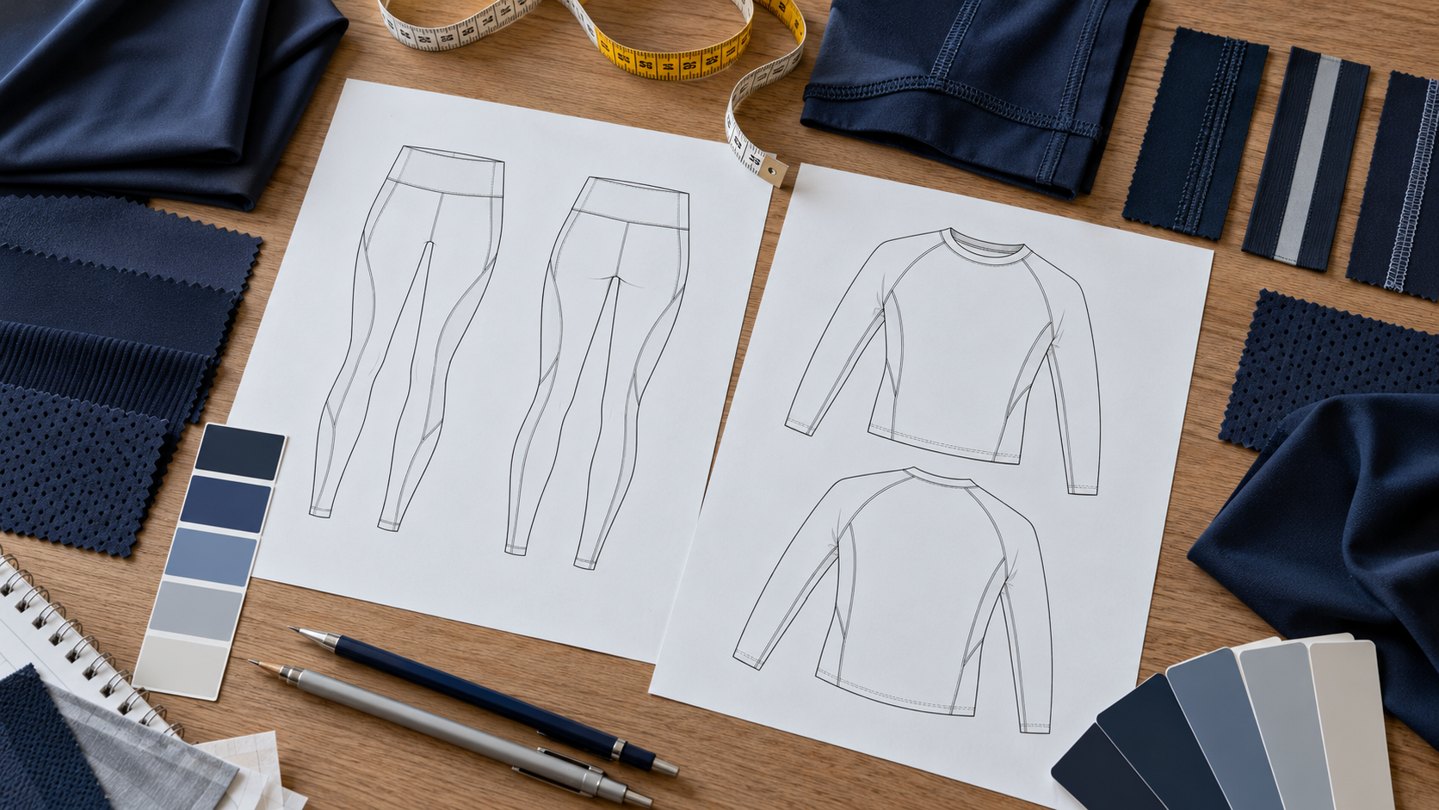
Illustrator and Photoshop can support original prints, presentation boards and technical drawings. Excel or Google Sheets can hold line plans as well as graded measurements. CLO and Browzwear can help develop virtual garments. The distinction is what the person can demonstrate with those tools, rather than a rule that reserves a program for one job title.
Ask a technical candidate to explain the assumptions behind a digital garment: the pattern version, avatar dimensions, material properties and seam settings. Ask a creative candidate to explain how a proposed palette, print scale and silhouette work across the range and at the intended selling price.
A sports-bra simulation needs an evidence trail
In an internal development example, a virtual fit review highlighted an area of concentrated strap loading. The team changed the strap arrangement before sending another physical prototype. The avoided courier-and-review loop saved approximately 2 weeks on that project. The outcome relied on a suitable digital setup; a red region on a screen is not a clinical pressure measurement.
Physical fit and movement checks still decide whether the finished bra provides the required coverage and support. A simulation can help target the next test, but it cannot validate every material property, seam interaction or wearing condition.
First-hire advantage: a technical designer who can connect digital development to verified patterns and physical samples.
3. Give Fit and Performance a Named Approver
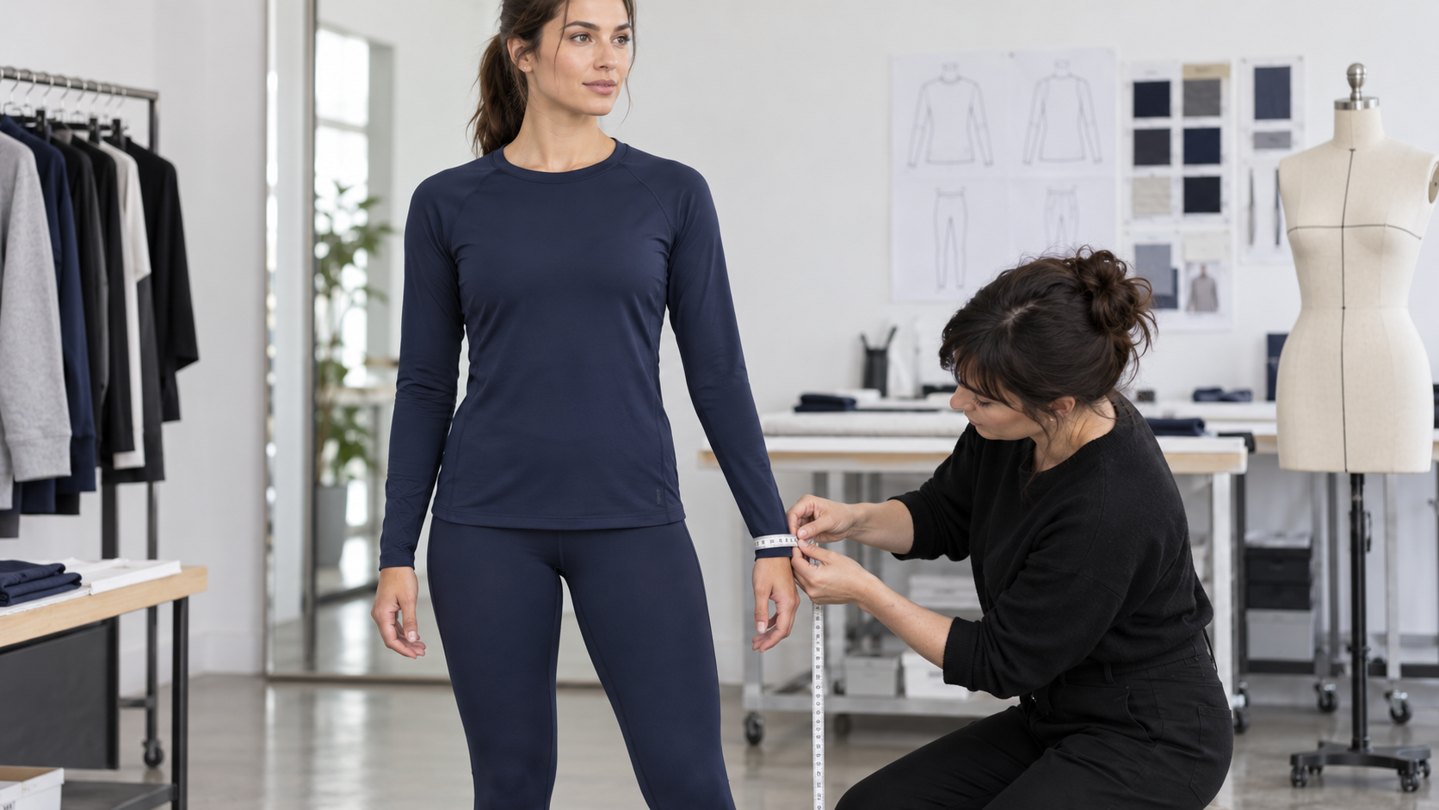
The intended appearance needs to survive movement. Before a fit session, state the target wearer, body measurements, base size and activities. Review both the standing silhouette and the movements the product is being sold for. A logo adjustment of 2 mm may matter visually, but it should not displace a check for waistband roll or restricted reach.
What the creative review protects
- Proportions, visual balance and panel placement.
- Colour blocking, artwork scale and logo alignment.
- The relationship between the individual style and the collection.
What the technical review must prove
- Coverage and seam behaviour during a squat or lunge.
- Waistband extension and recovery after movement.
- Neckline, armhole and strap behaviour on the intended wearer.
- Agreement between the measurement record and approved pattern.
Record different failure types separately. Seam grin is opening at a seam under tension, exposing stitches or the interior. Fabric becoming transparent during a squat is a different coverage problem. Both can occur in the same garment, but they need different material and construction investigations.
An example specification may use ±0.5 cm at a critical compression-garment point and ±1.5 cm at a less sensitive T-shirt measurement. These are product-specific examples, not universal limits for either category. The technical designer should justify each tolerance against fit sensitivity, material variation and the production process.
For a rolling waistband, assess pattern balance, elastic selection, seam position and the wearer’s movement before choosing a correction. An approved internal power-mesh layer is one possible construction solution. Its inclusion needs a BOM reference and a physical test, so the improvement can be repeated in bulk.
First-hire advantage: technical design when the launch is blocked by fit instability or unproven functional construction.
4. Make Factory Comments Specific Enough to Resolve

A useful correction identifies a location, a measured difference and the required next action. Instead of circulating several messages asking for a more comfortable fit, combine the issues into one controlled comment pack. Include marked photographs, POM references and an updated specification.
Example of an actionable revision record
Style / version: identify the sample tag and current tech-pack revision.
Measurement: increase the specified hip POM by 1.5 cm; state whether this is a flat or circumference measurement.
Construction: use the approved 4-needle, 6-thread flatlock at the named seam, with the agreed thread and setup.
TOP decision: hold the affected hem operation because of puckering; investigate feed balance and tension, then submit corrected evidence.
Approval: name the person who can release the revised sample or process.
In our reported comparison, a submission with defined measurement points could move into production planning, while a vague brief spent 3 days waiting for clarification. A complete brief does not override material availability or a factory’s actual capacity, but it gives the production planner a decision they can make.
Keep the route visible: prototype → fit sample → PPS/PP → TOP. New styling changes at TOP can affect material already cut and units already sewn, creating exposure of thousands of dollars depending on the order. Make discretionary design changes before the agreed design freeze, and handle later necessary changes through formal approval.
First-hire advantage: technical design when instructions are repeatedly returned to the buyer for interpretation.
5. Hire From Evidence of Completed Work
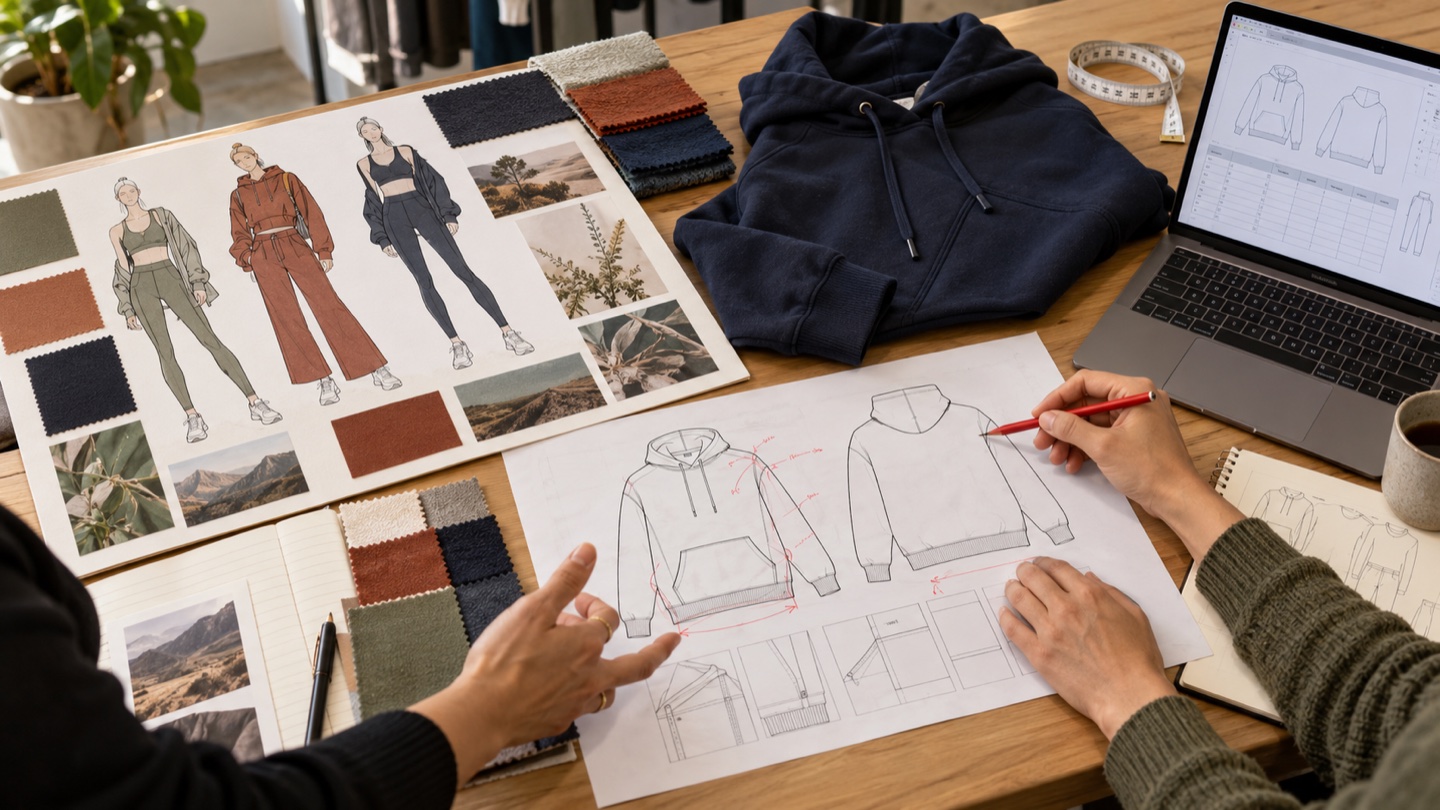
Our review of 50 resumes reinforced the need to examine outputs. Keywords help route a candidate to the right interview, but a portfolio should demonstrate a decision, its implementation and the resulting product.
Evidence for a creative lead
- Customer and trend research translated into a coherent collection.
- Original concepts, colour stories and print or styling direction.
- A line plan that explains how the styles work together.
- A clear rationale for the intended price and market position.
Evidence for a technical lead
- Construction knowledge and pattern-correction records.
- Graded specifications with consistent measurement methods.
- Fit comments connected to photographs and revised samples.
- PLM version control and relevant AQL inspection knowledge.
Use a hoodie sample to test how the candidate separates an observation from a proposed fix. A useful technical response might identify a 2 cm neck-drop issue, explain why the hood is pulling backward and propose a controlled change to neck drop and hood height. The candidate should also say what additional measurements are needed before confirming that diagnosis.
The creative response should explain the intended hood volume, face opening and relationship to the body silhouette. A strong candidate in either discipline can discuss trade-offs and recognise when the other discipline needs to make a decision. Pay candidates for substantial take-home work and use a brief that is not an unpaid production assignment.
Choose the first hire by the unresolved problem
Direction unclear: commission creative development.
Direction agreed, product unresolved: commission technical development.
Both unresolved: define a short concept phase followed by technical release, with separate deliverables and approval dates.
First-hire advantage: neither title automatically wins. Hire the person whose demonstrated output clears the current bottleneck.
See how Sportxia supports emerging brands with coordinated sampling and manufacturing.
When a Technical Designer Is the Better First Investment
Best fit: the collection has a visual direction, but fit, sizing, construction or supplier instructions are incomplete. The technical designer should own development records through the agreed production handover and approval milestones.
Advantages
- Fewer unresolved sampling loops: Sportxia’s reported experience is approximately 60% fewer rounds with complete technical management. In an individual comparison, approval moved from a 4-round route to a second-sample decision. Those two observations are distinct: 4 to 2 is a 50% reduction, not 60%.
- Repeatable sizing: grade rules can preserve intended fit relationships from Small to XL, with physical checks where body shape or construction makes simple scaling unreliable.
- Clearer quality decisions: an observed 2 cm discrepancy can be assessed against the agreed POM, measurement method and tolerance. Whether to reject a lot depends on that specification, defect classification and inspection agreement.
Limitations
- Visual direction is still required: a technically sound garment can lack a distinctive reason to buy it if the brief never defines the brand’s point of view.
- Setup takes work: a new team may need body measurements, reference garments and internal measurement rules before technical development becomes efficient.
When a Fashion Designer Should Lead First
Best fit: the founder needs a customer proposition, recognisable collection direction or a new visual language. The fashion designer should establish what is being developed before the team invests in detailed pattern and fit work.
Advantages
- A collection with a point of view: coherent shapes, colours and styling can connect the product to a specific customer and selling context.
- Visual differentiation: lookbooks and range presentations help the team judge how products read together, rather than approving each technical file in isolation.
- Stronger presentation: Sportxia’s internal observations found greater visual appeal in creatively led collections; this is a qualitative assessment, not a quantified sales uplift.
Limitations
- Performance can remain unproven: a fabric selected for colour or drape still needs stretch, recovery and coverage checks for the intended activity.
- Translation is a real development cost: unresolved construction can generate repeated supplier questions. In one reported development route, this contributed to 3 resampling rounds.
A Practical Hiring Sequence for a Small Brand
Define the concept, freeze the agreed appearance, develop the technical file, approve fit, and then release production. A mature team may overlap tasks, but it should still make the handover visible. The creative lead owns the approved design direction; the technical lead owns the evidence that the developed product meets its specification.
For a founder with an existing concept and a limited budget, the technical hire often protects the more immediate exposure. A weak colour story can be revised before sale. A production run of 500 units with a functional fit problem creates material, rework and delivery consequences. That is why our recommendation prioritises technical ownership once the visual brief is established.
Write each engagement around deliverables and an approval gate, not a vague promise to handle everything. State who owns the files, who approves changes and what the manufacturer must receive before cutting. When both roles sit with one person, keep the two decision records separate so that late creative changes do not silently invalidate a fit approval.
Questions Founders Ask Before Hiring a Designer
Who should a boutique yoga studio hire first?
If the studio already has its brand identity, prioritise a technical designer with relevant activewear fit experience. Specify waistband stability, movement coverage and consistent sizing across colourways. Review the physical sample on the intended wearer before approving the range. Bring in creative support first if the actual collection concept remains undefined.
I am an influencer with a clear aesthetic. Do I still need a designer?
You may already supply much of the creative direction. A technical designer can convert that direction into patterns, graded measurements, construction details and controlled sample comments. Confirm who owns original artwork and how revisions will be approved. A recognisable aesthetic does not automatically provide a production-ready specification.
Who should develop corporate uniforms in XS–4XL?
Assign technical ownership for the full XS–4XL range, including measurement methods, grade rules, wearer needs and endpoint fit checks. Creative input can establish the corporate appearance. Neither job title alone guarantees knowledge of a regulated protective product; assess additional standards expertise where relevant.
What if I have no sketches or collection concept?
Start with a fashion designer or creative-development brief. Define the customer, use occasion, silhouettes, palette and range plan. Agree an approval date for that concept, then commission the technical package. This gives the technical specialist something concrete to engineer.
When should I hire both roles?
Use both when the scope includes original collection development as well as fit and production ownership, particularly as you move from samples into bulk. Give the creative lead a design-freeze milestone and the technical lead a fit-sign-off milestone. Agree how later changes reopen either approval.
Reviewed October 29, 2026. Internal experience figures are company-reported observations, not an independently audited industry benchmark or a guaranteed project outcome. Construction and tolerance examples require product-specific approval. Send a correction to the content team.
Related Posts


READY TO DEVELOP YOUR COLLECTION?
Bring Your Design Brief to the Sample Room
Discuss your concept, technical files, fit requirements and next sampling milestone with Sportxia.
Get Your Development Quote
Leave a Reply