Sportswear Manufacturers China vs Europe: Which Supply Chain Will Grow Your Brand?

China gives growing sportswear brands a stronger route to competitive unit costs, technical fabrics and scalable production. Europe earns its premium when proximity and short EU replenishment windows matter more than factory price.

For a brand building repeatable performance collections, our recommendation starts with China. An integrated textile network gives you more ways to control the fabric, construction and production cost together. At Sportxia, we connect those decisions before bulk cutting, rather than asking you to solve material sourcing, customization and delivery separately.
Europe remains a practical option for a different operating model: premium positioning, frequent local fittings and short-distance replenishment into European distribution. Portugal, Italy and Turkey belong in the sourcing comparison, but they do not share one legal or customs regime. Portugal and Italy are EU members; Turkey requires its own origin and market-access checks.
The useful question is not which region has the cheapest sewing. It is which route leaves your brand with the best total landed cost, approved product and available inventory. Start with the comparison below, then test it against your order quantity, destination and selling calendar.
- Choose China when technical materials, customization, repeat orders and scale drive your margin.
- Choose Europe when local development and short delivery lanes are worth paying more for.
If China matches your sourcing requirements, use our China sportswear supplier comparison to build a shortlist, then request like-for-like quotes before selecting a factory.
China vs Europe: The Numbers That Shape Your Order
These planning inputs compare Guangdong/Zhejiang production with Portugal/Italy/Turkey sourcing. Sportxia’s order-development benchmarks are shown separately from regional cost and transport assumptions.
| Cost / route input | China: Guangdong / Zhejiang | Europe: Portugal / Italy / Turkey |
|---|---|---|
| Hourly labor-cost range | $3.50–$4.50 / hour | $8.00–$14.50 / hour |
| Minimum-wage reference in comparison† | $325 USD / month | $900+ USD / month |
| CMT proportion of FOB value | 15%–20% | 30%–40% |
| Freight-budget reference† | $3,500+ ocean / WCI reference | $1,600–$2,500 road reference |
| Transit: US East Coast | 30–35 days | 12–15 days |
| Transit: EU destination | 35–45 days | 3–6 days |
| Airfreight transit reference | 5–8 days | 1–3 days |
| US tariff consideration | Section 301 exposure; verify HTS | Trade / GSP eligibility to verify; not automatic |
| Order stage | Sportxia China programme | European comparison |
|---|---|---|
| Available-base / printed opening order | 50 units | 100–200 units |
| Custom cut-and-sew opening order | 100–200 units | 500+ units |
| Sample development | 7–12 days | 14–21 days |
| Bulk production | 25–35 days | 40–55 days |
| Repeat-order planning | 3 weeks | 6 weeks |
| Approval checkpoint | China comparison | European comparison |
|---|---|---|
| AQL inspection target | AQL 2.5; arrange independent checks | AQL 1.5 comparator; confirm plan |
| Chemical requirements | GB 18401 plus destination requirements | REACH for EU-market requirements |
| Certification / audit references | ISO 9001; BSCI | GOTS; OEKO-TEX STANDARD 100 |
Comparison basis: regional wage and freight figures are budgeting inputs, not current statutory wage schedules or live quotations. Freight lanes, shipment sizes and transport modes differ. Transit excludes unlisted production and clearance time. AQL figures are inspection targets in this comparison, not legal standards automatically applied by a region. Certification is facility/product-specific. US trade-preference or GSP eligibility must be checked; European origin does not automatically mean duty-free US entry.
Five Decisions That Matter More Than the Country Label
Use these five checks before comparing suppliers. Each one connects a sourcing choice to money, development time or the consistency of your next shipment.
1. Total Landed Cost: Price the Finished Delivery
A low factory quote is useful only when the rest of the delivery is priced. Build one worksheet covering ex-factory goods + duties + freight + testing + rework, with the same currency, destination and responsibility boundaries for both routes. FOB means Free on Board; it is a trade term, not another name for factory cost.
Keep the reference production-cost illustration in view: $14.00 for a Portugal-made compression legging against $6.50 in Guangdong. It demonstrates the possible manufacturing gap; it should not be blended with another supplier’s scope or assumed to be a binding quotation.
Working example: 1,000 nylon/spandex leggings
China route
At $6.50/unit, goods cost $6,500. A hypothetical ~20% duty adds $1,300. If the combined freight, testing and other landed additions are $2,700, the total becomes $10.50/unit, or $10,500. The shipping scenario ties up goods for 40 days; a Q4 freight increase changes the result.
Europe route
The separate comparison quote is $13.50/unit, or $13,500 before any charges excluded from that quote. Shorter local transport may reduce the delivery bill. Use a zero-duty assumption only when the actual origin, destination and applicable programme support it.
Check classification and rates in the USITC Harmonized Tariff Schedule, review USTR’s Section 301 information, and use the Drewry World Container Index to monitor freight direction. The ~20% example is a calculation input, not a tariff determination for every garment.
Our call: China is the stronger margin route for a planned order of 500+ units when the landed-cost worksheet includes the real import and freight exposure.
2. Lead Times: Separate Development From Restocking
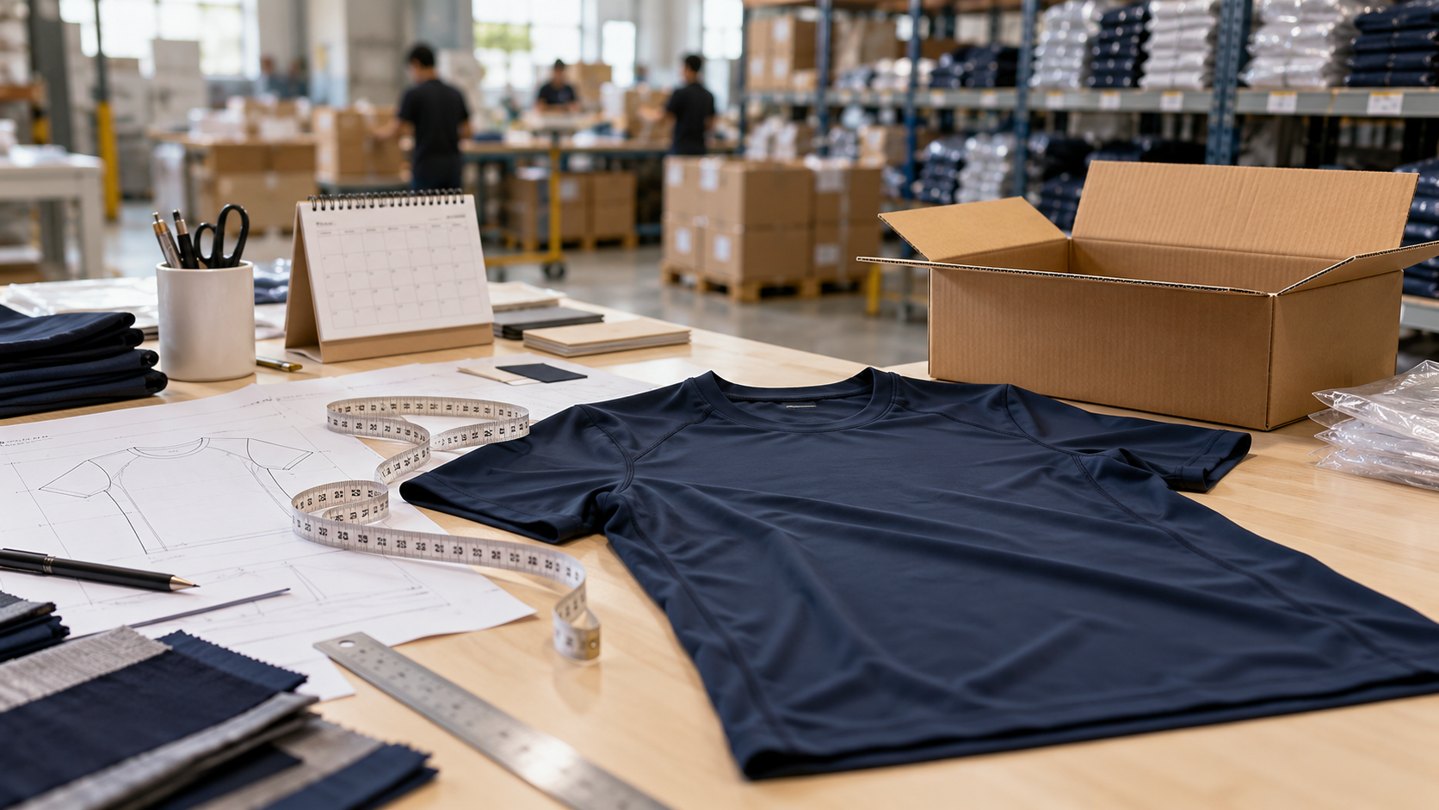
A new design and an approved reorder are different jobs. Development depends on decisions: fit comments, fabric availability, trim approvals and specification changes. Replenishment depends on material reservations and booked line capacity. Comparing a first sample with a repeat shipment hides the real bottleneck.
A scalable China programme can move from 500 to 50,000 units when the lines and materials are reserved. But two sample loops of 10 days each can consume the time you intended to save. Sportxia’s 7–12-day sampling and 25–35-day bulk-production planning ranges begin with a complete brief and ready materials; do not add transit to them silently.
For an EU-focused launch, a local fitting visit can settle questions quickly. The short-lane example uses 2–4 days by truck to an EU distribution centre, compared with 30+ days at sea from Asia. The broader route assumptions remain in Table 1; the lane and service must match your actual warehouse.
Our call: Europe has a proximity advantage for rapid local development; China becomes compelling when an approved product needs dependable production scale and planned replenishment.
3. MOQ and Flexibility: Match the Run to the Material
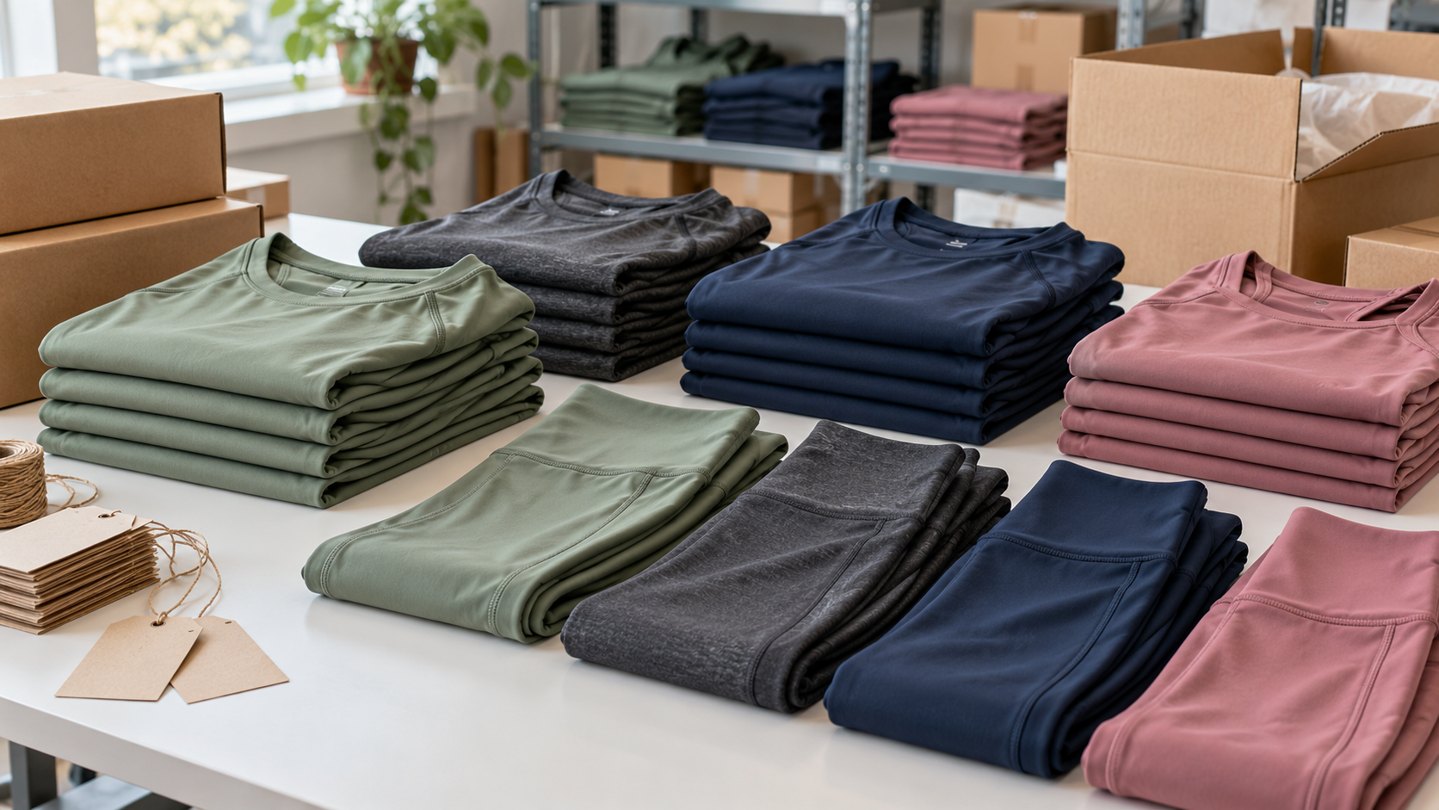
Do not let a low garment MOQ hide an expensive fabric commitment. Ask separately about units per style, units per colour, available base fabrics, custom dyeing, decoration and the minimum purchase for each trim. A small sewing run is only genuinely flexible when those upstream quantities also work.
The historical China benchmark of 1,000+ units per style is no longer the only model. Sportxia’s stock/print entry point is 50 units, with 100–200 units for custom cut-and-sew programmes in the table. Micro-run production in the 50–200-unit band gives a brand a route to test a collection before moving into a larger commitment.
European boutique runs in the 100–300-unit range can also work when materials are available. Distinguish those stock-supported runs from the 500+ custom cut-and-sew benchmark. A mill may decline to custom-dye just 50 yards, whichever sewing location you choose.
Quantity decision
- Demand test: 50–200 units. Use available fabrics and a narrow colour range. A nearby European supplier can suit local iteration; Sportxia’s micro-run route offers an alternative when you also want China-based sourcing.
- Established demand: 2,000+ units. Secure the mill allocation and repeat-production plan. Ask how the supplier would handle a request to triple production, and which approvals would have to be repeated.
Our call: choose an agile China programme when you want the small opening run and the later scaling path planned together.
4. Performance Fabrics: Specify the Material, Then Choose the Route
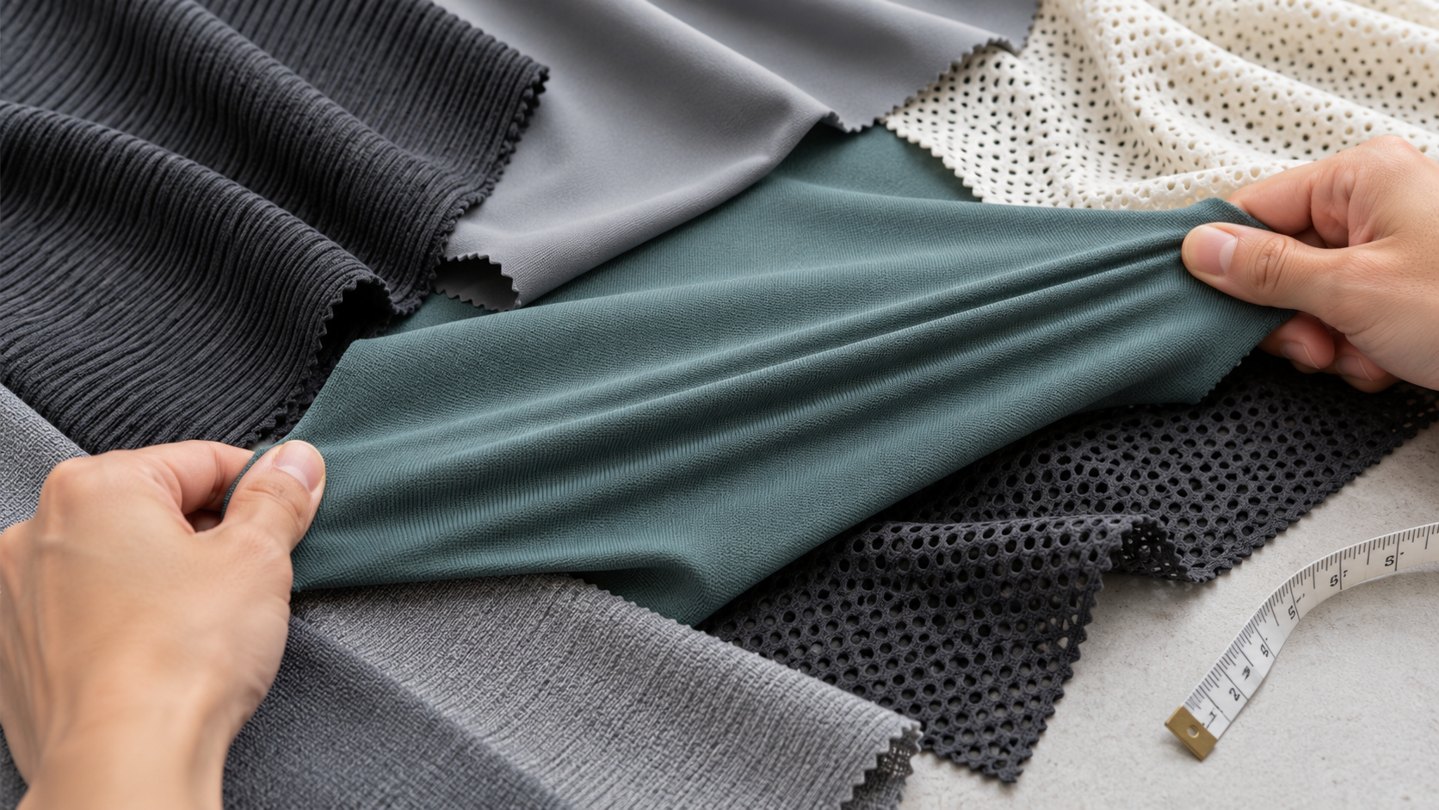
For activewear, a sewing quotation without a fabric specification is unfinished. Record composition, weight, construction, recovery, coverage, colour and finishing before approving a base. A material that feels right on a swatch can still behave differently across a stretched panel or after laundering.
China’s technical supply network offers combinations such as Nylon 6.6, high-elastane knits and engineered rib structures, alongside sublimation, laser cutting and bonded construction. Put those options against your actual performance brief rather than buying an unspecified “premium” fabric.
European sourcing can be attractive for organic cotton, merino wool and traceable recycled-polyester programmes. Yet the sewing location alone does not establish where the yarn was made, where the fabric was knitted or where finishing happened. Ask for each stage when local-material sourcing is part of the brand promise.
Explore Sportxia’s cycling apparel, swimwear and printing methods to connect the material choice to the product and decoration process.
Our call: China offers the stronger starting network for varied technical performance specifications, particularly when fabrics and specialist processes need to move through one coordinated brief.
5. Ethical Manufacturing: Make Verification Part of the Order
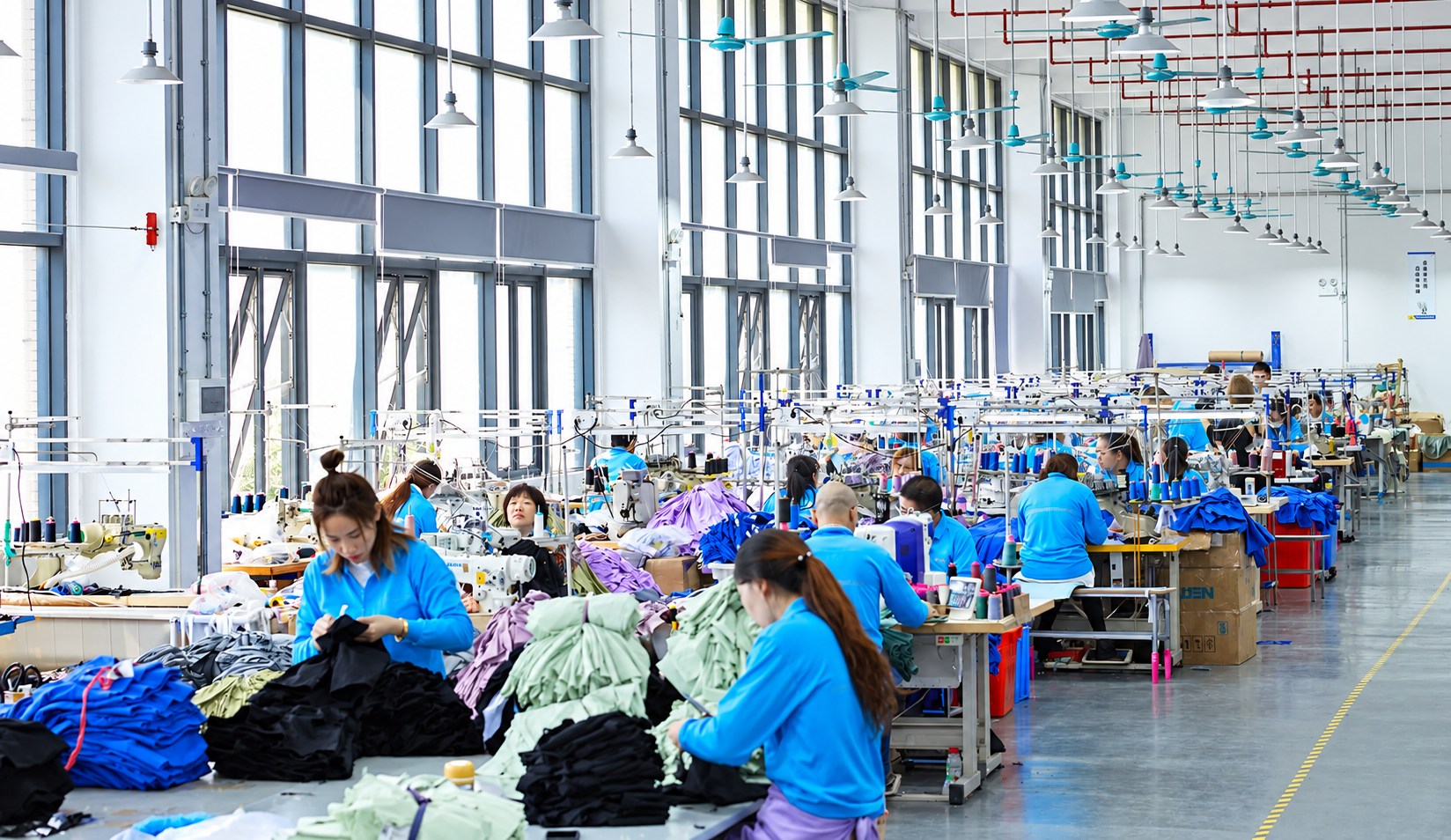
Manufacturing country is not an audit result. A recognised logo, a clean showroom and an attractive price should all lead to document checks, not replace them. Apply the same identity, site, validity and scope checks to suppliers in both regions.
European production operates within the requirements of the country concerned; EU chemical rules are relevant to products placed on the EU market, including imports. A China-based supplier must therefore work to the destination requirements in the approved brief, not treat domestic GB 18401 compliance as an automatic replacement for REACH.
- Chemicals: verify the OEKO-TEX certificate number through the official Label Check, then check that the relevant product and validity period are covered.
- Recycled content: review the applicable GRS scope and transaction documentation for the specific batch. Use Textile Exchange’s GRS guidance rather than relying on a website badge.
- Labor and site identity: request the relevant SMETA or BSCI report and corrective actions. Cross-check the declared production address, including map or Google Earth context, and establish which processes may be subcontracted.
Our call: proximity can make European checks easier to arrange; verified site records, approved samples and in-process evidence make a China programme commercially workable.
China: The Stronger Platform for a Collection That Must Scale
China’s best case is a coordinated production programme: local performance materials, specialist processes and a repeatable approval standard. For Sportxia, the commercial objective is to keep the approved specification connected to the line that actually makes your order.
- Connected sourcing: investigate the practical 50 km supplier-cluster advantage instead of comparing sewing rates in isolation.
- Technical options: assess high-gauge seamless knitting, laser-bonded hems and the particular machines your garment needs.
- Volume efficiency: use a stable material specification and repeatable construction to protect unit cost as orders grow.
- Sample-to-bulk control: retain the sealed approval sample, measurement tolerances and agreed inspection points so a strong prototype becomes a consistent shipment.
- Cash-cycle planning: budget for a 30–45-day ocean leg in the relevant route scenario, plus the other lead-time elements your order actually needs.
Europe: Pay for Proximity Where It Changes the Business
European production can justify a higher factory bill when nearby development, frequent restocking or an origin-led brand position produces a measurable return. Test the benefit against your warehouse location and reorder pattern instead of treating “Made in Europe” as a complete sourcing specification.
- Traceability access: shorter travel and supply routes can make site visits and document follow-up easier.
- Local replenishment: a nearby road route can support smaller deliveries into EU stockholding.
- Boutique rhythm: frequent, limited runs can suit a premium collection using available materials.
- Capacity reservation: at 10,000+ units (10k+), ask for a line plan and material commitment rather than assuming capacity will expand on demand.
- Cost recovery: the comparison’s 3–4× labor-cost premium needs to be supported by the selling price, service benefit or lower inventory exposure.
Production note: examine the origin of the yarn and greige fabric as well as the cutting, sewing and finishing locations. A shorter final shipment does not prove that the whole material route was local.
A Practical Certification and Greenwashing Checklist
Turn each claim into a record your team can file against the purchase order. This checklist applies on either side of the sourcing decision.
- ISO 9001: match the legal entity, manufacturing address, scope and validity to the production site being assessed.
- GRS: check the applicable chain of custody and batch-specific transaction certificate, rather than accepting a generic recycled-content logo.
- OEKO-TEX STANDARD 100: use the official checker and review the covered product group and certificate validity.
- SMETA/BSCI: read the findings and corrective-action plan, including follow-up evidence for issues previously identified.
- Order execution: approve the pre-production sample and require in-line sewing photos or video before final-payment release under the agreed terms.
Specify defect classifications and the inspection plan. AQL 2.5/4.0 can be part of an agreed protocol; the table’s AQL 1.5 comparator is a different target. Neither target means every unit was inspected. A claimed defect reduction of up to 22% should be evaluated against a recorded baseline and follow-up period, rather than used as a guaranteed outcome for a new collection.
Our Recommendation: Choose the Supply Chain Your Growth Needs
If technical sportswear is your core business and repeat volume is the goal, start the conversation with a China manufacturing partner. Sportxia’s role is to bring fabric sourcing, fit development, customization, inspection and shipment planning into one order brief.
Choose China when…
- A proven SKU needs production capacity and competitive unit economics.
- Teamwear, sublimated kits or technical activewear require coordinated customization.
- Your team can manage sample sign-off, inspection checkpoints and the longer international freight lane.
Choose Europe when…
- Your premium positioning depends on a verified local production story.
- Frequent physical fit reviews and a nearby EU replenishment lane are worth the factory-price premium.
- Small, frequent runs fit the material availability and capacity of the supplier you have selected.
Use a Hybrid Route When the Collection Has Two Jobs
A single sourcing country does not have to serve every SKU. You can develop or test a limited run close to your market, then transfer the approved tech pack and physical references to China for a repeatable volume programme. Treat the transfer as an approval stage: repeat the fit, material and construction checks at the receiving factory.
Split the line deliberately
Keep time-sensitive hero products near the selling market when speed supports their price. Put stable core basics on a planned China production schedule, where repeat materials and scale can support the collection’s overall margin. Record which supplier owns each stage and how a replenishment decision is triggered.
Build Your Next Sportswear Supply Chain With Sportxia
Bring us your target garment, opening quantity, fabric requirements, destination and launch date. We will help structure the manufacturing brief so you can compare material choices, sampling, production and delivery on the same basis.
Read Sportxia’s fact-checking process and editorial guidelines. Company planning figures and worked cost scenarios are distinct from independent market statistics. For a correction, email our content team with the article link and supporting records.
Related Posts


READY TO START YOUR BRAND?
Turn Your Sourcing Decision Into a Production Plan
Discuss fabrics, samples and your next production run with Sportxia.
Get Your Free Quote
Leave a Reply