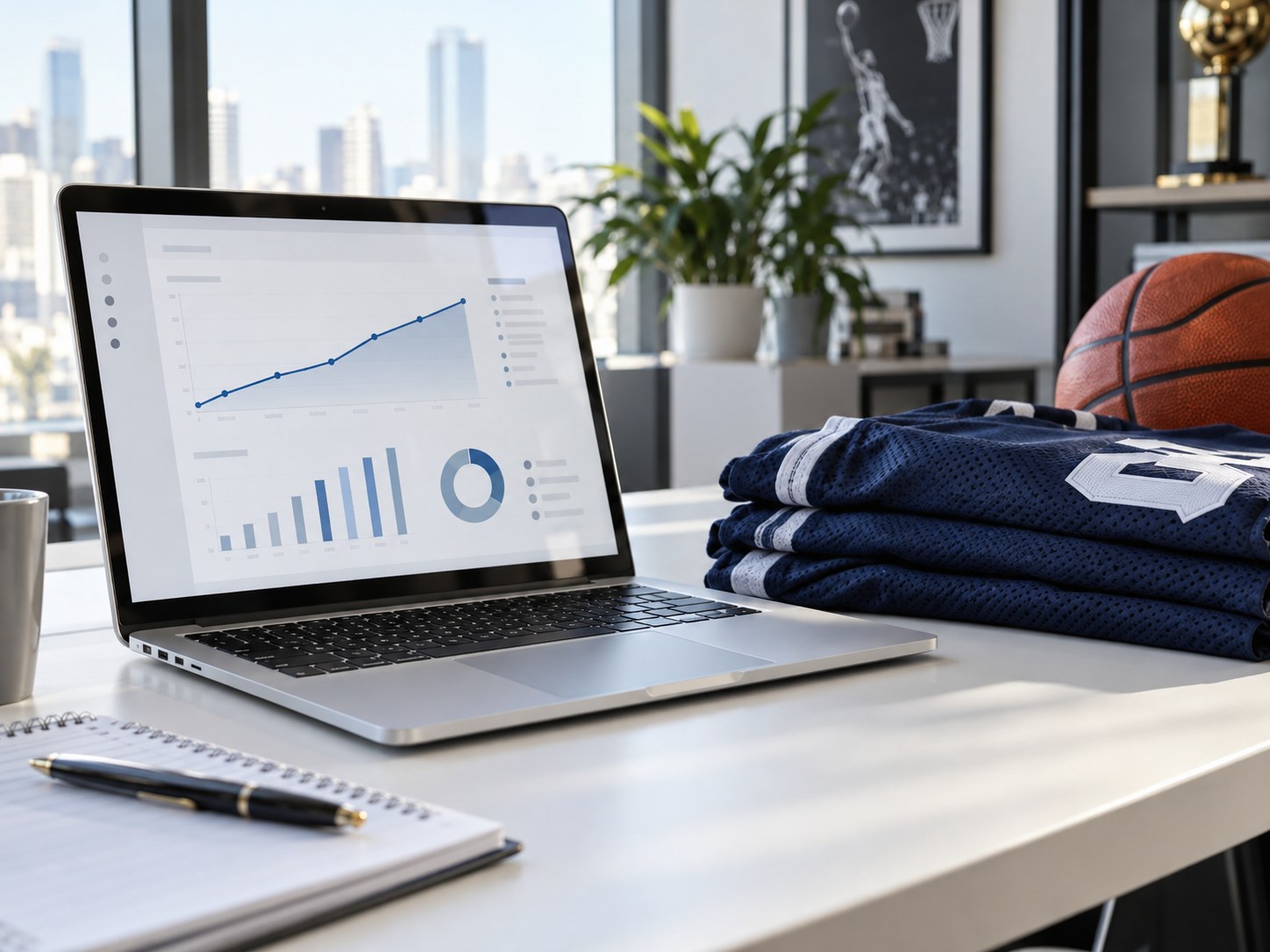
CASE STUDY · CUSTOM LICENSED SPORTSWEAR
Licensed Sportswear Case Study:
US$500K Revenue
 LucasUpdated November 3, 2026
Six-month revenue at
88% sell-through
Recorded returns on
custom performance styles
League approval for
the project garments
Physical prototype
turnaround
Client Profile
| Industry | Licensed sports merchandise and ecommerce |
|---|---|
| Company size | Mid-market business with 10–25 employees |
| Location | United States |
| Annual revenue | Approximately US$2 million before the project |
| Sales channel | Direct-to-consumer ecommerce |
| Starting challenge | Event-driven order spikes exceeded the print-broker network’s capacity. Inconsistent garment quality, fit and licensing records disrupted the licensed collection. |
| Project brief | Direct manufacturing, a documented league-approval workflow, application-specific fabrics, the required children’s product compliance file and flexible quantities for testing and replenishment. |
The client, league and project personnel are anonymous. Redacted approval records, inspection logs, material reports and fulfillment records may be requested subject to client permission and a confidentiality agreement.
The Challenge
This licensed sportswear case study began with a business built around game days, playoffs and championship runs. When its team progressed through the postseason, demand could rise four to six times overnight. The client’s print-broker network struggled to match that surge with consistent products and reliable stock.
Four recurring problems shaped the manufacturing brief:
- The decoration failed when the fabric stretched. The earlier supplier applied a rigid screen-print ink to stretch polyester. In the first batch review, the printed logos cracked during the basic stretch check, showing that the decoration and textile had not been approved as a working combination.
- The approval file did not match the licensed assortment. League reviewers needed the correct artwork, colours, copyright marks and required authentication details on the physical garments. The children’s range also lacked the product-safety and material records required for the project brief.
- Missed demand and returns carried a measurable cost. The client estimated US$120,000–150,000 in potential revenue was lost during the earlier playoff window through stockouts and quality holds. A 12% return rate, associated with generic sizing that ran small for its customers, added approximately US$24,000 a year in processing and return-shipping expense.
- One tri-blend specification was used for unrelated products. Casual fan tees, ventilated match jerseys, stretch performance styles and cold-weather outerwear needed different fabric properties. The existing range did not distinguish those requirements, including the need for structured 300 GSM fleece in the outerwear.
The client changed print brokers twice, but the same issues returned as volume increased. Sportxia rebuilt the approval, material and inspection workflow around the actual products and the event calendar.
The Solution
Sportxia brought sourcing, decoration, inspection and fulfillment into one manufacturing plan. Six connected steps gave the licensed collection an approval route and a repeatable path from sample to replenishment.
Step 1: Lock the Licensing Workflow
Written league artwork approval became a release gate: fabric cutting began only after approval was documented. The master calendar included a 14-day league-review buffer, and the approved artwork file identified the required marks, placement and authentication details for the collection.
For the children’s range, the team reviewed the applicable CPSIA records and the OEKO-TEX® STANDARD 100 documentation required by the client’s material brief before production release. Certificate scope and the material supplied were checked together.
League authorization, textile certification and US children’s product requirements address different approvals. The responsible US manufacturer or importer’s Children’s Product Certificate relies on the applicable product-safety rules and supporting test evidence; an OEKO-TEX certificate does not replace that file.
Step 2: Engineer Each SKU for Its Use Case
Sportxia replaced the one-fabric approach with three principal material specifications, matching the textile to the product’s purpose:
- 130 GSM open-mesh polyester — match jerseys. The open structure supported airflow, while the polyester was compatible with the approved dye-sublimation process.
- 180 GSM cotton blend — retail fan tees. The selected weight provided a more structured drape and a suitable surface for the lifestyle range’s screen-printed graphics.
- 300 GSM fleece — premium outerwear. The heavier construction addressed warmth and body for cold-weather stadium wear.
Stretch performance styles were also reviewed for their poly-spandex recovery requirements. The specification separated the fit and movement needs of performance garments from those of casual fan merchandise.
Step 3: Match Decoration to the Fabric
The polyester products used dye sublimation, with the dye carried into the compatible fibers rather than left as a rigid surface layer. Screen printing remained on the cotton-blend lifestyle styles, where the approved ink handle suited the garment.
The first prototype wash test showed colour bleeding into the white side panels. The technician adjusted the heat setting from 205°C to 195°C and increased roller pressure by 15%. The second sample passed the wash review with zero bleed.
One additional sampling day prevented the incorrect setting from reaching bulk production. The revised temperature and pressure became part of this material-and-print specification.
These were the settings established for this project’s fabric, ink and equipment, rather than a universal sublimation recipe.
Step 4: Build the Sample-to-Bulk Pipeline
A physical prototype was delivered in 11 days, compared with the four to six weeks the client had experienced with its brokers. The client began with 50-piece test runs, reviewed fit and colour in its market, then increased the full cut-and-sew order to 150 pieces per colour.
Pattern development addressed the shoulder grading and proportions required by the client’s athletic customer base. That work targeted the sizing mismatch associated with the earlier 12% return rate, giving repeat production an approved measurement and fit reference.
Step 5: Enforce Inspection Discipline
The project quality plan used AQL 2.5 across three inspection stages: incoming fabric, in-line sewing and final carton review. The team checked the specified material, construction and packing references at the point where each could still be corrected.
- 55 pounds-force seam-strength result met the project’s heavy-duty polyester seam requirement.
- Below 3% shrinkage was recorded in the garment’s wash evaluation.
- 98%+ stretch recovery was recorded for the selected performance material.
The results were retained with the approved sample and the bulk inspection file, connecting the performance brief to the products released for delivery.
Step 6: Connect Manufacturing to Fulfillment
Replenishment planning focused on the client’s three best-selling SKUs. Production readiness, approved quantities and dispatch dates were reviewed against the event calendar so the collection could be replenished during the postseason demand window.
The shipment plan used DDP delivery to the agreed destination, coordinating transport, import clearance and applicable duties within the delivery arrangement. Those responsibilities were planned with the shipment documents; DDP did not remove customs requirements.
The client recorded zero peak-period stockouts during the project. The same coordinated replenishment approach later supported the 40,000-unit holiday sportswear program featured in Sportxia’s case overview.
The Results
Swipe or use the buttons to view every column.
| Measure | Before · print-broker supply | After · direct manufacturing |
|---|---|---|
| Six-month revenue | Approximately US$350,000 · client estimate | US$500,000 |
| Sell-through | Approximately 70% | 88% |
| Returns | 12% | 0% recorded in the project |
| Physical sample turnaround | Four to six weeks | 11 days |
| League and project approval | At risk; incomplete approval and children’s product file | 100% of project garments approved |
| Stockouts during demand peaks | Frequent | Zero during the project peak period |
| Material specification by SKU | One tri-blend across the range | Application-specific textiles · three principal weights |
Validation: the revenue comparison uses the client’s ecommerce exports, with the earlier US$350,000 baseline identified as an estimate. Return figures were checked against the client’s returns records; inspection logs and fabric reports support the production results. These figures describe this collection and reporting period. Read Sportxia’s fact-checking process.
Key Takeaways
The lessons from this licensed sportswear case study connect league approval, garment engineering and event-driven inventory planning:
- Production control mattered more than changing brokers again. Two supplier changes had left the same stretch-print failures, fit problems and approval gaps. Written artwork release, product-specific fabrics and three inspection stages gave this licensed program a common production reference.
- The fabric and decoration had to follow each product’s use. The 130 GSM mesh, 180 GSM cotton blend and 300 GSM fleece served different jobs. The prototype correction from 205°C to 195°C, with 15% more roller pressure, resolved the observed bleed before the bulk run. Sell-through reached 88%, compared with the earlier approximately 70%.
- Approval belonged before cutting, with time in the calendar. The 14-day league-review buffer and the children’s product file were part of the production release. Keeping the league brief, material certification and applicable safety documentation aligned supported the recorded 100% project approval result.
- Replenishment needed a delivery plan for the selling window. The top-three-SKU plan connected approved production with DDP shipment preparation. The client recorded zero peak-period stockouts and US$500,000 revenue over six months, with no recorded returns in the project’s reported range.
Available approval documentation, redacted inspection logs, material reports and fulfillment records may be reviewed subject to client permission and a confidentiality agreement. Contact Sportxia to request the licensed collection project file.
How Sportxia reviews manufacturing information and corrections: Fact-Checking Process. To report an error, email [email protected] with the article link and supporting information.
MORE CASE STUDIES
See More Case Studies
Custom Swimwear: A Shorter Sourcing Cycle
Ice Hockey Jerseys: Team Uniform Delivery
Corporate Activewear: A Coordinated Rollout
YOUR LICENSED SPORTSWEAR PROJECT
Plan Your Next Licensed Collection
Send your garment references, licence requirements, artwork, quantities and event calendar. Sportxia will reply within 24 hours with the next steps for a quotation, samples and your production plan.
Discuss Your Licensed Collection →