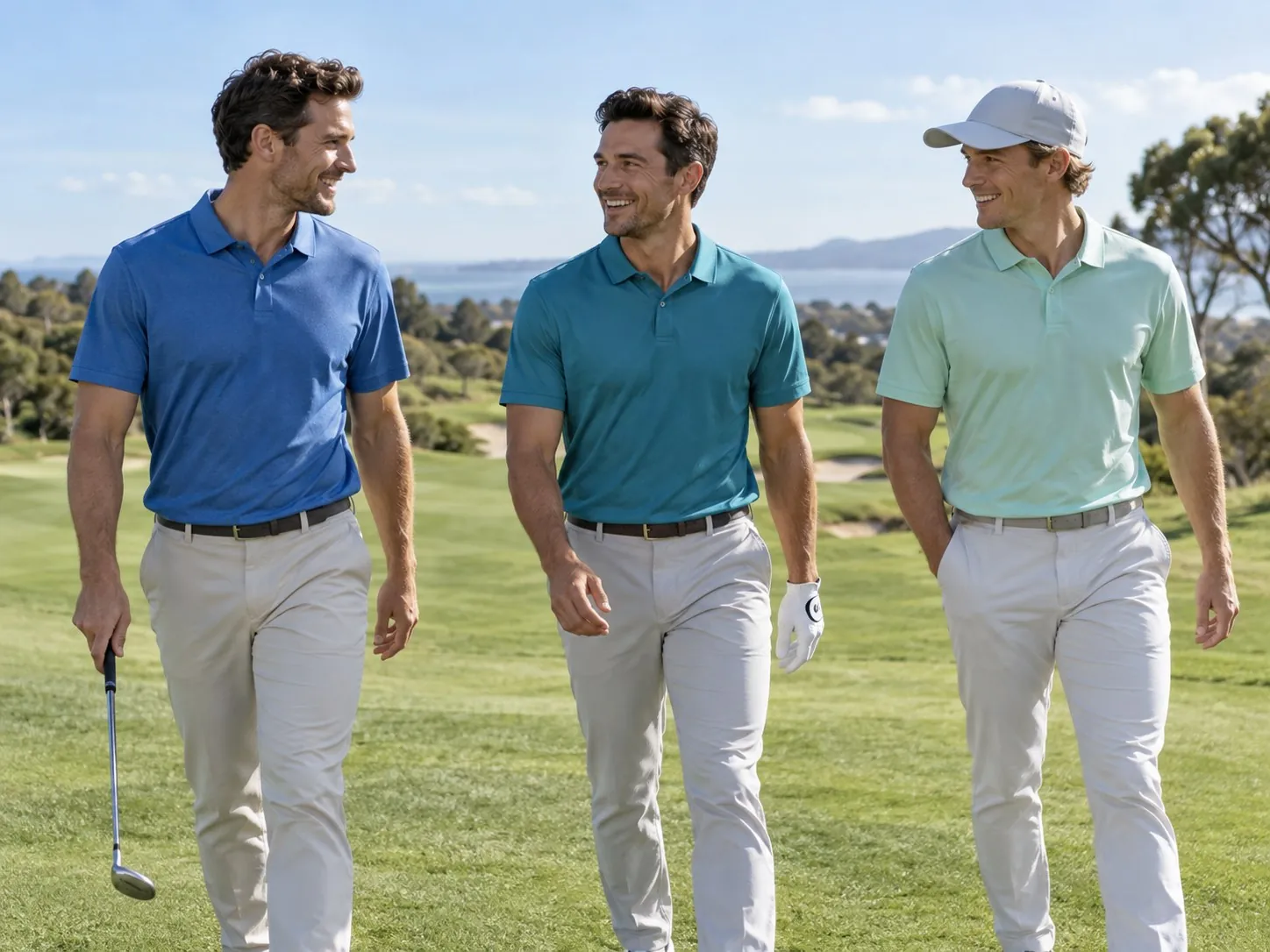
CASE STUDY · CUSTOM GOLF APPAREL
Custom Golf Apparel Case Study:
45% Club Growth
 LucasUpdated October 21, 2026
Reported membership growth
in one season
Wash durability
tested using ISO 6330
Defect rate
at delivery
Colourfastness grade
against ISO benchmarks
Client Profile
| Industry | Premium golf club and hospitality |
|---|---|
| Company size | 30–50 staff across clubhouse, events and grounds |
| Location | Southeastern United States |
| Annual membership revenue | US$3M+ |
| Starting challenge | Club apparel that lost its shape, colour and presentation after repeated wear and washing. |
| Project brief | A coordinated performance-polo program for staff, members and events, with repeatable decoration and garment quality. |
The club and project personnel are anonymized. Commercial outcomes are reported by the customer; garment results describe the production program reviewed here.
The Challenge
This custom golf apparel case study followed an 18-month period without growth in the club’s membership conversions. The club’s earlier polos cost about US$3 each but gave its premium welcome kits and staff wardrobe an inconsistent appearance. The polos needed to look appropriate at the clubhouse, remain comfortable through a round and carry the same crest across staff uniforms and member merchandise. Initial appearance alone was an inadequate basis for approving the next order.
The earlier 150 GSM polos revealed three problems after use:
- Collars and plackets lost their shape. The earlier collar and placket began losing their structure after three washes. Failed interlining left the neckline limp, making the staff wardrobe look worn before the garment had reached a useful service life.
- The embroidered crest puckered. The dense crest distorted under stretch, with puckering visible from around three feet away. The lightweight knit could not adequately support the embroidery settings used on it.
- Brand colours changed with washing. Navy faded within a month of summer wear, while the club’s signature green changed visibly by the fifth wash. This weakened consistency between the welcome kit, staff uniforms and tournament merchandise.
The commercial concern: around 30% of touring prospects received a welcome kit. At an annual membership fee of US$5,200 and an assumed five-year membership, the club valued a potential member at US$26,000. Its estimate of 8–12 missed sign-ups implied about US$208K–312K in potential lifetime fees, rounded to US$200K–300K. This was a planning estimate of opportunity value, rather than an audited annual loss or proof that the shirts alone caused lost memberships.
Changing promotional suppliers had not resolved the underlying specification: the replacement catalogue used a similar fabric weight and construction. Sportxia brought the fabric, neckline construction, embroidery and inspection requirements into one project brief. Explore custom golf apparel manufacturing.
The Solution
Four stages connected the golf-club brief with an approved garment and a controlled delivery plan.
Phase 1: Fabric Engineering
Sportxia moved the club from a 150 GSM promotional polo to a structured, four-way-stretch polyamide blend. The 220 GSM construction gave the new range a more substantial feel, with movement through the shoulders for a golf swing and a finish selected for humid southeastern US summers.
- 220 GSM fabric weight — the increased weight provided greater coverage and a cleaner drape than the earlier lightweight promotional shirts.
- Moisture-wicking finish — evaluated in a 35°C environmental chamber for the warm-weather conditions encountered during an 18-hole round.
- UPF 50+ sun-protection rating — supported by the selected fabric’s test report. ARPANSA fabric-testing guidance explains the Australian assessment framework.
Phase 2: Decoration Engineering
The crest had distorted because its dense embroidery overwhelmed the earlier lightweight knit. Sportxia’s embroidery technician rebuilt the decoration settings around the replacement fabric, rather than transferring the old file unchanged.
- 20% fewer stitches, with 3-ounce cut-away backing: the revised file and support stabilized the crest without sacrificing the intended visual coverage.
- Defined chest-logo safe zones: placement stayed away from the shoulder and side panels where the garment stretches most during movement.
- 75/11 ballpoint needle: the rounded needle point helped protect the knit structure during embroidery.
The approved settings, backing and crest placement were retained together for repeat orders. See Sportxia’s embroidery capabilities.
Phase 3: Sampling and QC Lock
The first sample was delivered in 12 days. In the wash review, the technical team found that the placket began to warp after cycle 3. They changed the interlining and lowered the topstitching tension. The second sample retained its shape through the full 50-cycle evaluation.
The inspection plan specified AQL 2.5, with checks at three production stages: incoming fabric, completed embroidery and the final pre-packing review. The approved sample, placket alignment and critical seam measurements were checked together; correction records remained attached to the order.
What the wash test covered: the 50-cycle record used ISO 6330 washing and drying procedures. Colourfastness reached 4.5/5, shrinkage stayed below 2%, and elasticity retention reached 98%. ISO 6330 defines domestic washing and drying procedures; the property results and acceptance criteria are recorded separately in the project reports.
Phase 4: Delivery and Economics
Sportxia’s logistics team arranged DDP air freight. The quotation brought the polyamide polo, custom crest and delivery scope into one US$18-per-unit total, giving the club a fixed purchasing basis instead of separate, unpredictable freight and customs additions.
The previous buying process had exposed the club to customs charges and delays that were difficult to budget. Confirming the destination, packing list, size breakdown and DDP scope before dispatch made the delivered cost clear to the purchasing team. The US$18 figure is the delivered price for this order and its agreed specification.
The Results
Swipe or use the buttons to see every column.
| Measure | Before | After | Change |
|---|---|---|---|
| Membership conversions | Unchanged for 18 months | 45% increase in one season | +45% |
| Merchandise reorders | Unplanned, reactive purchases | 32% increase | +32% |
| Colourfastness after 50 washes | Visible fading by cycle 5 | Grade 4.5/5 | — |
| Dimensional stability | Not measured | Less than 2% shrinkage | — |
| Stretch recovery | Collar lost shape by cycle 3 | 98% elasticity retained | — |
| Embroidery integrity | Puckering visible from 3 feet | 0 thread breakages | — |
| Defects at delivery | No recorded QC baseline | 0% | — |
| Replacement orders | Frequent replacements | US$0 spent | — |
Validation: Sportxia’s production team measured the garments after washing and recorded the colour, size and recovery results. Membership conversions and merchandise reorders were supplied by the club; Sportxia maintained the fabric-test and inspection records. Both sets of results were reviewed against the preceding year’s baseline. Read Sportxia’s fact-checking process.
Key Takeaways
The practical lessons from this custom golf apparel case study connect the club’s commercial priorities with the garment specification.
- A low purchase price can undermine a premium club’s presentation. The earlier US$3 promotional polos lost shape and colour quickly. The club’s commercial estimate put the associated missed membership opportunity at roughly US$200K–300K; this is a customer estimate, not a measured loss caused solely by clothing. For welcome kits and member-facing staff, appearance after wear matters alongside the original buying price.
- Wash performance belongs in the membership experience. A shirt is judged repeatedly as staff wear it around the clubhouse. The revised sample completed 50 wash cycles, with 4.5/5 colourfastness, less than 2% shrinkage and 98% retained elasticity. At two washes a week, 50 cycles represents approximately six months of use; it gives the club a much more useful approval reference than an unwashed sample alone.
- Stretch-knit embroidery needs its own production settings. The 20% stitch-count reduction, 3-ounce cut-away backing, safe-zone placement and 75/11 ballpoint needle addressed the earlier puckering together. The delivered range recorded zero thread breakages. A logo file should therefore be approved on the selected garment fabric, with its stabilizer and placement, before bulk embroidery starts.
- A defined DDP scope makes the purchasing budget predictable. DDP air freight combined the polo, crest and agreed delivery scope at US$18 per unit for this project. Purchasing could compare a delivered total with its budget instead of reconciling separate customs and shipping charges after the order had left the factory.
- Choose a manufacturing partner around the whole program. The outcome depended on material selection, decoration, 12-day sampling, post-wash approval and AQL 2.5 inspection working together. The club reported 45% more membership conversions and 32% more merchandise reorders; the delivery inspection recorded 0% defects and the reported replacement spend was US$0. Explore Sportxia’s golf apparel manufacturing capabilities to plan a comparable brief.
For a detailed project review, request the ISO 6330 wash records, AQL 2.5 inspection logs and relevant fabric documents. Access is subject to client permission and a confidentiality agreement. Contact Sportxia to request the production records.
How Sportxia reviews manufacturing information and corrections: Fact-Checking Process. To report an error, email [email protected] with the article link and supporting information.
MORE CASE STUDIES
See More Case Studies

Custom Swimwear: A Shorter Sourcing Cycle

Ice Hockey Jerseys: 500 Uniforms in 14 Days
Corporate Activewear: A 5,000-Unit Rollout
YOUR GOLF APPAREL PROJECT
Build Your Club’s Next Collection
Share your product references, logo, quantities and target delivery date. Sportxia will reply within 24 hours with the next steps for your samples and production brief.
Discuss Your Golf Apparel Project →