10 Questions to Ask a Clothing Factory Before You Order
Get specific answers about capability, minimums, sampling, lead times, quality and commercial terms—and ask for the evidence behind each answer.

The most useful questions to ask a clothing factory turn broad promises into verifiable production decisions. Ask who performs each operation, what the quote includes, which minimums apply and how the order will be inspected. Then connect the answer to a document, physical sample or live demonstration.
At Sportxia, a sportswear brief needs to connect stretch-fabric behaviour, construction and fit to the proposed order. Machinery names and certification logos can start the discussion, but the relevant material, sample, current records and written terms establish what the supplier is committing to deliver.
Use these ten questions for comparable supplier conversations. The sample answers below illustrate the level of detail to request; quantities, prices and policies must be confirmed in your own quotation. For the document and site checks behind the conversation, follow our clothing manufacturer verification guide.
A Practical Ten-Question Factory Interview
Give each candidate the same product brief and ask the questions in this order. Record the answer, supporting evidence, open issue and person responsible for resolving it. A delayed answer may need follow-up; an essential identity, safety or inspection-access issue should remain on hold until it is resolved.
1. Which similar products do you make, and which operations do you control?
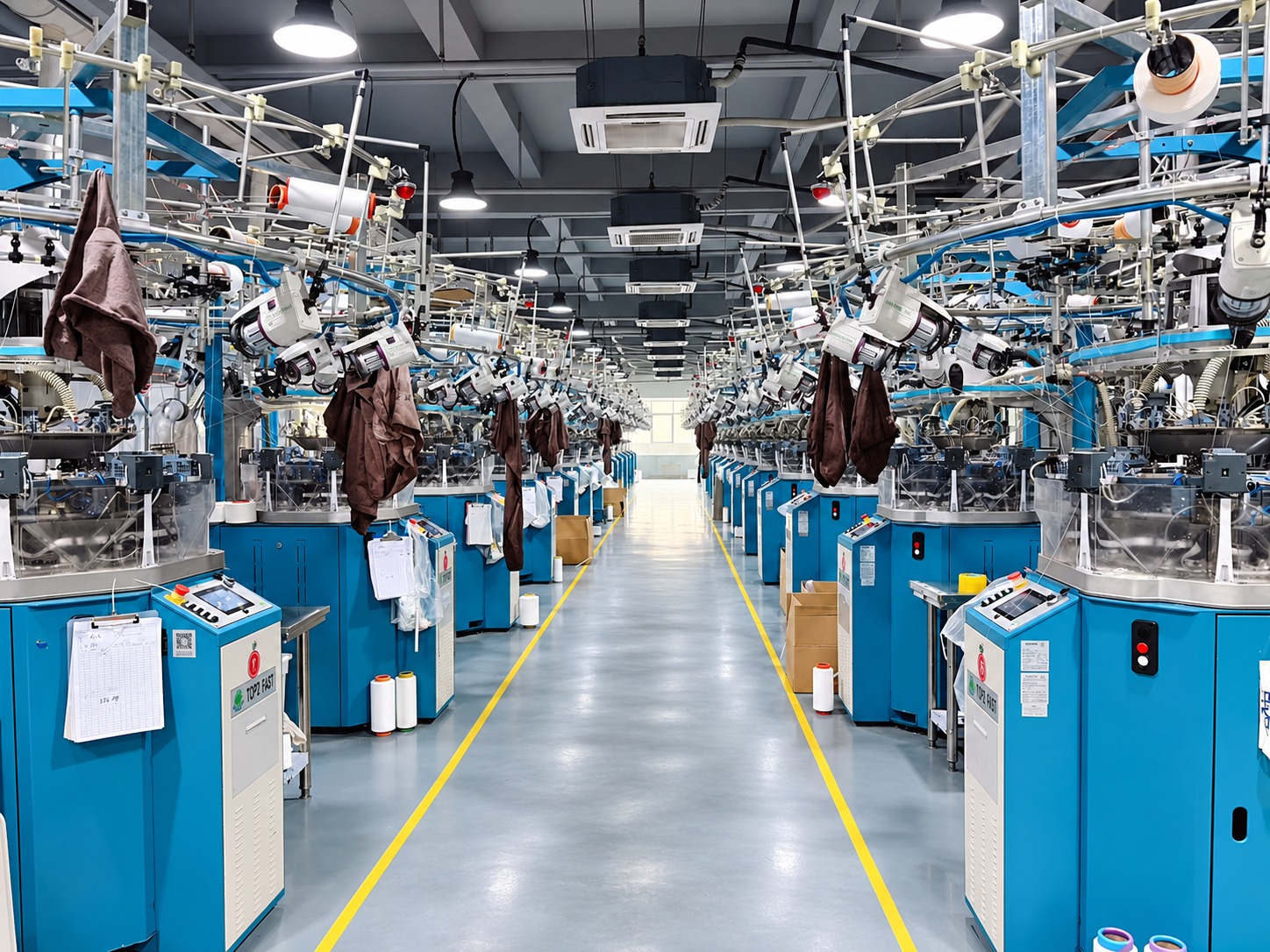
Why ask: a factory experienced in cotton tees may need different equipment, thread handling and technicians for high-compression nylon/spandex. Identify control over cutting, flatseam sewing, printing and the actual production line.
What a detailed answer sounds like
A supplier might identify 10 seamless-knitting lines using Santoni equipment, a Monti Antonio sublimation calender, the relevant cutting/sewing operations and purchased components such as YKK zippers. Ask which machine models, site and processes will be used for your order, and request evidence of a 4-needle, 6-thread operation if the garment needs it.
A sublimation calender transfers a print under heat; it is not the same machine as the digital inkjet printer that produces the transfer paper. A specialist component supplier is also different from an undisclosed garment-production subcontractor.
Request: a directed live production call or dated process evidence, a recent relevant sample set and a list of approved partners. See Sportxia’s cut-and-sew development scope when forming the process questions.
2. Is the quote CMT or full package, and what have you included?
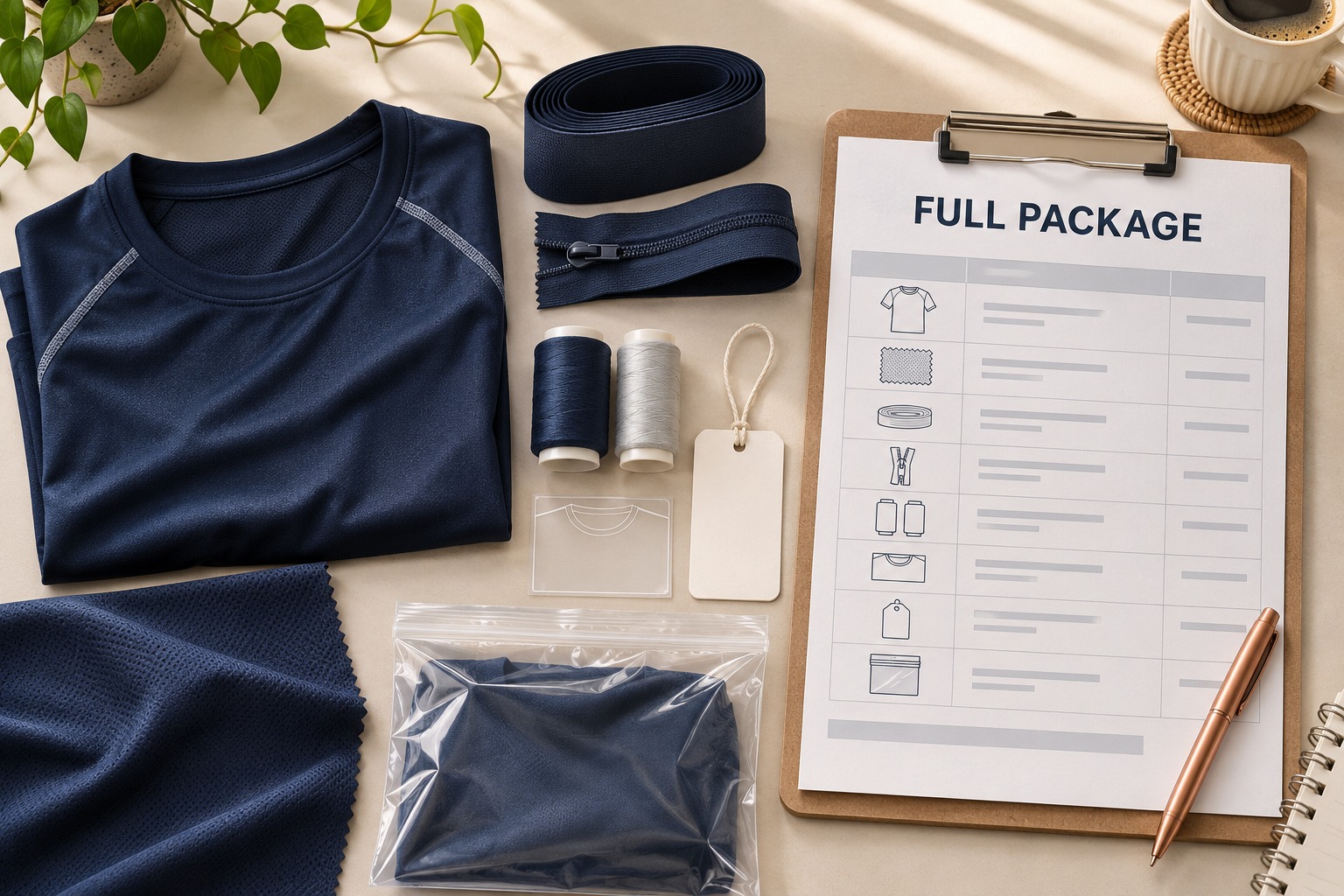
Why ask: CMT usually leaves the buyer responsible for agreed inputs such as fabric, trims and patterns, while a full-package supplier coordinates more sourcing and manufacturing work. The labels do not define every commercial inclusion. Use a responsibility matrix.
A useful scope statement
“The price covers sourcing the selected 250 GSM nylon/spandex, lab dips, garment assembly, approved heat-transfer labels, individual bags and final packing. The buyer supplies the released technical file and artwork. Testing, special trims and freight are listed separately where applicable.”
Request: an itemised material/labour quote, included development work and a sourcing record for the proposed mill. A name such as Carvico or a local equivalent must refer to the actual article and commercial supply arrangement, not an unsupported logo on a presentation.
3. What is the minimum for this style, colour, size mix and fabric?
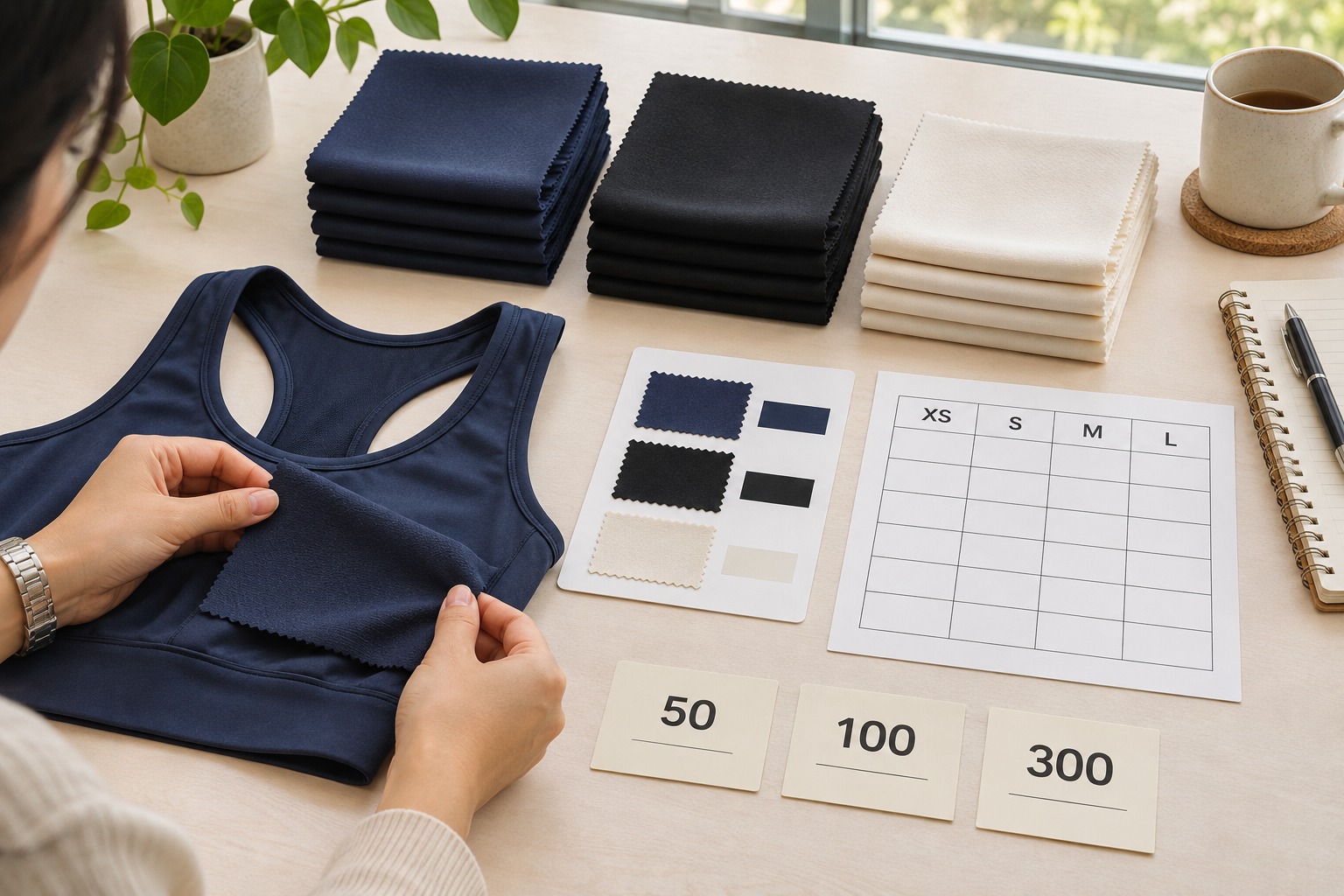
Why ask: a headline minimum of 100 units may coexist with a 500-unit-per-colour material or dye commitment. Separate garment sewing minimums, custom colour commitments and component minimums.
A minimum that can be costed
An illustrative offer could state 300 pieces per custom-dyed colour across four sizes, or 50 pieces per style from available black, navy or white fabric. A separate 50-piece paid pilot might use approved stock materials. Ask whether size and colour combinations are permitted and how repeat availability will be controlled.
| Quantity | Example unit price | Confirm before comparing |
|---|---|---|
| 100 units | $15 | Same approved style/material/decoration and delivery basis |
| 500 units | $12 | Check material commitment, size/colour allocation and included charges |
Request: a written MOQ matrix and quantity price breaks. The table’s 100 units at $15 each and 500 units at $12 each are comparison examples, not current Sportxia prices.
For Sportxia, the previously confirmed starting points are 100 pieces for standard custom programmes and 50 pieces for suitable printed private-label programmes. Confirm the style, colour, size split and material basis in the actual quote.
4. What does sampling cost, how do revisions work and who owns the files?
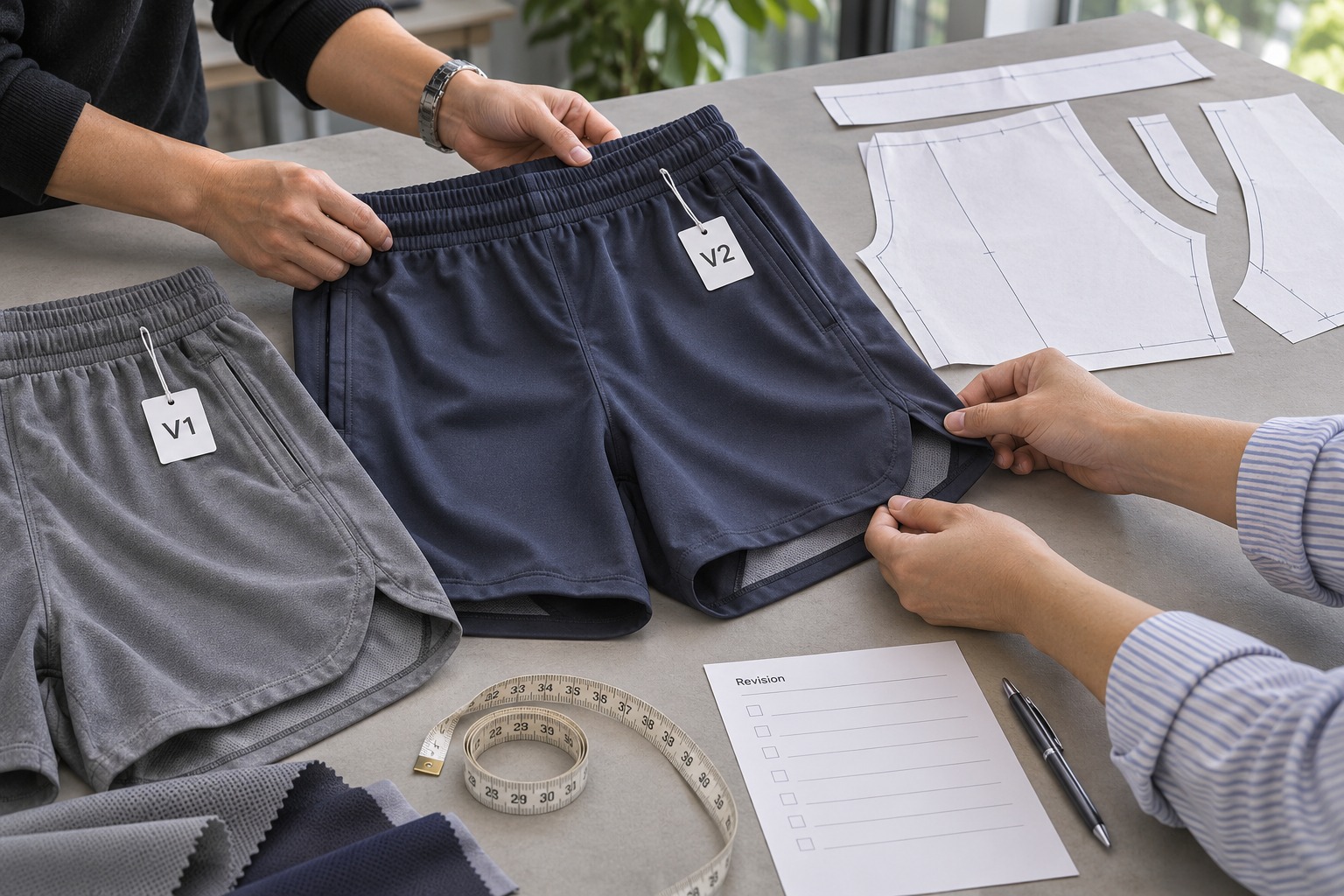
Why ask: a sample fee alone does not establish revision entitlement, refund conditions or ownership of every development asset. Agree what is being commissioned and which deliverables will be released.
An example to negotiate explicitly
“The development sample is $100 per style, including two fit-revision rounds. It is credited against a bulk order over 300 units, subject to the listed conditions. Ownership, permitted reuse and delivery of paid CAD patterns and technical-file updates are set out in the development agreement.”
Request: the sample invoice, additional-revision charges, credit/refund conditions and a written file-ownership clause. Ask which graded pattern files, compatible .dxf exchange files, .rul grade-rule files and decoration digitising files are included. These formats serve different purposes; confirm that a receiving developer can open the supplied files.
Record whether any existing factory block, licensed artwork or third-party component is excluded from an ownership transfer. Use our sample-stage guide to give each prototype, fit and pre-production decision its own identifier.
5. Which technical files do you need for a reliable quote?
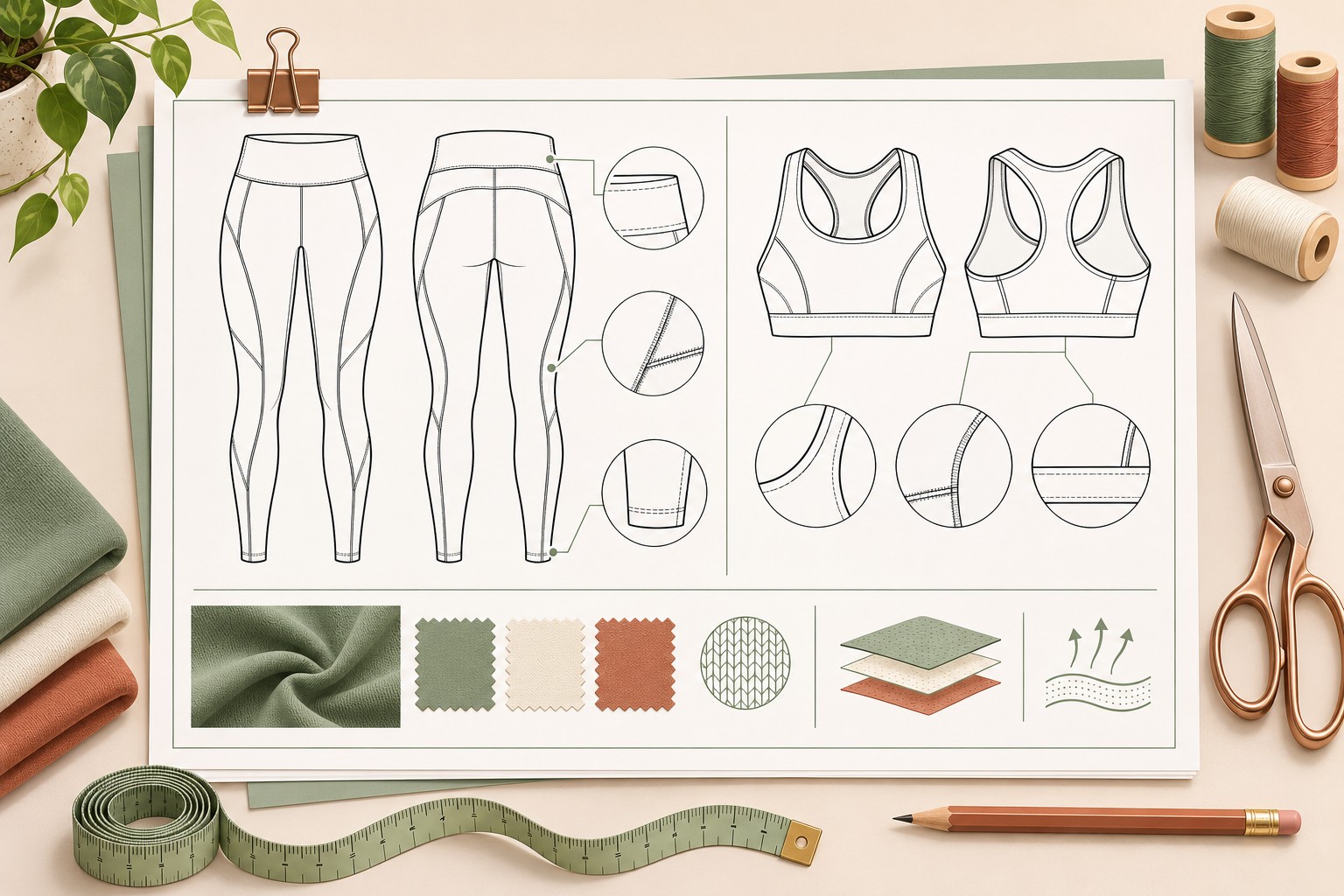
Why ask: a photo can support an early estimate, but a firm comparable quote needs a defined material, construction, size range and order scope. Missing inputs should appear as assumptions or open development work.
A quote-ready request
“Please send the technical pack in a readable PDF with the measurement/BOM data in an agreed editable format. We need fabric composition and GSM, seam and stitch requirements, the measurement method and tolerances, artwork dimensions, labels, packaging and the quantity matrix. Any paid technical-development support will be scoped separately.”
Request: the factory’s specification template and an example of its revision process. Build the file with our sportswear tech pack guide, which includes a checklist and editable template.
6. What are the dates for every stage, through delivery?
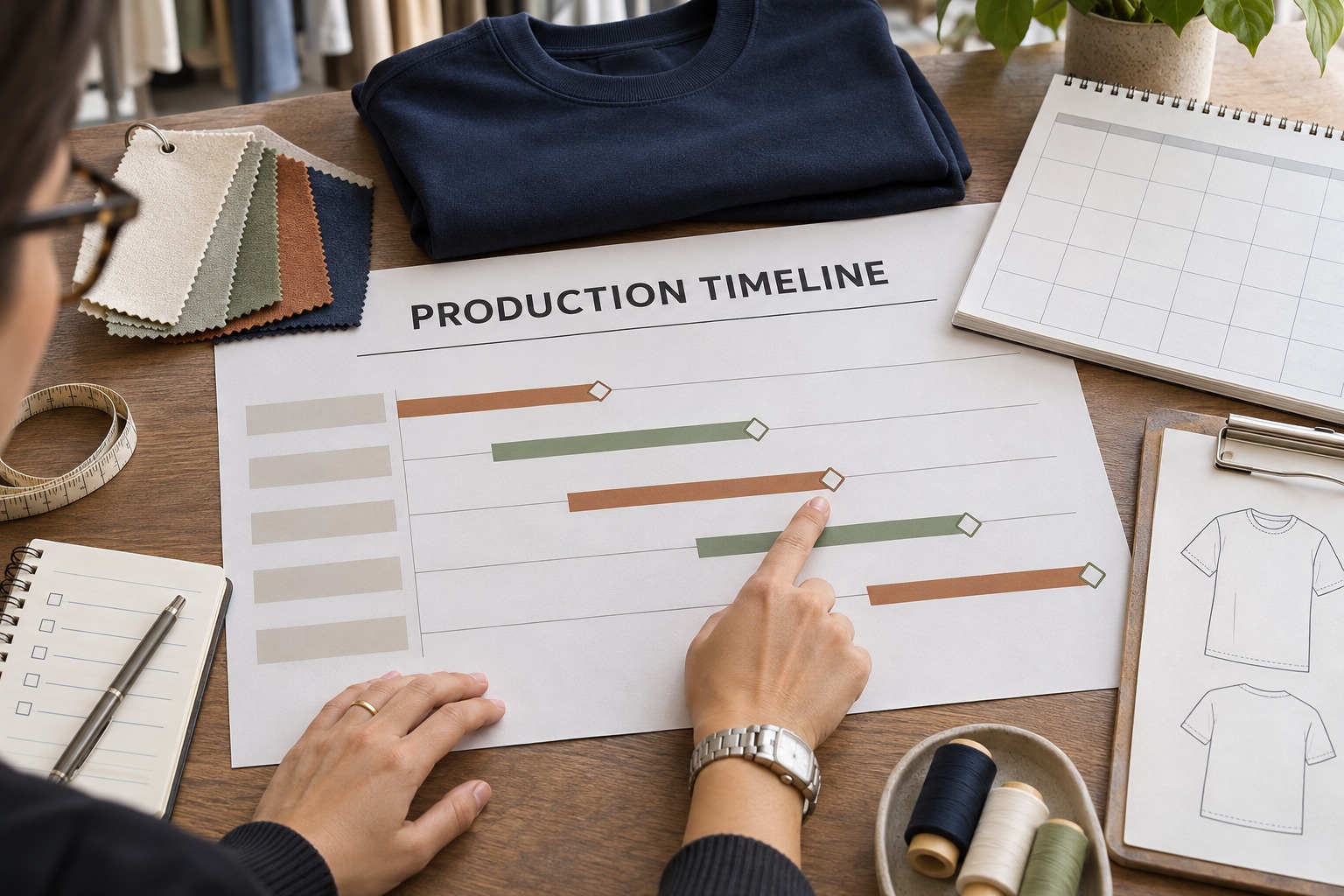
Why ask: “30 days production” may exclude material development, colour approval, buyer feedback, testing, inspection and transport. Ask which event starts each interval and whether dates are working or calendar days.
| Stage | Days | Release or dependency |
|---|---|---|
| Lab dips / Colour approval | 7 | Approved colour on selected material |
| Fabric development / Production / Dyeing | 20 | Material booking and required approvals |
| Pre-production sample approval | 3 | Actual approval scope and buyer response |
| Cutting and sewing | 15 | Released technical file and bulk materials |
| Finishing and packing | 5 | Inspection and packing/release requirements |
| Total ex-factory | 50 | Transport, customs and receiving still to be scheduled |
This sequential example totals 50 days ex-factory: 7 + 20 + 3 + 15 + 5. Transport and import/receiving stages remain additional. A real critical path may overlap some work, but it must identify dependencies rather than subtract time without an approval plan.
Request: a dated milestone or Gantt plan showing sourcing, lab dips, PP approval, cutting/sewing, finishing, inspection, shipping and buyer response owners. For Sportxia, current planning ranges are 7–15 days for samples and 15–30 days for bulk production, with the programme, materials and approvals confirmed separately.
7. Which inspection plan will govern this purchase order?
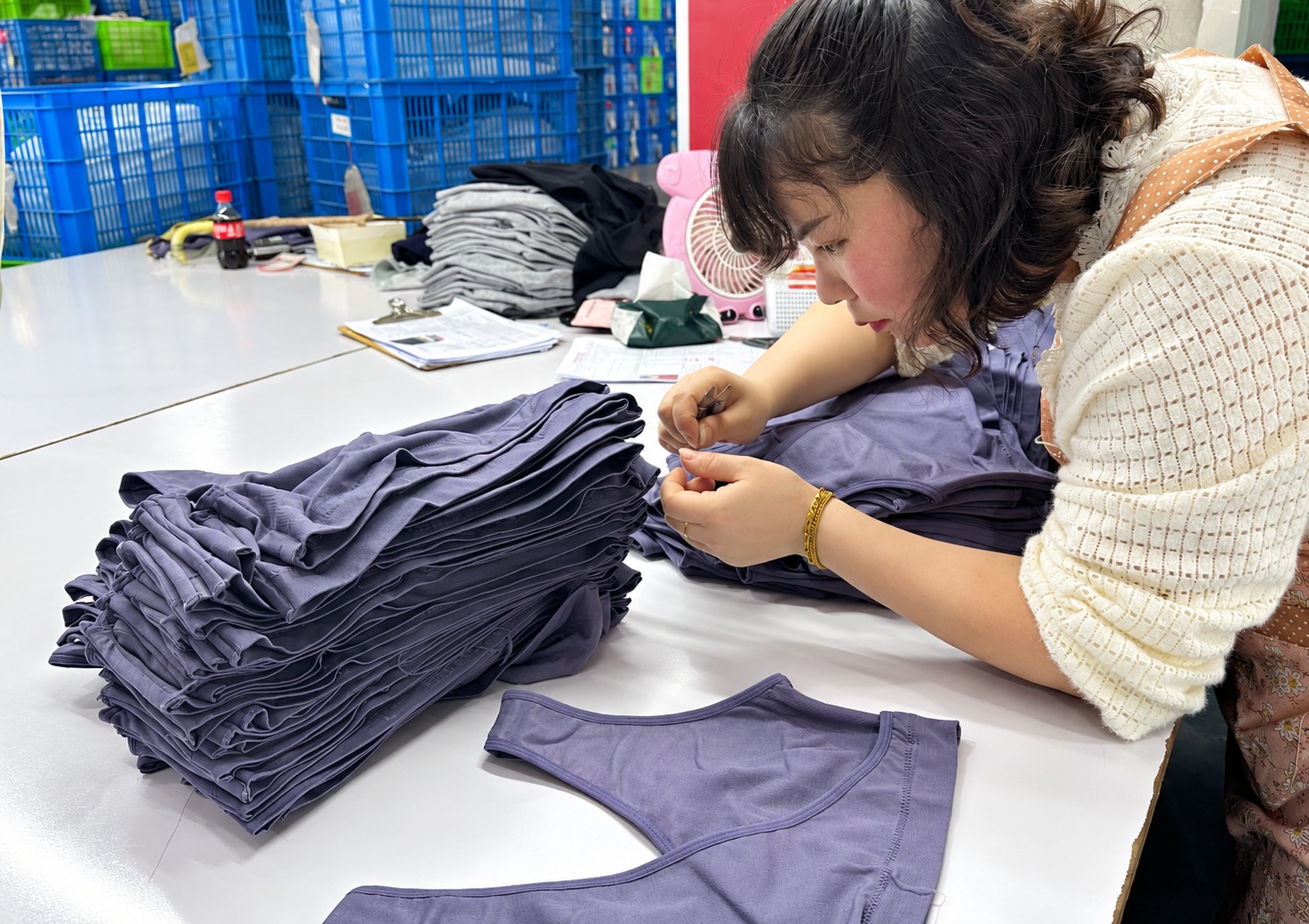
Why ask: “high quality” is not an acceptance criterion. Establish defect definitions and the full sampling plan under the agreed standard, such as ISO 2859-1, whose current edition is 2026.
A measurable QC response
“We identify which features are checked on 100% of units inline, retain the records and use the agreed final sampling plan. An example is General Inspection Level II, AQL 2.5 for major defects and 4.0 for minor defects, with no acceptance of identified critical hazards. The lot size, sample size, acceptance/rejection numbers and release authority are written into the order.”
- Critical: define hazards such as needle fragments and sharp components, with the necessary preventive controls.
- Major: define open seams, unacceptable colour and failed critical measurements.
- Minor: define permitted cosmetic departures and their classification.
A blanket ±2 cm sizing allowance is not a substitute for point-specific tolerances; it may be unsuitable for a compression zone. State the agreed value for each POM.
Request: the actual QC checklist, a redacted inspection report, defect examples and agreed access for an independent inspector. AQL parameters do not guarantee that an entire delivered lot has that percentage of defective garments. Resolve inspection access before releasing the order.
8. What evidence supports the product’s compliance and material claims?

Why ask: the required evidence depends on the product, intended wearer, market and claim. Ask about the relevant restricted substances, colourfastness and mechanical requirements rather than requesting a generic “compliance certificate.”
Look for a product-specific evidence chain
A useful response identifies the actual site and any ISO 9001 management-system scope, the supplied material and relevant OEKO-TEX STANDARD 100 coverage, and applicable laboratory reports. For EU supply, identify the relevant REACH obligations. For US products, establish which CPSC/CPSIA requirements apply, including the specific requirements for children’s products where relevant.
Request: complete certificate scope, official verification results and reports whose material, colour, test method and intended product match the order. Confirm the identity and scope of reports from laboratories such as Intertek, SGS or Bureau Veritas. One report or a certificate logo does not establish every safety claim.
Use the official-database verification steps to check holders, validity, product scope and traceability.
9. What does the delivered price include, and when is payment due?
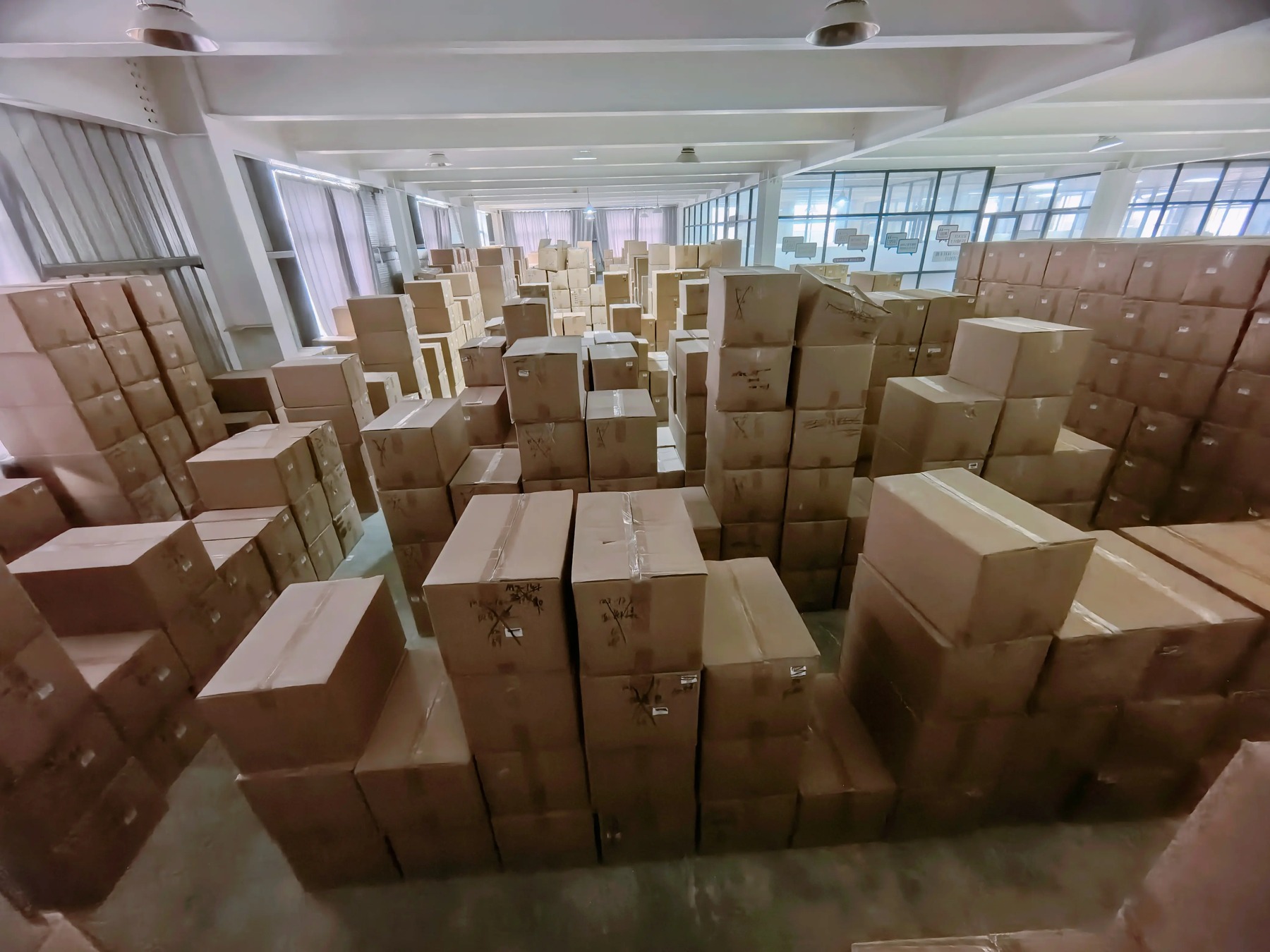
Why ask: compare the same garment, quantity, delivery point and buyer-borne costs. Identify material consumption, testing, development, packing, transport, duty and handling assumptions.
A comparable commercial example
“The product is $12.50 FOB Shanghai, Incoterms 2020. A separately scoped alternative is $15.00 DDP to the named warehouse, with the destination and included charges stated. The proposed payment schedule is 30% deposit / 70% balance, linked to the agreed inspection and shipment-release conditions.”
Those values illustrate a quotation structure. They are not current Sportxia prices. Avoid a location as broad as “FOB China”: state the named port or place and edition. Agree insurance separately where the chosen rule does not impose it.
| Rule | Scope to identify | Important distinction |
|---|---|---|
| FOB | Named shipment port; applicable sea/inland-waterway transaction | Risk transfers on board at shipment; buyer arranges main carriage. FCA may suit container/multimodal handover. |
| CIF | Named destination port; sea/inland-waterway transport and prescribed insurance | Seller pays stated freight/insurance but risk transfers at shipment, not warehouse arrival. |
| DDP | Named destination and seller import/duty responsibilities | Confirm lawful import arrangements, unloading boundary and included costs; insurance is not automatically mandatory under this rule. |
Request: the proforma invoice, complete cost scope, named destination/port and payment milestones. Use the ICC rule-selection guidance to choose a term suited to the actual route. DDP does not remove product obligations or guarantee fast clearance; identify who can perform the import role.
10. How will you resolve defects and delivery-related claims?

Why ask: a fault affecting, for example, 15% of zippers needs a recorded investigation and remedy. “We will improve next time” does not define what happens to the affected delivery.
A written claims workflow
An example policy asks for initial evidence within 14 days after delivery, identifies affected quantities and sample/lot IDs, then defines the agreed remedy: remake affected units with the stated freight responsibility, refund or credit the relevant value, or reimburse an approved local repair. The agreement must state eligibility, review dates, costs and the treatment of latent defects and applicable rights.
Request: the written claims/RMA procedure, inspection-to-release conditions, named decision-maker and dispute route. Agree how evidence is retained and who approves repair or disposal. A failed inspection is handled under the agreed sampling and contract terms; do not reduce it to a universal “defect percentage exceeds AQL” shortcut.
Score the Answers, Then Resolve the Gaps
Score each of the ten questions from 0–2, for a maximum of 20. This is an editorial screening rubric, not an independent factory certification.
| Points per question | Evidence status | Follow-up |
|---|---|---|
| 0 | Unclear or unsupported answer; essential evidence unavailable | Record the gap and hold the relevant approval |
| 1 | Plausible verbal response with documentary evidence outstanding | Assign owner and deadline for verification |
| 2 | Specific answer supported by relevant current evidence | Confirm scope and record the file/reference |
Below 12: hold the supplier until material gaps are resolved. 12–14: request targeted follow-up evidence before a controlled pilot. 15 or more: consider sampling when essential requirements are met. A high total cannot override an unresolved identity, safety, payment or inspection-access issue.
Apply the same questions to Sportxia. Request our actual process responsibilities, current material and QC records, and the scope of any DDP programme. A claim to own knitting machines, a dye house or logistics permissions must be supported for the relevant entity and site; a self-awarded perfect score is not a substitute for those records.
Adjust the Interview to Your Business Model
A start-up ordering 100 units, an individual-order fulfilment business and a team kit with a fixed opening date have different bottlenecks. Keep the core checks and change the emphasis of the conversation.
Scenario A. Start-ups and Small Collections
Constraint: limited budget and an unproven demand forecast. Committing to a lower unit price can leave 400 unsold units if the quantity was chosen to satisfy a tier rather than customer demand.
Ask: can a 50–100-unit paid pilot use available material; can size and colour combinations meet the minimum; and what revisions are covered? Request the current stock-fabric card and repeat-availability conditions.
A custom mill may quote a commitment of 1,000+ yards, depending on the material and process. Stock fabrics can support smaller orders and avoid some custom-development time. They still need approval for composition, weight, colour, recovery and coverage.
Scenario B. E-Commerce and Dropshipping
Constraint: the customer receives the garment without your own receiving inspection. Verify the pick-and-pack operation as carefully as sewing.
- Does the WMS or equivalent control scan and reconcile each unit and shipment?
- Can packaging follow the agreed blind-shipping presentation while retaining legally required origin, sender/return and product information?
- What is the dispatch SLA, and under which stock, cut-off and working-day conditions would a 24-hour target apply?
Ask for an order-to-tracking demonstration, exception handling and returns responsibilities. Handwritten labels are a process risk to examine, not proof that every address will be wrong. Sportxia supports individual-order dropshipping on agreed programmes; confirm inventory ownership, systems, dispatch scope and branding separately.
Scenario C. Teamwear and Fixed Event Dates
Constraint: the first match or season opening is immovable. Delivery planning and safety/quality requirements both need a defined approval path.
Ask: what is the final roster/artwork cut-off, which transport route is booked, what happens if a milestone is missed, and can a suitable named-destination DDP service be offered? DDP does not eliminate customs procedures or the need for a realistic contingency.
Scenario D. Brands Making Sustainability Claims
Constraint: the proposed marketing claim must match the material and supporting supply chain. Ask for current GRS scope, the relevant transaction certificate or equivalent authorised shipment record, and traceability to the goods being purchased.
Separate certification of finished textile materials from chemical-input assurance. OEKO-TEX ECO PASSPORT concerns textile/leather chemical products; STANDARD 100 concerns testing covered textiles and components for harmful substances. Asking whether a dye is “STANDARD 100 certified” confuses those scopes.
Verify the issuer, status, scope and applicable claim conditions before writing recycled, organic or other environmental claims onto the label.
Size Grading for a Diverse Customer Base
A range such as XS–4XL needs fit development across the intended bodies, not just a uniform enlargement from Small. Ask which grade rules control rise, shoulder, armhole and compression zones, and whether separate fit models or blocks support XL+.
Request the POM methods, size-set evidence and point-specific tolerances. ±1 cm can be a negotiating example for a particular measurement; it is not a universal quality boundary. The acceptable range depends on fit impact, fabric and measurement method.
Use One Audit Checklist for Every Candidate
Download the editable scorecard to record all ten answers, the evidence reference, a 0–2 score, open actions, owner and due date. Keep the supporting documents in a controlled folder and use the same product brief when comparing candidates.
For overseas production with significant exposure, consider both a pre-order capability audit and a suitable final inspection. They address different risks. Define the scope and follow-up; an inspection helps manage risk but is not an insurance policy or a guarantee that every defect will be found.
Questions Buyers Ask About Factory Vetting
What MOQ should a new sportswear brand expect?
A custom-dye discussion may involve 100–300 pieces per colour, while available fabric can support a 50–100-unit style in some programmes. These are examples, not universal minimums. Sportxia’s confirmed starting points are 100 custom pieces and 50 pieces for suitable printed private-label programmes; check style, colour, fabric and component commitments in the quote.
What do AQL 2.5 and 4.0 actually determine?
They are inputs to an agreed sampling scheme, often selected for major and minor defects respectively. Lot size, inspection level, sample size, acceptance numbers and defect definitions are also required. A statement such as “1,000 leggings, more than 21 major defects” cannot be derived from the AQL value alone and must not be used as a standalone acceptance rule. Use the applicable standard tables and agreed plan; identified critical hazards need separate zero-acceptance controls.
How do factories, trading companies and sourcing agents differ?
A factory operates manufacturing processes, a trading company sells or coordinates goods, and an agent works within an agreed representation scope. All can be legitimate when roles, sites and accountability are clear. A 15–30% markup can be explored as a comparison scenario, but it is not a verified universal trading-company charge. Compare delivered value and evidence rather than infer the business model from a refusal to film a particular area.
How long should samples and bulk production take?
Plan from the actual route and material readiness. A generic example of 10–14 sampling days + 30–45 bulk days + 7–15 air-transit days adds to 47–74 days if sequential and measured on the same calendar basis. A 60–75-day headline requires its own calendar and allowances; it is not the arithmetic total of every case.
Sportxia’s confirmed planning ranges are 7–15 days for sampling and 15–30 days for bulk, subject to the selected programme and approvals. A claim of two weeks for everything needs scope verification; ready-stock decoration and new custom development are different jobs.
Should I commission an audit, a pre-shipment inspection or both?
An audit before commitment can investigate capability, records and labour conditions. A PSI/FRI examines the defined goods at the agreed production and packing stage. A request to inspect at 80% packed should be checked against the service scope; many final-inspection arrangements require production complete and a specified packing threshold. Do not assume the percentage alone defines a valid final inspection. Prioritise the unresolved risk and obtain a scope-specific proposal.
Is FOB or DDP better for a US-bound order?
Choose according to route, import capability and cost transparency. DDP puts specified destination-delivery and import obligations on the seller, but those obligations must be feasible and documented. FOB is a sea/inland-waterway rule with risk transfer on board at the named shipment port; FCA may fit container or multimodal handover better. A delivery term does not remove the importer’s legal responsibilities or determine every product-compliance obligation.
How do I protect technical files and designs?
Define confidentiality, authorised use, ownership, file delivery and subcontractor access before development. NDA or NNN provisions should fit the parties, jurisdiction and transaction; an NNN title is not automatically stronger or enforceable in every case. Paying a sample fee does not automatically transfer all IP. Specify patterns, artwork and technical updates in the written development terms.
What should be complete before I pay a deposit?
Obtain the proforma invoice/order terms, verified counterparty and beneficiary details, released specification and revision, material/colour scope, quantities, named delivery rule/place, payment milestones and relevant approval/inspection conditions. Confirm a business registration and any affiliate/export-agent relationship. A stamped tech pack can record acknowledgement, but the signature or chop must be connected to the authorised contracting party.
Ready to discuss a defined sportswear programme? Contact Sportxia with your product brief, quantity matrix and target delivery date, then use the same evidence standard for our proposal.
Reviewed November 3, 2026. Anonymous buyer examples and the event-programme artwork buffer are company-reported. Sample answers, prices, capacity descriptions and commercial terms illustrate what to ask and require an order-specific agreement. Send a correction.
Related Posts

READY TO TURN THE ANSWERS INTO A PRODUCTION PLAN?
Bring Us Your Product Brief and Questions
Discuss the style, material, sample scope, quantity and deadline with Sportxia. We will help define a quote and the evidence needed for the next decision.
Discuss Your Sportswear Project
Leave a Reply