How to Verify a Clothing Manufacturer: A Step-by-Step Guide to Avoiding Scams

Check who takes your order, where it will be made and which evidence supports the promised quality—before committing to production.
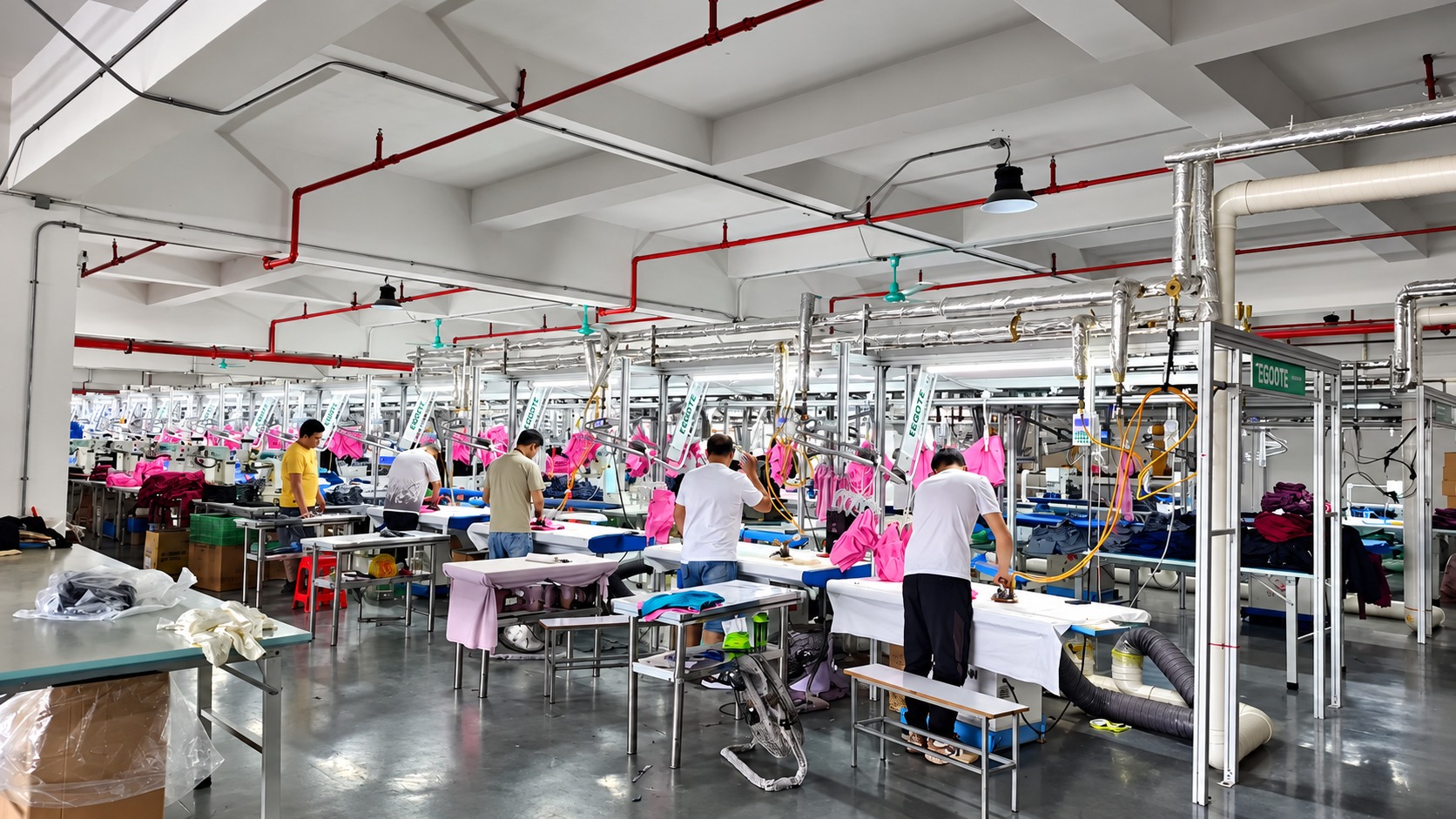
A certificate PDF can support a supplier review, but it cannot establish manufacturing capability on its own. You need to connect the legal seller, payment instructions, production site, material sources and inspection records to the order you actually intend to place.
In one supplier review reported by Sportxia, an ISO 9001 document looked convincing until its holder was compared with the beneficiary on the proforma invoice. The entities did not match. That finding required an explanation and independent verification before the document could support the proposed transaction.
This guide explains how to verify a clothing manufacturer through ten connected steps. It follows the evidence-led approach used in Sportxia’s sportswear manufacturing programme: verify identity, check relevant credentials, observe operations and test the approved specification before increasing the order.
Use the IAF CertSearch database and the relevant issuing body when checking accredited management-system certificates. An ISO 9001 certificate concerns the stated management-system scope; it is not a product-performance guarantee. Keep a dated record of what you verified and what remains unresolved.
What You Need Before You Start
Prepare the evidence request and inspection conditions before discussing a deposit. A well-organised supplier should be able to explain who owns each document, which site it covers and how access will be arranged. A delayed response is a follow-up item, rather than proof of dishonesty by itself.
When a lead comes from an exhibition, our sportswear trade show sourcing guide explains what to collect at the booth, how to organise follow-up and when to verify the evidence before committing to a pilot.
1. Build the paper trail
- Business registration: legal name, registration identifier and the relationship between registered office and operating factory.
- Invoice and payment details: the contracting entity, beneficiary and any disclosed collection or export arrangement.
- Certificate files: include scope, annexes, site details, issuer and validity dates.
- Factory profile: process capability, machinery counts, capacity and current workload.
- Subcontractor list: identify outsourced dyeing, printing, embroidery and other relevant operations.
2. Agree access and standards
- A live walkthrough that includes cutting, production, QC and the warehouse.
- Written access for an agreed independent inspection or audit.
- A defined inspection plan, including any chosen AQL 2.5 parameter for major defects.
- A shared evidence folder with version history, controlled access and retained copies. An ordinary cloud folder is not automatically immutable.
- A tape measure, suitable scale and, when required, a GSM cutter with a defined fabric-mass procedure.
Start with official sources: OEKO-TEX Label Check, the GOTS supplier database and amfori’s platform guidance. Step 4 explains what each record can support.
If the supplier will not identify a responsible QC contact or agree a workable inspection route, hold approval until those controls are resolved. Use the manufacturer sourcing and first-PO guide to connect this review with the wider buying process.
If an agent will perform these checks for you, define the evidence, site access and corrective-action follow-up in their scope. Our guide to evaluating an apparel sourcing agent compares fee models with the technical oversight and independent checks your project needs.
Step 1. Draft Your Factory Verification Brief
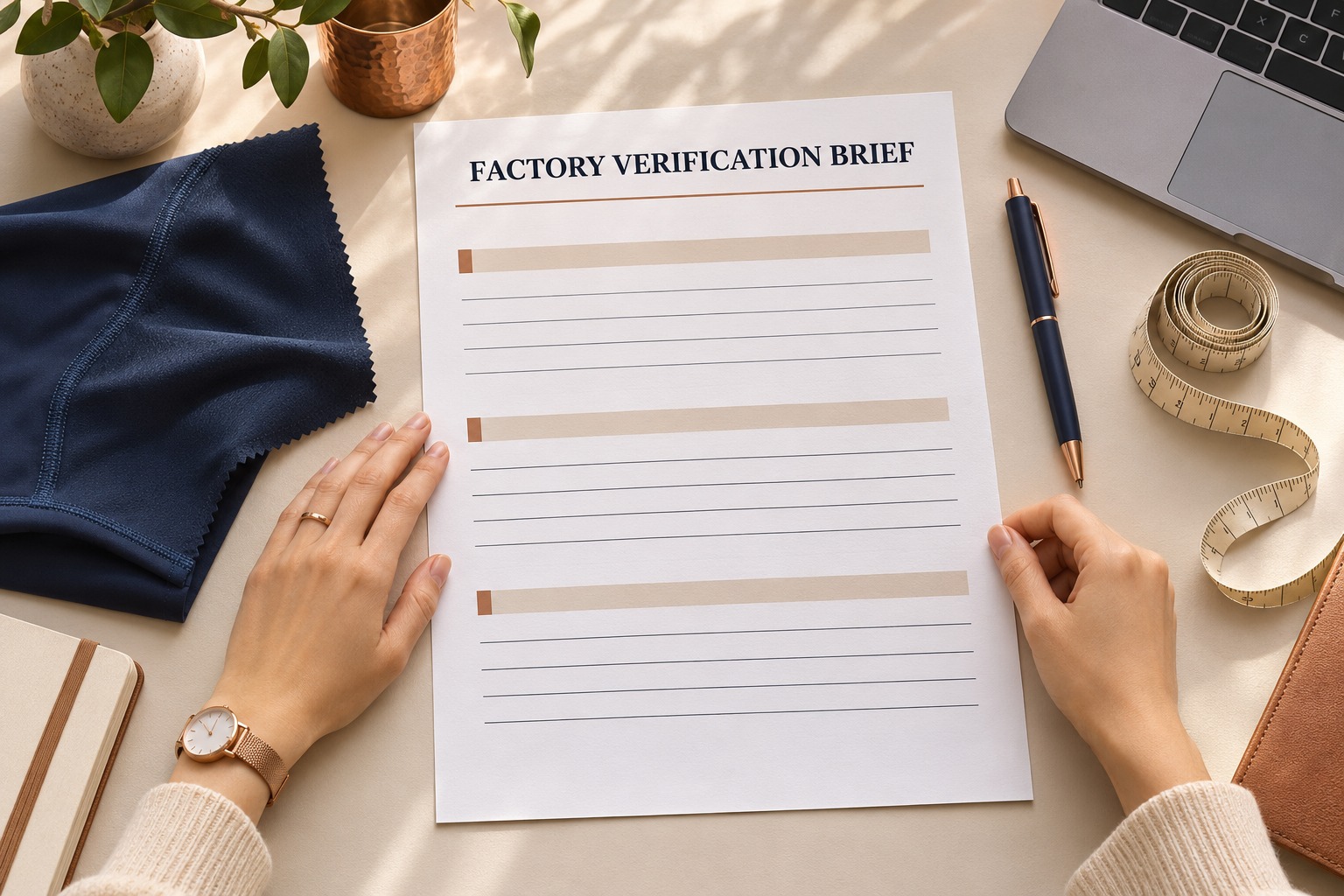
Send a one-page Factory Verification Brief (FVB) so the supplier answers the same practical questions as every other candidate. “Can you make good quality?” produces little useful evidence. A defined brief gives the supplier a clear capability test.
| Section | What to ask | Evidence or decision |
|---|---|---|
| Product scope | Category, construction complexity, material, target quantity and price basis | Comparable sample/work records and production plan |
| Required processes | Pattern making, cutting, sewing, finishing and any special operations | Identify in-house work and disclosed process partners |
| Non-negotiables | No unauthorised subcontracting; inspection access; channel-specific packing and fit requirements | Written acceptance or a documented capability gap |
A seamless activewear programme and a heavyweight hoodie programme require different processes. State whether in-house pattern development and cutting are required, then ask which other operations use approved partners. “No unauthorised subcontracting” is more precise than assuming every component must be made under one roof.
Adapt the brief to your channel. Amazon FBA programmes need current receiving, bag-warning and barcode instructions. Boutique collections may place greater emphasis on grading and consistent hand feel. Make each requirement measurable and identify its approver.
Use Sportxia’s cut-and-sew capability information when preparing questions about patterns, cutting and garment assembly.
Step 2. Check the Physical Operation
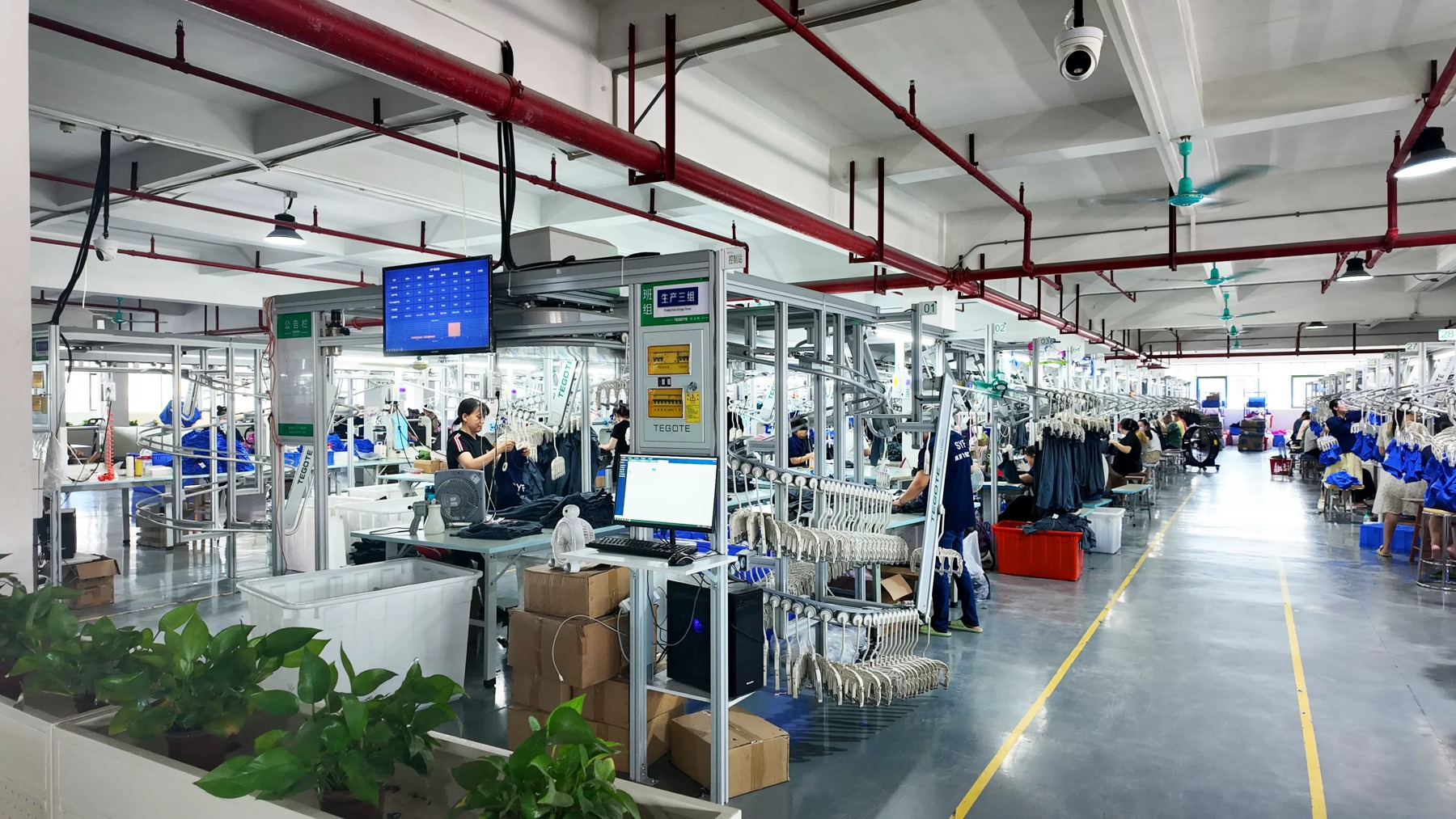
Confirm what the supplier operates directly and what it coordinates through other companies. A trading company can be a legitimate partner; the risk is an undisclosed or misrepresented production arrangement.
- Use platform filters as a starting point. On Alibaba.com, review any Verified Supplier assessment and whether the proposed order qualifies for Trade Assurance. Alibaba describes third-party assessments, but its Verified Supplier information does not replace your product and site checks. Read the applicable order-protection conditions.
- Request a live identity check. During the call, ask the operator to show a paper containing your project reference and today’s date, then move to a named work area. Keep unrelated customer information out of view.
- Reconcile the location. Compare the disclosed factory address, registration information and a voluntarily shared location pin. A registered office may differ from a manufacturing site; request evidence of that relationship.
- Record a 0–5 confidence score. Explain the evidence behind the score. An unresolved identity or payment issue remains a hold condition even if the overall presentation looks strong.
If you are buying leggings but the call shows denim, ask which line will run your order and how that capability is evidenced. A mixed product floor raises a question; it does not prove outsourcing by itself.
Step 3. Audit the Proof Packet

Request complete, readable source documents through a controlled folder. A screenshot may help explain an issue, but it should not replace the relevant registration, certificate scope or invoice. Inspect the underlying records rather than their graphic polish.
- Registration: identify the legal entity and operating site. Reconcile Chinese and English names using registration identifiers and documented translations where appropriate.
- Payment evidence: compare the invoice beneficiary, bank confirmation and contracting party. Investigate any different collection company, export agent or affiliate before payment approval.
- Certification: check holder, covered sites, activities, products, annexes and issuer. ISO management-system scope and GOTS product/processing scope serve different purposes.
Perform a three-way identity match
Place the business registration, invoice header and certificate-holder record side by side. The objective is a documented, verified chain of responsibility. Names and addresses should either match or have a substantiated relationship; small transliteration differences are not the same as an unexplained unrelated entity.
A claim that a certificate belongs to a “sister factory” needs more than a verbal explanation. Request the relationship, production role, applicable agreement and evidence that the proposed activity is covered. Hold approval when the actual responsible site cannot be established.
Step 4. Verify Claims in Official Databases

Search the current issuer or scheme record using the certificate or licence identifier. Save the result, date, covered entity and unresolved questions. Use the original identifier exactly: OEKO-TEX states that its label numbers are case sensitive.
| Claim / Record | Official route | What to check | Scope limit |
|---|---|---|---|
| OEKO-TEX | OEKO-TEX Label Check | Exact case-sensitive identifier, status, holder and article scope | A yarn/material record does not automatically certify the finished garment |
| GOTS | GOTS certified suppliers | Entity, sites, eligible products/activities and current scope | Check shipment transaction evidence where required |
| GRS / Recycled claims | Textile Exchange company search | Current scope and relevant products/processes | Scope and transaction certificates answer different questions |
| ISO management systems | IAF CertSearch / issuing body | Standard, issuer, accreditation, organisation, sites and scope | Does not certify that each product meets every performance requirement |
| amfori BSCI | amfori platform guidance | Authorised connection, site, report date and corrective actions | Member/platform access may be required; not a product certificate |
| SMETA / Sedex | Sedex SMETA | Appropriate audit company, site, report and permitted sharing | An audit methodology, not Sedex certification |
| WRAP | WRAP facility search | Certified facility, validity and relevant record | Check the actual covered site |
| SA8000 | SA8000 certification search | Organisation, covered site and status | Contact the responsible scheme/certification body for unresolved questions |
Check scope as carefully as validity
For OEKO-TEX, a record covering yarn cannot by itself substantiate a finished-legging claim. A material supplier’s certificate can be legitimate evidence within a documented supply chain; it must not be represented as broader certification of an unrelated factory or finished product.
For GOTS and GRS, distinguish a scope certificate from the transaction evidence required for the certified goods. Scope identifies eligible activities and products. Shipment-linked evidence connects a particular purchase to the claim. Use the relevant scheme’s current procedures and issuing certification body.
For BSCI and SMETA, request an authorised platform connection or sharing route appropriate to your membership and relationship. For WRAP and SA8000, use their respective facility/certificate search routes. These are different systems, not interchangeable badges.
Step 5. Execute a Live Technical Walkthrough
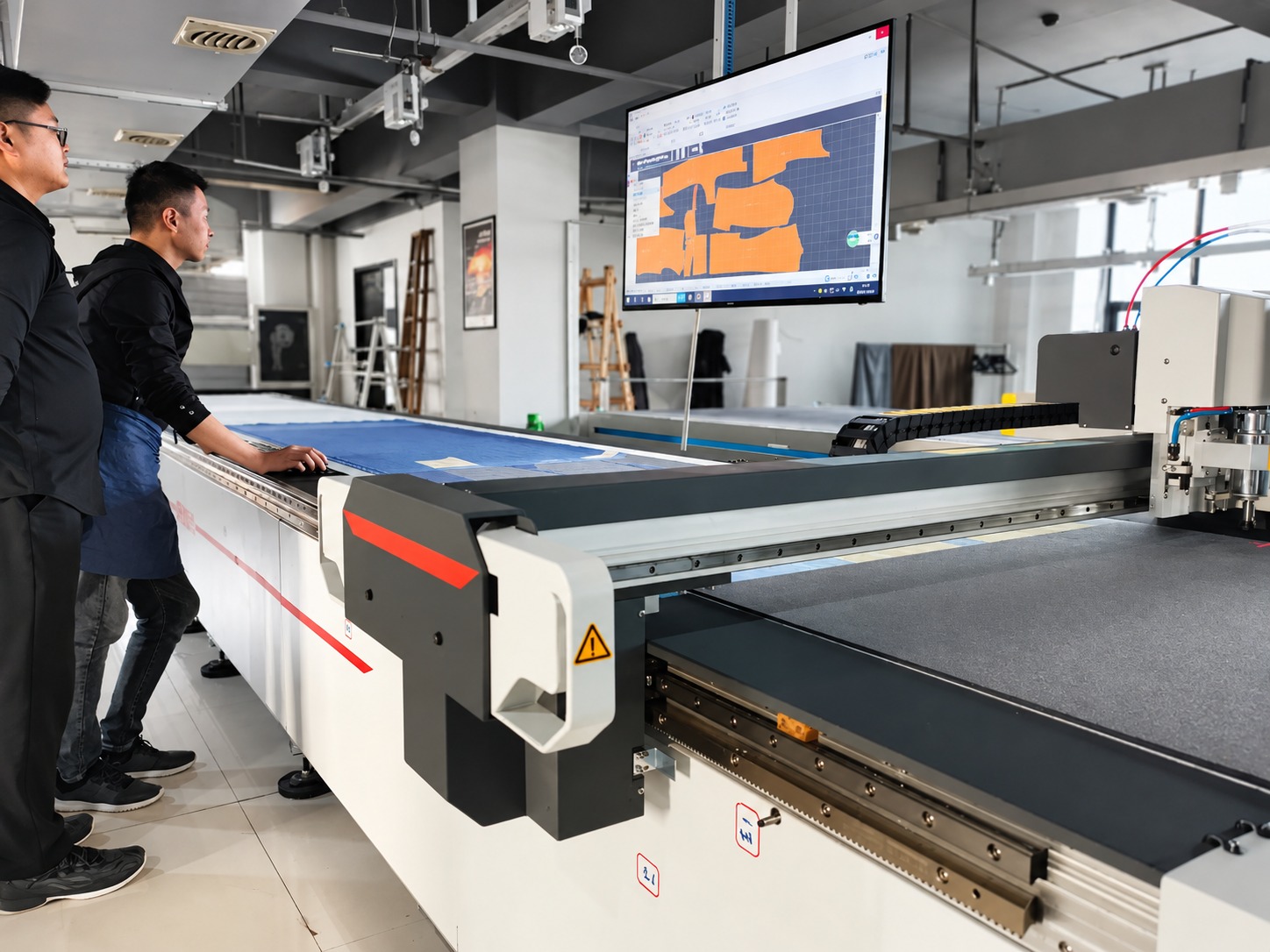
Arrange a live call during active production. Direct the sequence yourself so the operator connects receiving, cutting, sewing, inspection and packing. Recorded footage can explain a process, but it cannot establish who controls the site today.
1. Receiving and cutting
Ask to see roll labels, material codes and batch or lot numbers. Follow one relevant material into the cutting room and inspect spreading, bundle tickets and job identification. Check how different dye lots remain separated. Poor identification increases traceability and shading risk; a loose roll alone does not establish a failed product.
2. Sewing and machinery
Identify the proposed sewing line, inline QC point and approved garment reference. Ask about flatseam or overlock capability where relevant, machine maintenance records, grading responsibility and the measurement SOP. Relate the equipment to your actual construction rather than counting machines without a process plan.
3. Finishing and packing
Review needle guards, broken-needle control and the agreed metal-detection procedure. Request the prescribed performance-check or calibration records, challenge-piece demonstration where applicable, reject handling and the link to shipment release. Check carton labels against the packing record.
Look for identified WIP and segregated nonconforming goods. Ask the QC manager to explain how an affected unit is isolated, corrected and released. A hesitant answer merits follow-up; an empty red bin or a particular floor colour is not proof that records are fabricated.
Issue a findings list with owners, due dates and a corrective and preventive action (CAPA) plan. For material risk, higher exposure or restricted visibility, obtain an independent on-site assessment. Discuss the scope directly with organisations such as SGS or Intertek.
Step 6. Use Samples to Test Specification Control
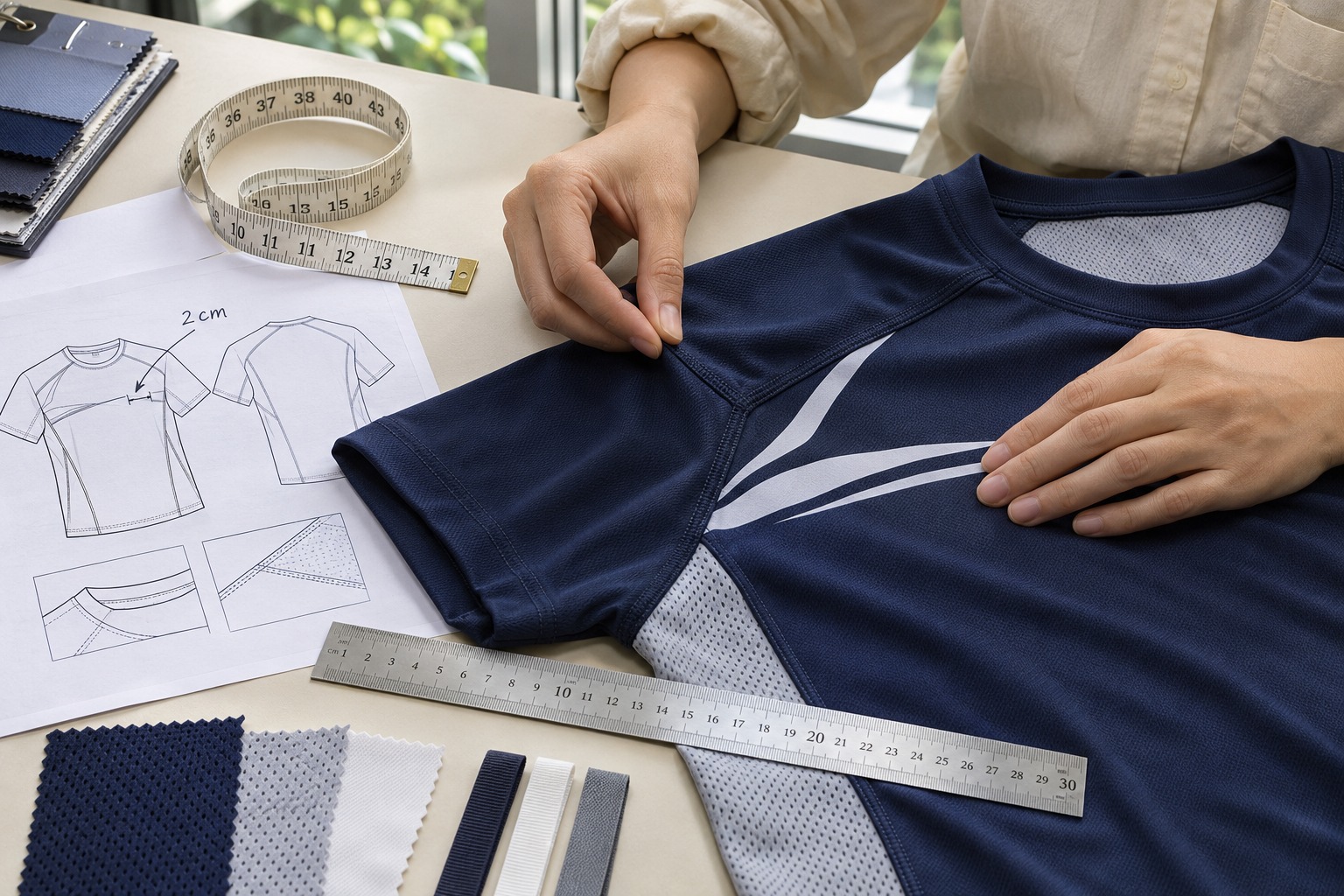
Sampling tests whether the supplier can translate your sportswear tech pack into the intended garment. Inspect material recovery and coverage under defined conditions, seam comfort, print edges, puckering and the agreed measurements. Use the garment’s intended movement range rather than an uncontrolled maximum stretch.
- Inspect and annotate. Photograph the issue and state the exact change, such as “move the print 2 cm right”, identifying the reference point, size and file revision.
- Control the physical reference. Tag the accepted garment with a unique identifier, revision and date. Link it to the specification.
- Approve the PPS. A pre-production sample should represent the actual approved bulk fabric, trims, artwork and process. Identify and resolve any remaining difference.
- Record the decision. Put the approval and release conditions in writing and reference them in the purchase order or annex.
Clarify terminology. Suppliers sometimes call an approved reference the “Top Sample,” while TOP often means a top-of-production sample taken from early bulk. Name the exact sample stage and ID so a TOP inspection does not silently replace pre-production approval.
Use the sample-stage and approval timeline to plan prototype, fit, size-set and PP decisions separately.
Step 7. Enforce Your Quality Control Plan
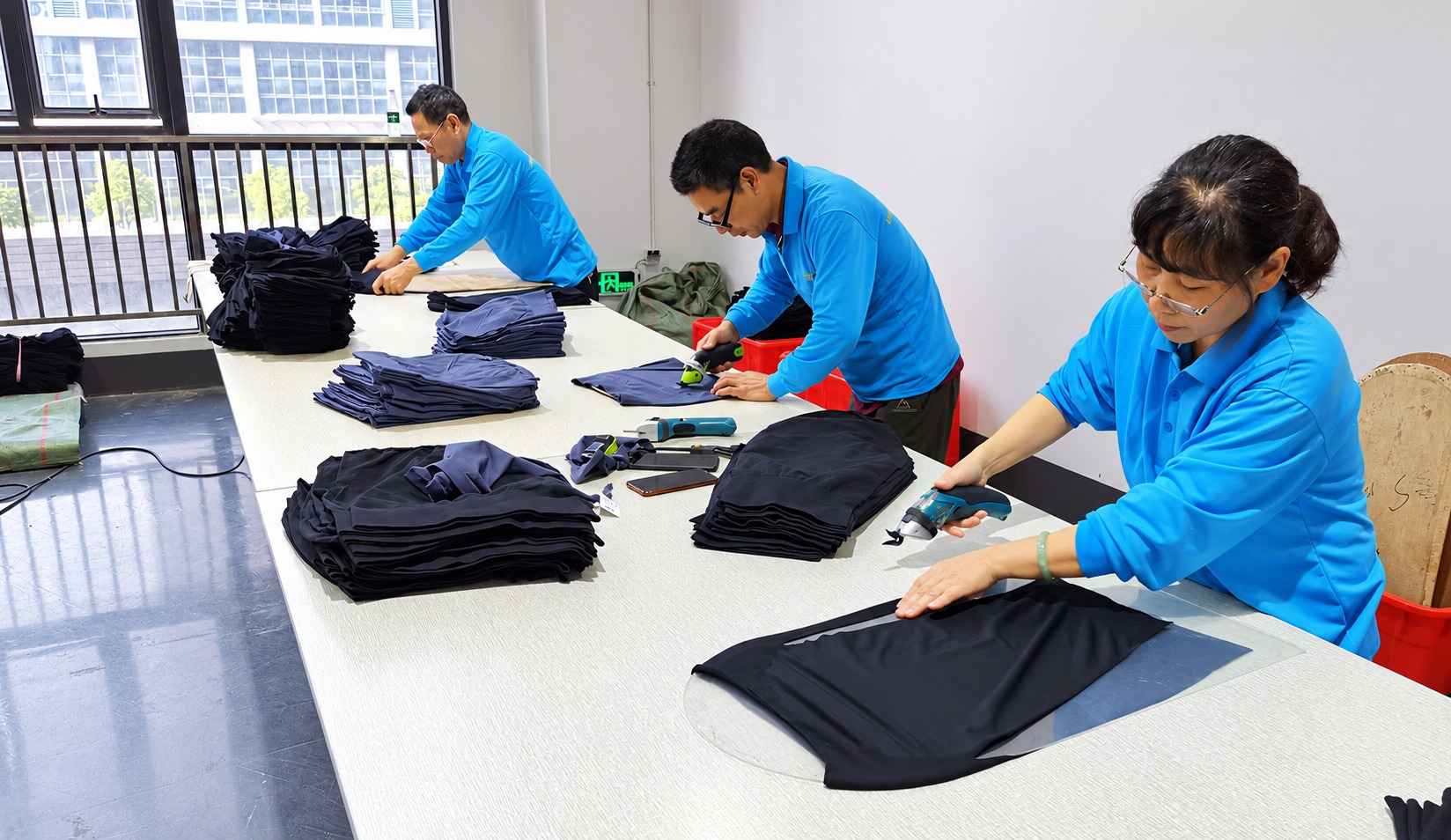
Agree the inspection gates, defect definitions and evidence before cutting. Attach the released QC plan to the order terms, including access, reporting, corrective action and who authorises shipment.
1. Establish three inspection gates
- Incoming / IQC: inspect and identify fabrics and trims before use.
- Inline / DUPRO: an agreed checkpoint at around 20% sewn can reveal a recurring measurement or seam issue early. Book it against actual progress.
- Final random inspection / FRI: inspect at the agreed completion and packing stage before the relevant payment or shipping release.
2. Define the sampling decision
Use the agreed edition of ISO 2859-1; its current edition is 2026. If AQL 2.5 is selected for major defects, also define inspection level, lot size, sample size and acceptance/rejection numbers. Set minor-defect criteria separately. AQL is not the percentage of defects you are guaranteed to receive.
Specify zero acceptance of identified critical hazards and an appropriate prevention/control process. Do not apply AQL 2.5 to critical safety hazards. If the lot fails, follow the agreed hold, sorting, rework and reinspection procedure before release.
3. Standardise the evidence
| Process stage | What to check | Standard / Method | Evidence to capture |
|---|---|---|---|
| Incoming | Fabric shade | Agreed D65 lightbox comparison | Side-by-side record against the master; physical colour approval controls |
| Inline | Measurements | Released size specification and POM method | Tape-on-garment photograph with actual readings |
| Inline | Stitching | Specified stitch type, density / SPI and seam requirements | Macro seam photograph and test result where required |
| Finishing | Labelling | Current tech pack / Approved label artwork | Care-label photograph and verified text |
| Packing | Barcodes | Released shipping-mark PDF / Receiving specification | Scanner result and label record; a beep alone does not verify every field |
4. Keep document and material control connected
Confirm the production line uses the released tech-pack revision, such as V2 rather than superseded V1. Connect each fabric lot to cut bundles and finished units so an issue can be bounded. Review nonconforming-unit and rework records, including the responsible person and closure evidence.
Step 8. Audit Ethical Standards and Supply Chain Transparency
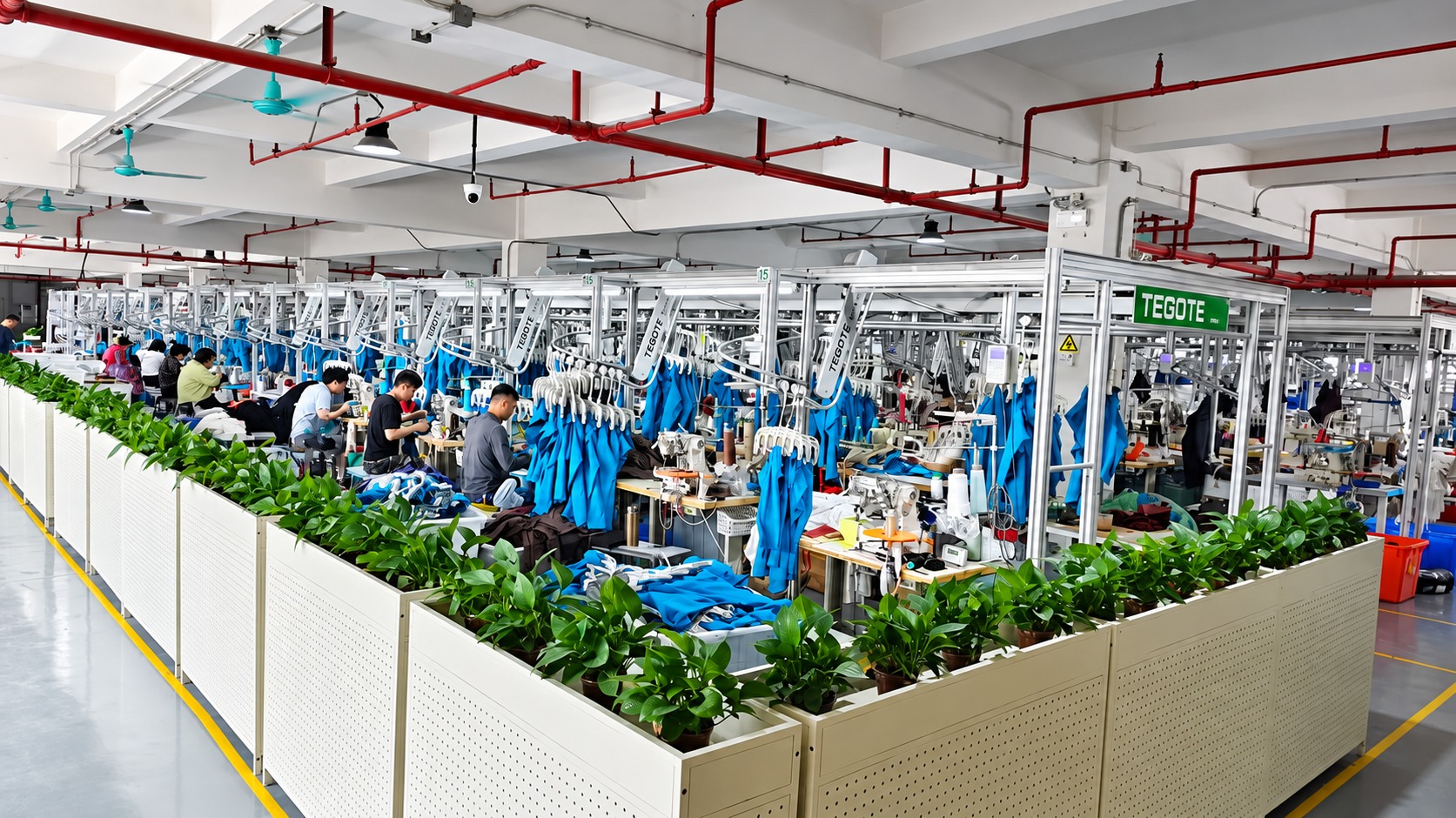
Review the people and processes behind the approved sample, including the facilities responsible for subcontracted operations. A showroom visit or clean workshop photograph provides limited context; it cannot establish labour conditions or product compliance.
Request the relevant social-compliance evidence and open corrective actions. SMETA is an audit methodology managed by Sedex; “Sedex certified” is not an equivalent product or factory certification. BSCI, WRAP and SA8000 also have distinct structures and verification routes.
Obtain a signed subcontractor map identifying dyeing, printing, embroidery and other relevant sites. Link invoices, material article codes, supplier identities and certificate scope to the actual chain. Different names can reflect a legitimate mill, converter or exporter relationship, but the relationship must be traceable.
Observe safety and welfare conditions
During a walkthrough, look at access routes, fire equipment, stored materials and basic sanitation. Ask how working hours and complaints are recorded. Worker interviews need appropriate confidentiality and a qualified audit process; a manager’s answer during a video tour is not a substitute.
Missing soap or running water is a concrete welfare issue to investigate. Bathroom appearance is not a reliable standalone measure of human-rights compliance. For higher-risk concerns, use an appropriately scoped independent social audit and follow the corrective actions.
Step 9. Put Verification Results Into the Order Agreement
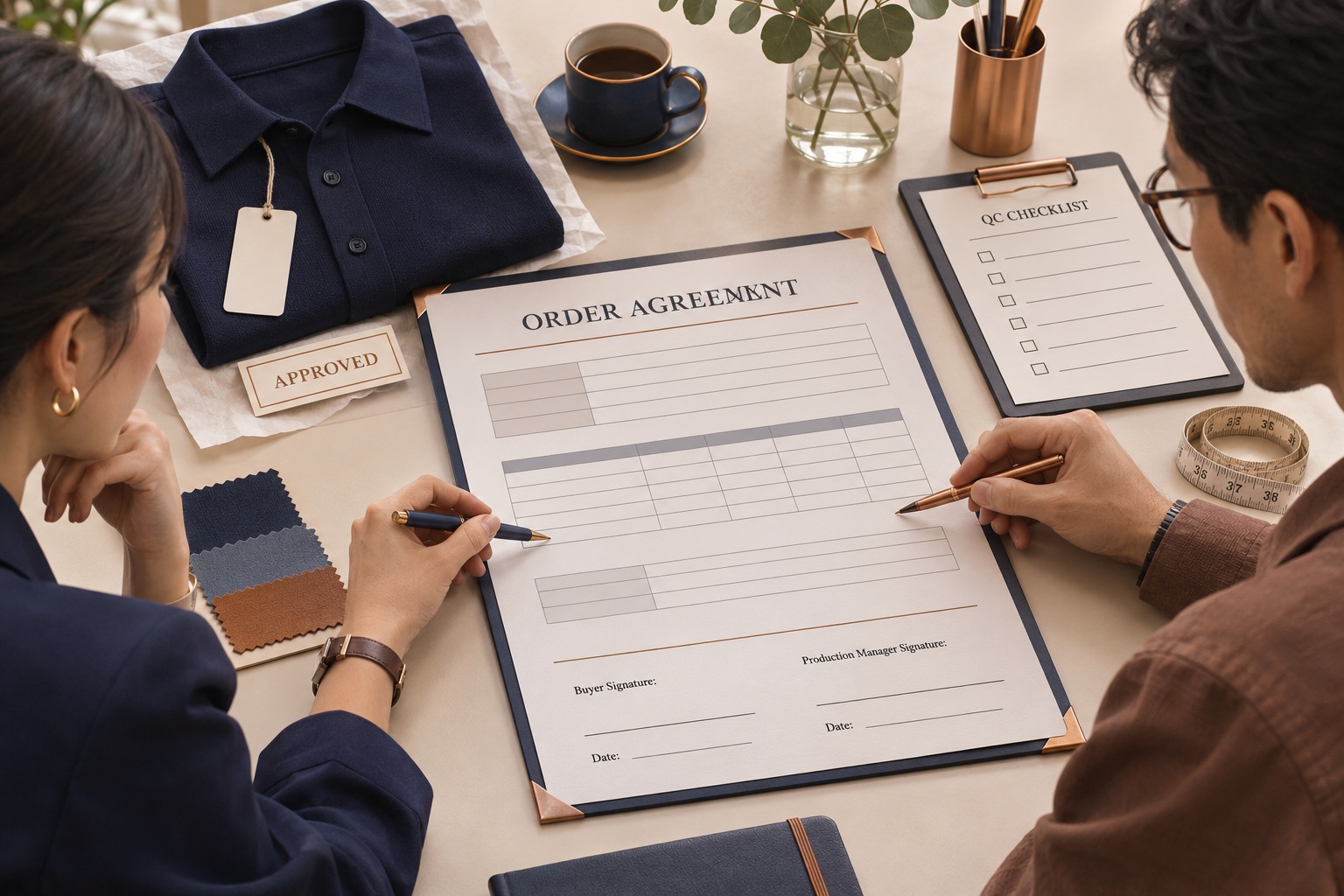
Convert verified facts and unresolved risks into clear obligations. The agreement should identify the seller, production sites, specification, inspection access, delivery conditions, change procedure and remedies. Have transaction-specific terms reviewed for the relevant jurisdiction and parties.
1. Write measurable production obligations
- Quality: incorporate the inspection plan, including any AQL 2.5 major-defect parameter, critical-hazard controls and the applicable acceptance numbers.
- Failed-lot response: if 100% sorting or rework is the agreed remedy, state its trigger, cost responsibility, timetable and reinspection requirements. It does not occur automatically from an AQL label.
- Sample hierarchy: identify the signed PPS/reference ID and released technical file; define which controls if they differ. A physical sample should not silently override every written specification.
- Subcontracting: list permitted sites and require written approval for changes. Define any suspension, refund or termination rights rather than assuming an unauthorised change automatically refunds a deposit.
- IP and tooling: state ownership and permitted use of patterns, tech packs, moulds or other paid development assets, with return/access arrangements.
2. Connect payments to agreed evidence
A negotiated example is 30% deposit / 70% balance. Release the deposit only when the agreed identity, contract and payment checks are complete. For Chinese suppliers, verify the contracting entity and authorised signature or company chop through an appropriate process; a red stamp alone does not establish authenticity.
Link the balance to the agreed passing inspection, resolved actions and packing/release evidence. Sealed-carton video is supporting information, not proof of every unit’s quality. Apply the order’s actual payment terms rather than unilaterally withholding a sum without reviewing the agreement.
Suggested reading: from tech pack to first production order.
Step 10. Place a Pilot PO to Check Consistency

An individually developed sample and a production line answer different questions. Use a controlled pilot to test repeatability, communication, traceability and packing before scaling the commitment.
- Plan a suitable micro-run: discuss a 50–100-unit pilot where the supplier’s materials and process allow it. Describe the PO as a capability test. Commercial invoices must still accurately describe the goods and transaction.
- Gate cutting: require written approval of the PPS before the relevant bulk cutting begins.
- Check drift: measure an early diagnostic set of 10 random units of one size using the same POM method. A waist spread greater than 1 cm warrants investigation against the agreed tolerance; it is not proof of excessive cutting-stack height.
- Check the full handover: compare shade, lot identification, approved trims, labels and packing with the released tech pack.
The ten-unit diagnostic is not a replacement for the agreed statistical inspection sample. Archive the report, specification, signed agreement, deviations and the release decision.
Allow an illustrative 14-day buffer for the additional pilot-and-review gate when building the launch plan. Actual timing depends on material readiness, scope and correction rounds. Scale after the pilot meets the agreed major-defect plan, critical-hazard controls and delivery requirements.
At Sportxia, 50 pieces applies to suitable printed private-label programmes, while standard custom development starts at 100 pieces. Sampling is normally planned at 7–15 days, with bulk at 15–30 days after the relevant approvals and material readiness. Confirm the order-specific basis rather than applying a pilot example to every style.
Troubleshooting Common Verification Failures
1. The Sample Matches but Bulk Production Fails
Scenario: an approved prototype is followed by a 500-unit delivery with incorrect seams or materials. Investigation: compare the actual BOM, factory/line, instructions and inspection records; unapproved subcontracting is one possible cause. Response: document affected units, preserve evidence and apply the agreed payment, rework and dispute process.
Prevention: attach the reference-sample ID to the order and schedule an inline check around 20% sewn, with a clear follow-up gate.
2. The Certificate Search Returns No Result
Scenario: the official lookup does not return the supplied certificate. Investigation: recheck the exact identifier, entity, scope, expiry and issuer. Ask how the holder relates to the goods and verify supporting supply documents.
Sportxia reports that nearly 30% of initial reviews encountered a credential presented as the supplier’s own even though it belonged to another entity. This is company-reported experience, not an industry-wide audit rate. Establish the relationship before relying on the claim; do not equate every holder mismatch with forgery.
Response: retain the failed search result and obtain clarification directly from the scheme or issuer through its official contact route.
3. The Supplier Will Not Share Audit Evidence
Scenario: the representative says the report is confidential. Investigation: establish the report owner, platform permissions and permitted sharing route. Confidentiality can be legitimate; refusal alone does not establish a fake or failed audit.
Response: request an authorised Sedex/amfori connection where applicable, or agree alternative evidence and an independent assessment. Keep approval on hold if the buyer cannot obtain evidence sufficient for the requirement.
4. The Tour Is Polished but Cannot Be Directed
Scenario: the video shows production but cannot respond to a request to inspect a named area. Response: arrange a live follow-up, ask for the project/date reference at a cutting table and reconcile the disclosed site with the records. A poor connection or edited film is a reason to investigate, not proof of a fake factory.
Ask how rejected units are recorded and where they are held. Check a documented example instead of using an empty defect bin as a fraud test.
The Go / Hold / No-Go Decision
Go when identity, capability, claim scope and production controls meet the agreed requirement. Hold when a specific gap can be resolved with evidence. No-go when material misrepresentation is established or the supplier refuses the essential controls needed for the order.
Record the decision, owner and supporting evidence. A low price should not outweigh an unresolved identity, critical-quality or inspection-access issue. For the wider sourcing choice, compare China and Europe as sportswear supply chains.
Questions About Verifying a Clothing Manufacturer
Does an Alibaba Gold Supplier badge prove a factory is genuine?
A badge or membership age is not proof of factory ownership, product quality or ethical performance. Alibaba describes business-verification and assessment features, but you still need the relevant current report and your own order checks. Membership prices vary; a $4,000 annual-fee figure should not be treated as a verified current price or as a quality score.
Sportxia reports a review of a five-year Gold Supplier listing behind which a two-person office coordinated production elsewhere. The useful question is whether that business model was disclosed and the actual production site could be verified.
Can I instantly distinguish a manufacturer from a trading company?
No single catalogue clue is conclusive. An offer spanning yoga leggings, denim and phone cases should prompt questions about direct production and partner sourcing. Verify the processes, site and commercial role. A disclosed trading company may be legitimate; a business misrepresenting another factory’s capacity is a different risk.
Which bank-detail issue requires an immediate payment hold?
An unexplained personal beneficiary or changed account instruction needs independent verification before a transfer. Reconcile the seller, invoice and beneficiary, including any authorised export-agent or affiliate arrangement. Do not assume every offshore corporate account is fraudulent, or that paying a private person automatically removes every legal remedy. If fraud is suspected after payment, contact the bank promptly and preserve the correspondence for the appropriate reporting process.
Can a live video review replace an independent factory audit?
It can help with initial screening, but it is not an equivalent assurance service. An order below $10,000 can still justify an on-site audit if the product, supplier or safety risk is high. For planning, a $300–$500 per auditor-day range can be tested as an illustrative budget before travel and scope-specific charges; request a current quotation rather than treating it as an SGS or Intertek published rate.
Likewise, covering 80% of a checklist remotely does not reproduce 80% of an auditor’s assurance. A directed call cannot replace independent records testing, confidential worker interviews or physical inspection. Ask which risks remain unverified and choose the next check accordingly.
Why might a supplier withhold its subcontractor list?
It may be protecting commercial relationships, observing another party’s confidentiality terms or avoiding scrutiny. Agree a proportionate disclosure route, including an NDA or independent reviewer where useful. You still need enough visibility to verify production responsibility, claim scope and required chemical controls. Knowing a dye house’s name alone does not prove freedom from restricted azo dyes; appropriate traceability and testing remain necessary.
Build a Supplier Verification File You Can Reuse
Retain five connected evidence groups: verified identity, validated claim records, technical walkthrough/audit evidence, an agreed QC plan and the signed order terms. Keep registration files, dated lookup results, authorised videos, approved samples and tech-pack revisions in a controlled supplier folder.
Use a supplier scorecard with an evidence reference and an open-action owner for every candidate. A record created today may help investigate a fabric or delivery issue six months later, but it supports the agreement and other evidence rather than guaranteeing a refund.
Run the process on your top two candidates. Resolve essential identity, certificate-scope and production-access gaps before progressing. Then compare the same product brief, material assumptions and delivery basis.
Sportxia’s manufacturing programme is based in Hangzhou, China, with a 16,000 m² facility. Ask our team for a live production discussion and the documents applicable to your proposed product and programme. Review the cutting, material, quality and delivery plan with the same evidence-led approach you use for any candidate.
Related reading: use the China sportswear manufacturer shortlist to identify candidates, then follow the checks here before choosing a supplier.
Reviewed November 3, 2026. Anonymous review examples and the nearly 30% figure are company-reported. Pilot quantities, budgets, timing and payment splits are programme-specific examples. Factory-library photographs show real work areas; document-review images are illustrative. Send a correction.
Related Posts

READY TO CHECK YOUR NEXT PRODUCTION PARTNER?
Connect the Paperwork to the Production Floor
Bring Sportxia your product brief, sample requirements and target schedule. We will help define the evidence and approvals needed for your manufacturing plan.
Discuss Your Sportswear Project
Leave a Reply