How to Find Sportswear Manufacturers: From Tech Pack to First PO
Find a sportswear manufacturer that can make your product, prove its capability and deliver the order you approved. Follow the full route from a technical brief to your first purchase order.

From Tech Pack to First PO
A finished product photo cannot tell you whether a supplier understands stretch recovery, controls sewing tension or can repeat a colour across a reorder. Those questions must be settled before bulk cutting begins. At Sportxia, we recommend choosing the manufacturing process first and comparing quotations against that process.
This guide turns sourcing into a sequence of decisions with an approval record at each stage. It covers startup activewear, private-label collections and team uniforms. The result should be a shortlist you can explain, an approved physical sample and a purchase order that connects the product specification to inspection, payment and delivery.
Before You Contact a Sportswear Factory
Put the information a production team needs in one shared folder. Your first email does not need a finished collection, but it must identify the garment and the decisions still open. Reserve budget for development samples and independent inspection as well as the goods.
Your essential files
- A one-page brief: category, destination market, intended customer, size range, quantity and target price.
- A versioned tech pack: front and back flats, points of measure, grading, seam construction and artwork positions.
- A fabric specification: composition, GSM, stretch, recovery and an opacity target, supported by a physical reference where possible.
- Branding artwork: .AI or .SVG logo files, care-label wording and hangtag requirements.
- A supplier comparison sheet: identical fields for quantity, sampling, delivery, payment and evidence.
Decisions to make in advance
- Which destination labeling and chemical requirements apply?
- Which voluntary certificates support the claims you intend to make?
- Who arranges freight and acts as importer?
- Which measurements and performance checks decide sample approval?
- What inspection plan will be included in the PO?
For quality-system context, review ISO 9001. A management-system certificate does not certify the performance of your particular leggings or jersey.
Step 1. Turn the Product Idea Into a Quoteable Specification
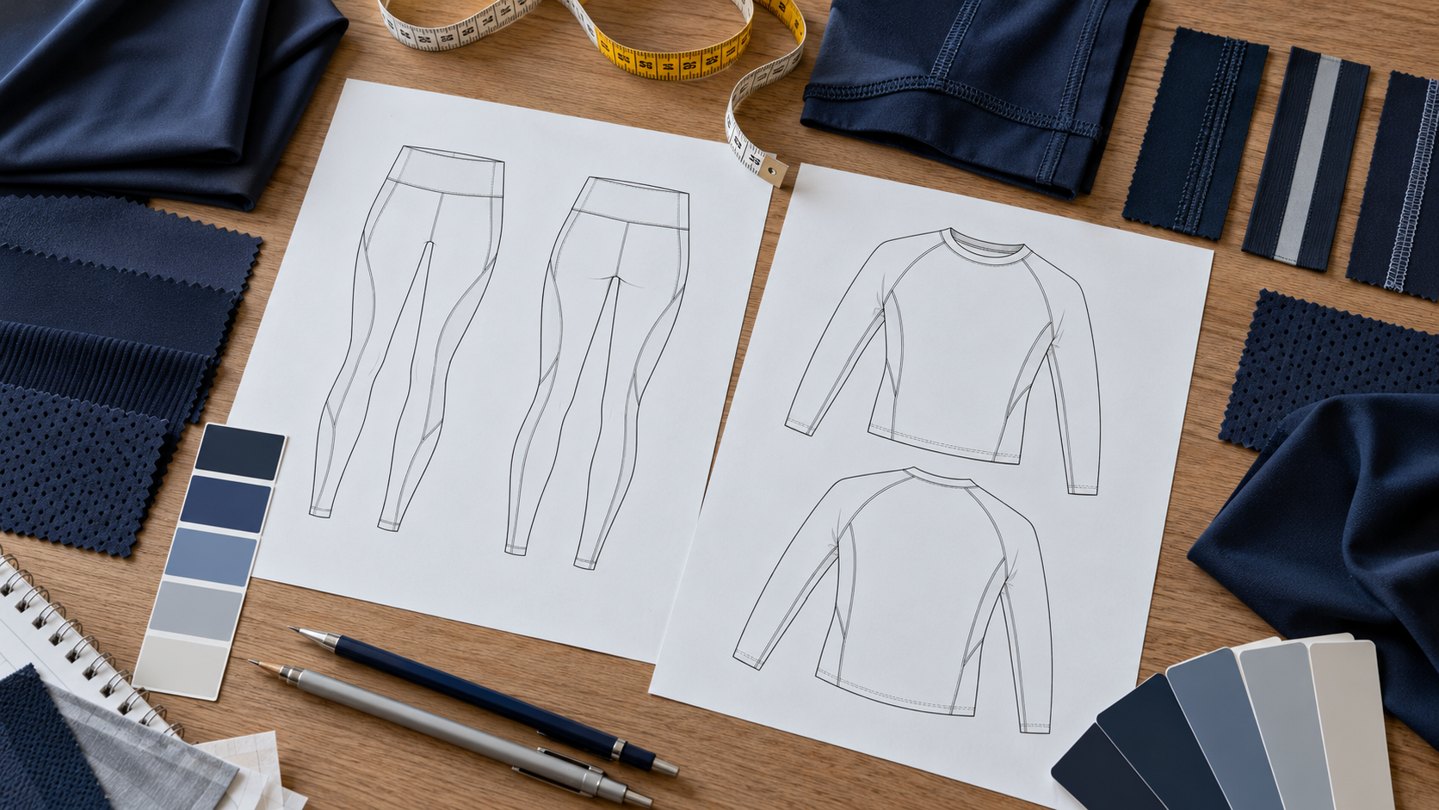
Write five screening requirements before searching: manufacturing category, order quantity, target delivered cost, required evidence and warehouse arrival date. Distinguish seamless knitting from cut-and-sew: the machinery, development work and material commitments differ.
A quantity such as 50 units per colour is a useful opening question, provided you also identify sizes and available materials. It is not the same as 50 units across several custom colours. Specify a DDP destination if the budget is meant to include delivery; otherwise the supplier cannot price the same scope.
For a compression style, identify the proposed Nylon 6.6 blend and evaluate a 220–250 GSM candidate range. Neither the yarn name nor fabric weight alone proves recovery or squat-proof coverage. Assess the chosen colour, stretch level and finished garment. Specify flatlock construction where the design needs reduced chafing, with seam position and thread requirements.
- First collections: begin with available fabric colours when a smaller opening run matters.
- Team kits: agree print durability and sublimation artwork before discussing optional hand-feel changes.
- Repeat collections: identify the fabric lot and approved colour reference that future runs must match.
Need help converting the brief into production instructions? Explore apparel sizing and cut-and-sew development.
For the full sequence from brief and tech pack through sampling, costing and production release, follow our sportswear product development guide.
Before requesting a sample quote, use our factory-ready sportswear tech pack guide to turn the agreed brief into controlled drawings, material codes, measurement methods and approval instructions.
Step 2. Build a Supplier List Across Five Channels
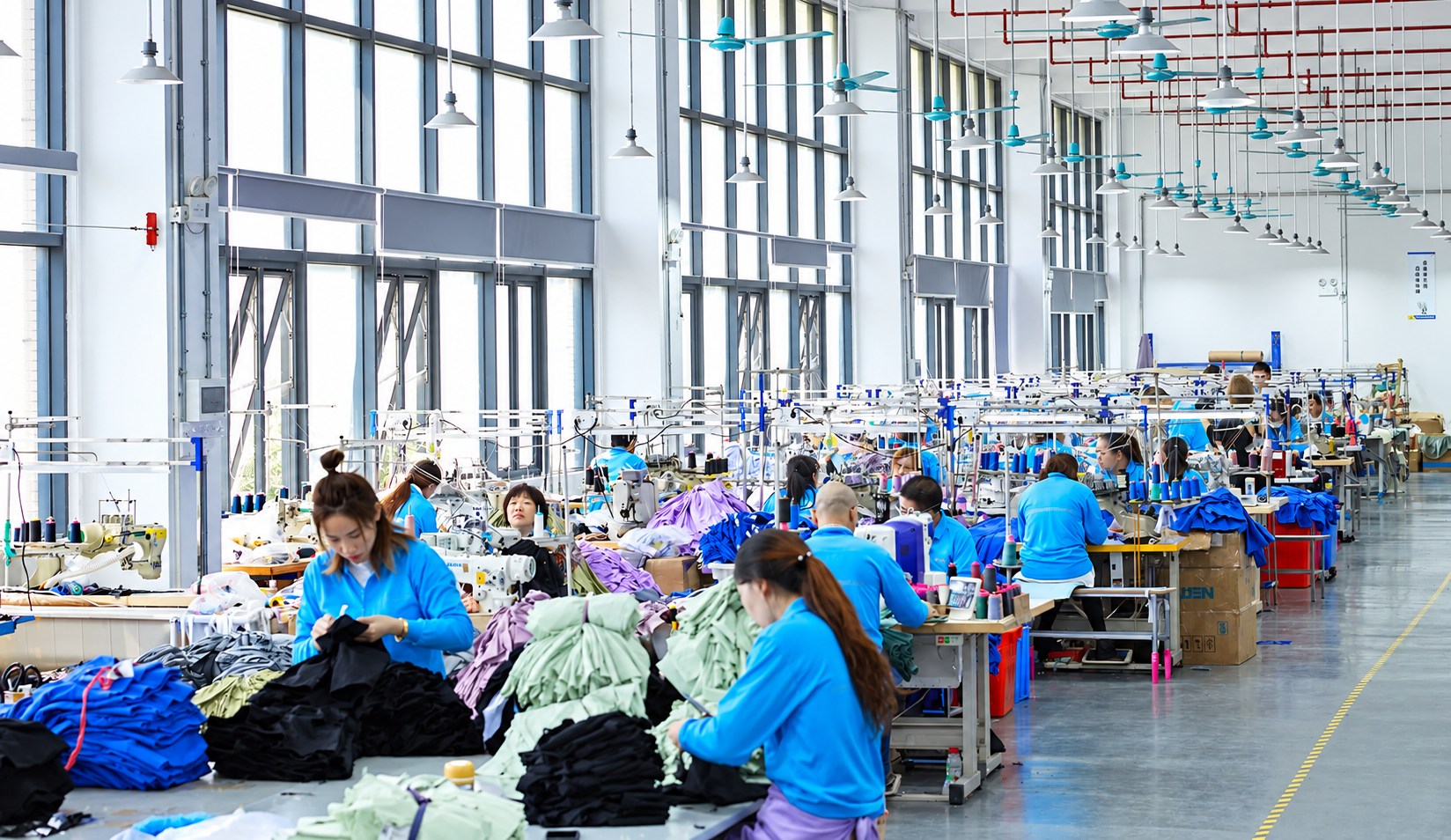
Search widely enough to compare actual capabilities. Record why each candidate belongs on the list, rather than collecting company names with no product evidence. Use the same screening questions on all five channels.
- Industry directories: use Common Objective and relevant local textile networks to discover candidates. Check what a listing actually verifies.
- B2B marketplaces: search Alibaba and Global Sources. Read the supplier classification and assessment details; a badge does not replace order-specific due diligence.
- Trade-show exhibitors: investigate ISPO and Canton Fair exhibitors whose samples demonstrate your construction.
- Material-supplier referrals: ask mills which garment factories routinely handle the fabric and pay reliably.
- Sourcing agents: compare their fee, inspection role, subcontracting visibility and accountability when you need local management.
If trade-show exhibitors are part of your search, use our step-by-step trade show sourcing SOP to plan meetings, capture comparable booth evidence and turn the shortlist into a controlled pilot order.
For every lead, record the legal entity, production address, owned versus outsourced operations, MOQ, sample timing and bulk timing. Request evidence of three relevant past styles and a business-license copy. Ask who owns the line that would produce your order.
To build a China-focused candidate list, compare our ten sportswear manufacturers in China, then apply the same product, minimum-order and evidence checks to each enquiry.
If you need local production support, compare the fee, technical deliverables and accountability in our apparel sourcing agent versus factory-direct guide. Identify which tasks are already included by the manufacturer before paying for additional coordination.
Step 3. Send One RFQ and Compare the Evidence

Use these ten questions to ask a clothing factory to structure the follow-up interview, then verify the manufacturer’s identity, claim records and production controls before treating the answers as approval evidence.
A comparable quotation begins with comparable instructions. Send the same tech-pack version and quantity breakdown to every shortlisted supplier. Ask them to list assumptions and exclusions, including material substitutions, packaging and inspection charges.
RFQ template — copy and adapt
Subject: Sportswear RFQ — [brand / style / tech-pack version]

Hello [supplier team],
Please review the attached specification and quote [quantity] units,
split by the attached colour and size breakdown, for [destination].

Please provide:
1. Unit price, currency, named Incoterm and named port/place.
2. Sample fee, development schedule and revision inclusions.
3. Bulk schedule measured from final sample/material approval.
4. MOQ by style, colour, size and fabric; any material minimums.
5. Deposit/balance milestones and quotation validity.
6. Relevant certificates, scope and order-specific test options.

Identify outsourced processes, proposed substitutions and exclusions.
Attach recent, unretouched examples of comparable production.
Please flag any specification you cannot achieve before quoting.

Thank you,
[name / brand / contact]
Score response speed, quotation clarity and production proof on a 0–2 scale each. Award 2 points for a useful response within 24 hours, allowing for agreed working hours; 0 points for repeated unanswered follow-ups. Use 1 for an incomplete response that is resolved promptly. Apply the same 0, 1 or 2 method to clarity and evidence, for a total of six.
Then ask a precise follow-up: for example, the waistband-label stitch density and whether it is included in the quote. An answer that ignores the measurement is a reason to investigate communication before production. Keep a direct factory and a vetted agent in consideration when their service scopes differ; compare the extra management cost transparently.
Approval gate: retain candidates that can meet the actual MOQ, document their quotation scope and answer the technical follow-up accurately.
Step 4. Verify Certificates Against the Product and Order

Start with the destination law and the claims on your product. OEKO-TEX STANDARD 100 is a voluntary harmful-substances certification; it is not automatically mandatory for every skin-contact garment. Request it when it is part of your buying specification, and check that the certified scope covers the material or finished article being supplied.
- Identify the scheme: STANDARD 100 for the specified harmful-substances scope; GOTS for qualifying organic-textile certification; GRS or RCS for the relevant recycled-content chain of custody.
- Collect identifiers: certificate or license number, certification body, company and site details, scope and validity period.
- Check the issuing source: use OEKO-TEX Label Check, the GOTS certified-supplier database, or Textile Exchange certificate authentication.
- Match the scope: confirm the facility, processing operation, product category and relevant product class. A yarn certificate alone does not establish that a finished garment is covered.
- Archive the result: save the document and dated verification record with the supplier file.
Where a fabric mill holds the certificate, document its relationship to the garment maker. Different names need an explained supply chain; they are not automatically evidence of forgery.
Step 5. Run Samples Through Three Approval Stages

Sampling is where a promising supplier becomes a production partner. Require a graded measurement chart for every size, the fabric composition and GSM, artwork dimensions, seam callouts and component list. Mark every revision with a new version, date and responsible approver.
Prototype → fit → pre-production
- Prototype: evaluate construction, material feasibility and the design direction. Record any substitute fabric.
- Fit sample: review the intended body measurements, size balance, grading and movement.
- Golden sample: approve the final pre-production unit with the agreed bulk fabric, colour, trims and decoration. Keep a sealed reference at both ends.
Test what an athlete will notice
- Check opacity in the actual movement and stretch conditions, including squats where relevant.
- Observe waistband roll, chafing and seam comfort during wear.
- Measure before and after the agreed wash procedure.
- Evaluate fabric growth, recovery and seam performance using agreed loads and methods.
AATCC TM135 concerns dimensional changes of fabrics after home laundering. Choose the appropriate garment method where necessary, and specify separate methods for pilling and recovery. One wash method cannot establish every performance claim.
Step 6. Write Quality Control Into the PO
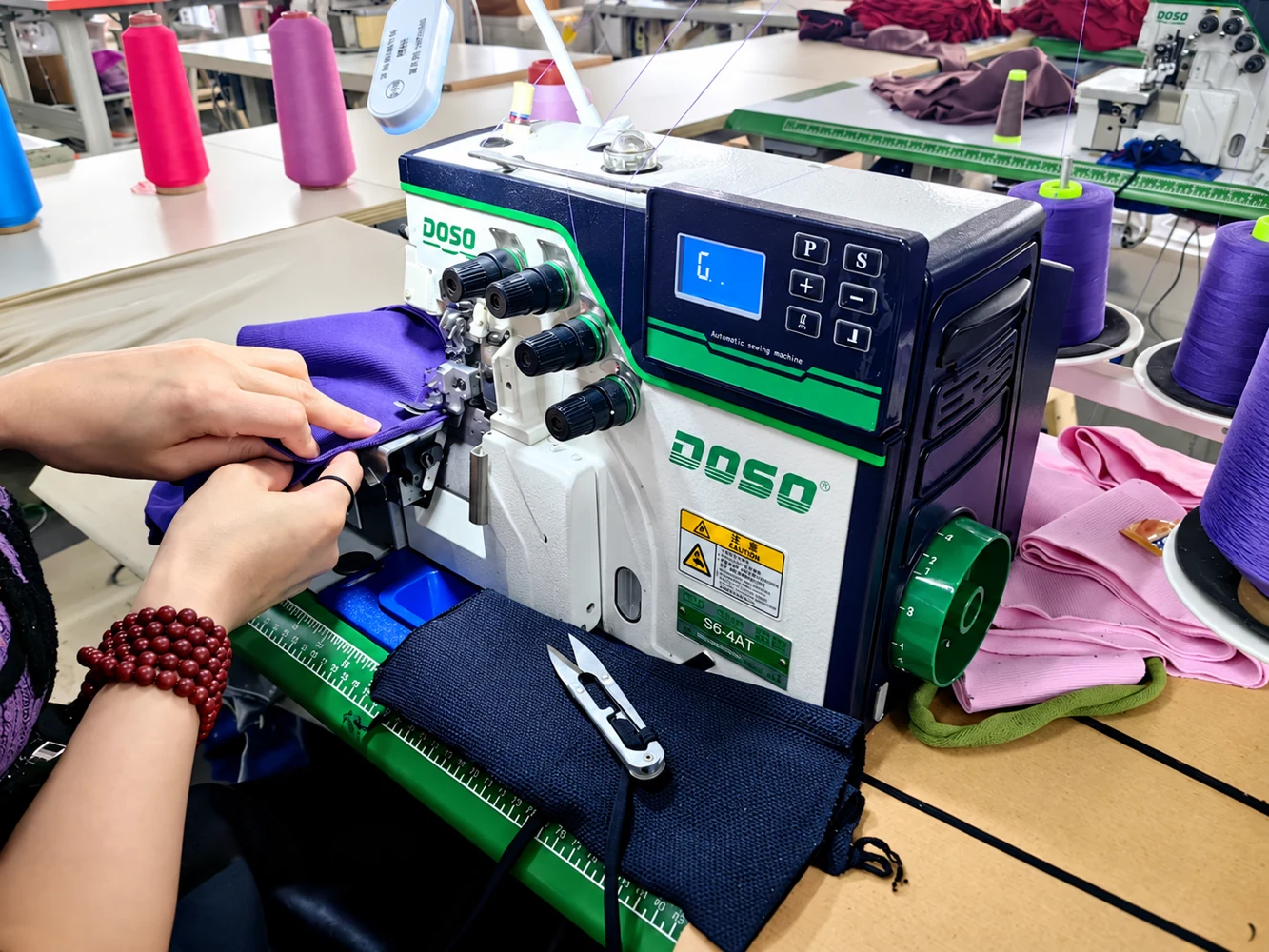
Agree a defect library and measurement method while the approved sample is still available. Reference an appropriate ANSI/ASQ Z1.4 or ISO 2859-1 plan with the edition, lot definition, inspection level and severity specified. AQL values alone do not determine sample size or acceptance numbers.
| Defect class | Buying specification | Example |
|---|---|---|
| Critical | 0 acceptance under the agreed safety protocol | Needle fragments, sharp contamination or mold |
| Major | AQL 2.5 planning target | Open seams, unusable zippers or incorrect size labels |
| Minor | AQL 4.0 planning target | Agreed cosmetic defects such as untrimmed threads |
The product checklist should cover seam opening under stretch, print rub and wash durability, label accuracy, packaging and garment measurements. The reference target of ±0.5 cm can be specified for selected waist, inseam and rise measurements when the construction supports it; state the exact points, measuring tension and tolerance for each size.
Use in-line checks to correct drift during sewing. Arrange final random inspection when production is complete and the agreed packing readiness is reached; 80% packed is a common booking condition, not permission to leave the remaining quantity unfinished. For overseas procurement, independent inspection adds a separate view of the shipment.
Step 7. Price Delivery, Not Just the Garment
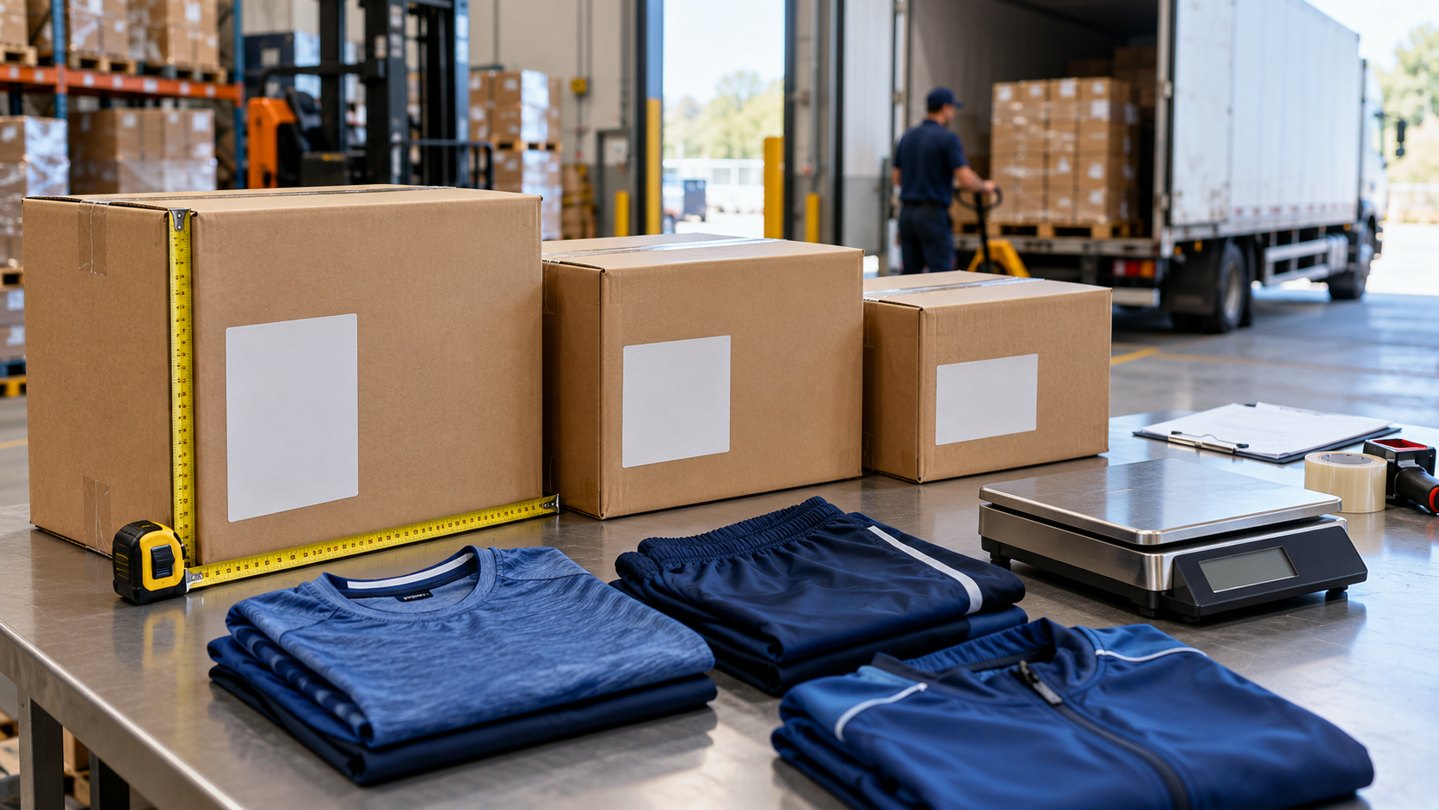
Ask for the preliminary packing list before choosing the shipping route. Carton length, width and height in centimetres, gross weight in kilograms, carton count and the proposed HS classification all affect the estimate. Use the forwarder’s actual chargeable-weight method; volumetric weight can exceed scale weight.
Write the named place and version beside the trade term. FOB — Free on Board applies to sea or inland-waterway delivery on board the vessel; discuss FCA for relevant container or multimodal arrangements. DDP — Delivered Duty Paid assigns extensive delivery and import obligations to the seller, but requires a workable importer and tax arrangement. It does not automatically make transport faster. Use the ICC Incoterms guidance to define responsibilities.
| Cost line | Evidence to request | Check before approval |
|---|---|---|
| Garments and packaging | Supplier’s itemized quotation | Same specification, quantity and inclusions |
| Freight | Forwarder’s air/sea quotation | Route, chargeable weight and surcharges |
| Insurance | Insurer or forwarder quotation | ~1% of cargo value is a planning allowance, not a fixed premium |
| Duty and tax | Classification and official tariff check | Origin, destination and importer treatment |
| Brokerage and receiving | Broker and warehouse quotation | Clearance, handling and delivery exclusions |
For US entries, begin the tariff check with the USITC Harmonized Tariff Schedule. Add inspection and development costs when comparing the commercial result, then test the margin at the planned selling price.
Step 8. Confirm the Contract and the Production Site

Before a deposit, reconcile the signatory, business-license entity, invoice issuer and bank beneficiary. Any difference needs verified documentation and an approved payment arrangement. An unexplained mismatch is a reason to pause. Obtain suitable legal review of the actual sales agreement rather than relying on a heading or invoice stamp.
- Product exhibits: tech-pack version, approved sample photographs, fabric lot, artwork and packing specification.
- Quality remedies: inspection rights, acceptance conditions, rework, replacement, refund and the process for disputed findings.
- Delivery terms: named milestones and a negotiated delay remedy. A 5% discount per week is an example to review, not a universally enforceable penalty.
- Design protection: appropriate non-disclosure, non-use and non-circumvention provisions, plus pattern and artwork ownership.
- Payment: where a 70% balance is negotiated, tie its release to the agreed inspection and document conditions rather than assuming the shipping date proves acceptance.
Use a live tour to verify equipment suitable for the product, including circular knitting for a seamless programme where relevant. Follow labeled fabric rolls and dye lots into the cutting area. Locate in-line inspectors, check the barcode and carton-labeling process, and observe clear aisles, fire equipment and task-appropriate PPE.
Troubleshooting: What to Do When the Evidence Does Not Match
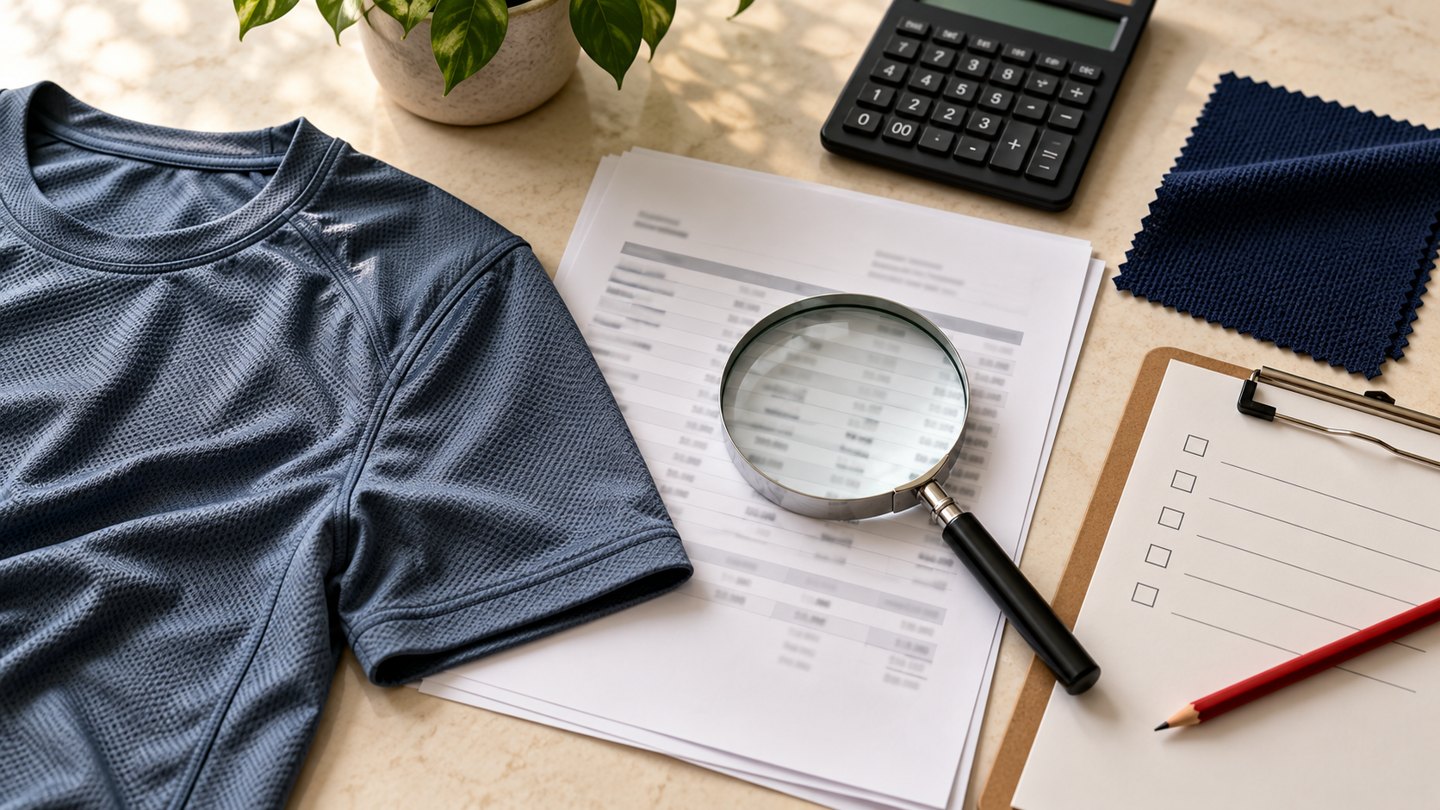
A red flag is useful only when it changes the next action. Resolve uncertainty before money or material commitments make a change expensive.
1. An implausibly cheap, immediate quotation
A $4 technical hoodie is a prompt to examine scope and construction, not automatic proof of fraud. Ask for fabric yield, trim costs and cut-and-make labor. Request a bill of materials and ask which specified process or material has been excluded.
2. No access to the working facility
Ask for a 5-minute live walk from material storage to cutting. If access is refused, request an independent site visit or documented ownership and outsourcing information. Do not mark an office tour as a factory audit.
3. A certificate that cannot be verified
Request the complete scope certificate and issuer details. Check the official database and ask the certification body to resolve missing records or entity differences. A polished PDF is not a substitute for a verifiable scope.
4. Payment requested to a new or unrelated beneficiary
Stop the transfer. Confirm any change through a known, independently verified contact. Avoid treating a new email thread, personal account or cash-transfer request as routine instructions.
5. Bulk goods drift away from the approved sample
Reconcile sample tags, tech-pack version and fabric-lot records. Quarantine affected goods, compare measurements and inspection photos, then follow the contract’s corrective-action process.
Questions Buyers Ask Before the First Order
How do I find a reliable sportswear manufacturer?
Use all five sourcing channels, then require relevant product evidence, a transparent production location, written quotation assumptions and a sample that passes your agreed checks. A supplier’s ranking or directory badge alone cannot establish that it can manufacture your exact style.
What MOQ should a custom activewear brand expect?
The reference planning comparison uses 300–500 pieces per style/colour for conventional cut-and-sew orders and 50–100 units for selected micro-runs. These are comparison bands, not universal minimums. At Sportxia, discuss a selected-style 50-piece pilot and available fabrics first; confirm the actual minimum separately for style, colour, size and custom material.
Do I need a finished tech pack before making contact?
You can start with a clear brief and ask Sportxia for development support. Before accepting an accurate production quote or approving bulk, resolve the measurement chart, materials, construction and artwork in a versioned tech pack. No single generic ASTM standard replaces that specification.
How can I tell whether certification documents are genuine?
Check the identifier, validity, entity, facility and product scope with the issuer’s official database. Document any mill-to-garment-factory relationship and obtain applicable transaction evidence for certified goods. Ask the certification body about unresolved discrepancies.
Should my first order use FOB or DDP?
Compare the same delivery destination and complete cost scope. DDP may reduce coordination when the seller can legally perform its obligations. FOB offers an on-board sea-freight responsibility boundary; a buyer with a forwarder should also assess FCA when appropriate. Neither term guarantees a lower total bill or better margin.
From a Shortlist to a First PO You Can Control
The practical goal is 3–5 vetted suppliers, a documented sample decision, an agreed QC protocol and a complete delivery-cost model. Choose the supplier that can explain how the product will be made and how exceptions will be handled.
- Send the same RFQ and current tech pack to the shortlist.
- Arrange production-site checks and resolve certificate questions.
- Order and test samples before committing to bulk materials.
- Put the approved specification, inspection and delivery conditions into the purchase order.
When production grows from 100 to 10,000 units, the approval record becomes more valuable. Archive revisions, sample photographs, lab results, inspection decisions and approval emails so the next run starts with evidence rather than memory.
Build your first production brief with Sportxia
Bring us your sportswear idea, quantity, fabric requirements and launch date. We can discuss private label, selected-style low-MOQ pilots and custom development against one manufacturing brief.
Technical references were reviewed for this draft on October 26, 2026. MOQ bands, insurance allowances, packaging reductions and example contract terms are planning inputs whose applicability must be confirmed for the order. Send a correction or evidence question.
Related Posts


READY TO START YOUR BRAND?
Turn Your Tech Pack Into a Production Plan
Discuss sampling, materials, inspection and your first sportswear order.
Get Your Production Quote
Leave a Reply