ICE HOCKEY JERSEY CASE STUDY
Ice Hockey Jersey Case Study:
500 Uniforms Delivered in 14 Days
 LucasUpdated October 18, 2026
Custom jerseys delivered
in 14 days
Name and number errors
across 25 team rosters
Season-end replacements
2 jerseys out of 500
Fill-in production turnaround
for this league program
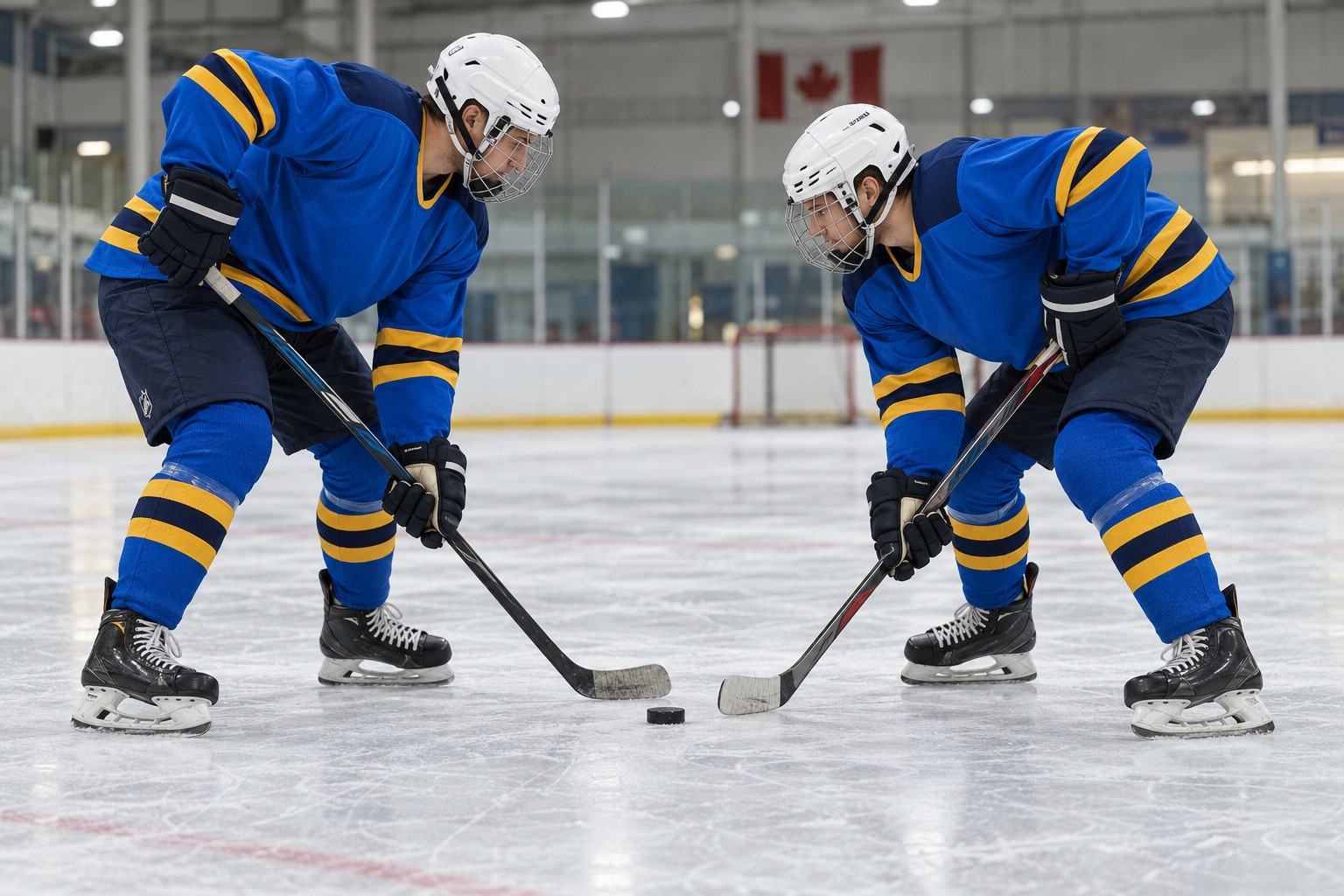
Client Profile
| Industry | Youth and amateur ice hockey |
|---|---|
| League size | 25 teams · more than 500 players |
| Market | Canada |
| Seasonal requirement | 500+ custom jerseys |
| Starting challenge | Late supply, incorrect player details and unstable decorated fabric. |
| Project priority | A 500-jersey order for the opening fixture, sorted by team, with a practical process for later additions. |
The league’s identity is withheld for confidentiality. Sportxia presents the project results with the customer and technical personnel anonymized.
The Challenge
Opening day gave the league a firm receiving deadline. Every carton also had to contain the correct jerseys for its team: a complete shipment would still leave players without usable uniforms if a name, number or size was wrong.
- Player details were unreliable. The earlier order had a 15% name and number error rate. Corrections meant more administration for the league and extra handling for the teams.
- Decoration and fabric did not work together. Heat application distorted the previous mesh and affected the printed edges. A fabric approval needed to include the actual decoration process.
- Repairs disrupted the season. The league estimated that around 5% of its previous jerseys needed repair or replacement. Shoulder areas and fight-strap attachments required closer construction review.
- Late additions were difficult to equip. A new player needed a jersey matching the existing kit. The league required a small-order route that retained the original specification and pricing basis.
The brief therefore connected roster approval, garment engineering, team sorting and replenishment in one order plan. Explore Sportxia’s team uniform solution.
The Solution
Five coordinated stages took the project from player data to a complete team delivery, with the repeat-order route agreed before the season began.
Phase 1: Approve the Roster and Artwork Together
The first-day review covered all 25 team lists. Each production entry connected the player’s spelling, jersey number and size to the approved team artwork. The league signed off one final version before personalized production began.
A useful roster file also needs clear ownership. Changes after approval should identify the affected player, the new instruction and whether the original item has already entered production. Colour references belong with the artwork proof and approved physical standard.
Phase 2: Check the Fabric under the Actual Decoration Process
The project used 250 GSM polyester, with a thermal-stability trial at 180°C for 15 seconds. Those were the recorded settings for this material and process; they are not a universal pressing instruction for other fabrics, inks or transfer systems.
The material review considered abrasion alongside print behaviour. ASTM D4966 describes the Martindale method for evaluating textile abrasion resistance. Record the specimen, conditions and evaluation endpoint when comparing results; a method name alone does not establish a pass level.
Phase 3: Reinforce the Garment Where It Carries Load
The approved construction used flatlock structural seams and bar-tack reinforcement at the fight straps. Cutting settings were matched to the fabric, while assembly checks focused on the shoulder, seam joins and attachment points.
Inspecting those areas on a finished sample makes the construction brief easier to apply on the line. Stitch choice, thread, seam allowance and reinforcement position work together; the intended result should be checked on the actual garment. Review cut-and-sew development.
Phase 4: Track Production against the Receiving Deadline
The agreed calendar allocated ten days to proofing and manufacturing, followed by four days for the project’s DDP air delivery. The production team tracked each handover against the opening-fixture deadline.
| Milestone | Time |
|---|---|
| Artwork and final proof | 1 day |
| Laser cutting and sublimation | 4 days |
| Assembly and inline quality checks | 5 days |
| DDP air freight and delivery | 4 days |
| Total project schedule | 14 days |
Before dispatch, the packing review matched finished jerseys to the approved roster and team allocation. Carton identification and a team-level packing list helped the league distribute the delivery without rebuilding the order player by player. See packing coordination.
Phase 5: Keep a Matching Route for Fill-In Orders
For this league program, Sportxia supported orders from two jerseys at the original bulk unit price, with fill-in production as fast as three days. The retained fabric, colour reference, artwork and inspection criteria kept later additions connected to the opening order.
The fill-in instruction still needs the approved name, number and size. Confirm stock availability and the required receiving date when placing a repeat order; production turnaround and transport time are separate milestones.
The Results
| Measure | Before | With Sportxia |
|---|---|---|
| Main order | Delayed supply | 500 jerseys delivered in 14 days |
| Name / number errors | 15% | 0% |
| Season-end replacement rate | About 5% | 0.4% · 2 of 500 |
| Fill-in production | Slow, ad hoc reorders | As fast as 3 days |
| Fill-in minimum | No standing small-order route | 2 jerseys |
| Fill-in unit price | Premium-priced replacements | Original bulk unit price |
The 0.4% figure describes this league’s reported season-end replacements: two out of 500 jerseys. The earlier 5% figure is the league’s estimate for its previous order, rather than an industry-wide benchmark. See Sportxia’s fact-checking process for our approach to figures and corrections.
Key Takeaways
- Treat the roster as part of the production specification. Personalization needs the same approval discipline as measurements and artwork. Carry the final player data into inspection and packing.
- Test a decorated fabric sample before release. Review the material after the intended heat and print process. Record the settings and approved appearance alongside the fabric identity.
- Plan for players who join later. Retain a repeatable specification and agree a small-order route early. A matching jersey depends on accessible artwork and material references.
- Inspect construction in the context of use. Check reinforcement and seam workmanship at the garment’s load points. Use season feedback to inform the next production review.
Planning your next team order? Send Sportxia your brief to discuss rosters, sample approval, inspection and delivery. Requests for project documentation are reviewed against client confidentiality and disclosure permission.
Learn how Sportxia reviews manufacturing information, sources and corrections in our fact-checking process. To report an error, contact our content team with the article link and supporting evidence.
MORE CASE STUDIES
Explore More Production Results
Custom Swimwear: A 40% Shorter Sourcing Cycle
Corporate Activewear: A 5,000-Unit Rollout
Activewear Startup: Production for the Next Stage
YOUR NEXT TEAM ORDER
Build a Production Plan for Your League
Share your jersey design, team rosters, quantities and receiving date. Sportxia will respond within 24 hours with the next steps for your project.
Discuss Your Team Order →